



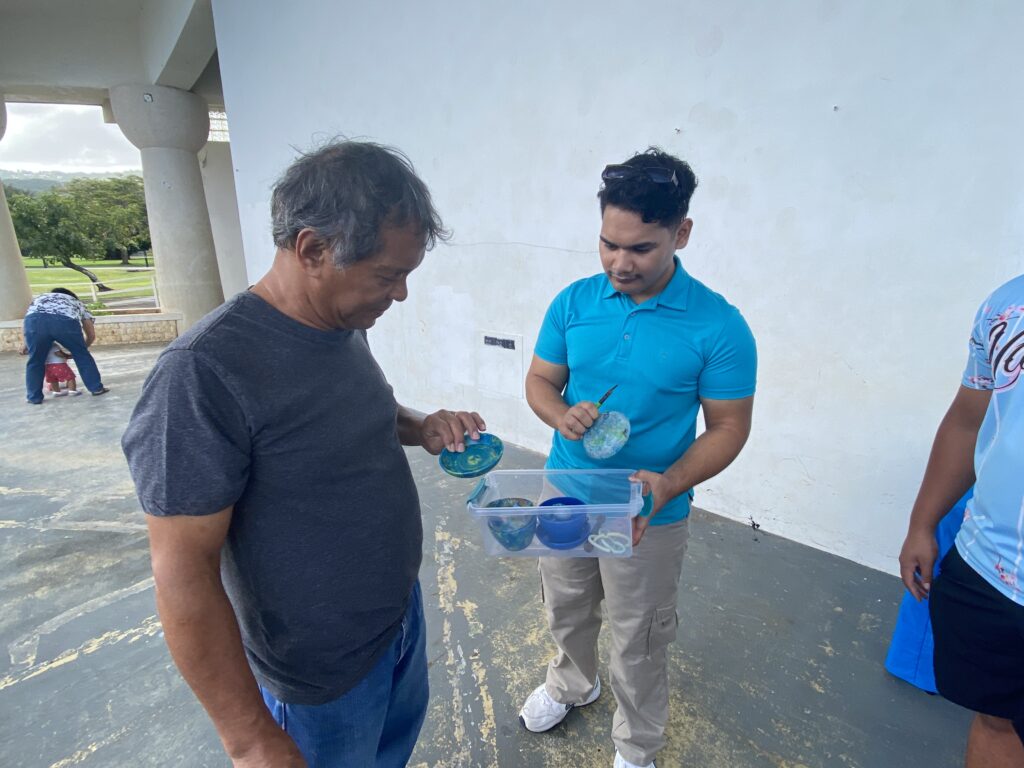
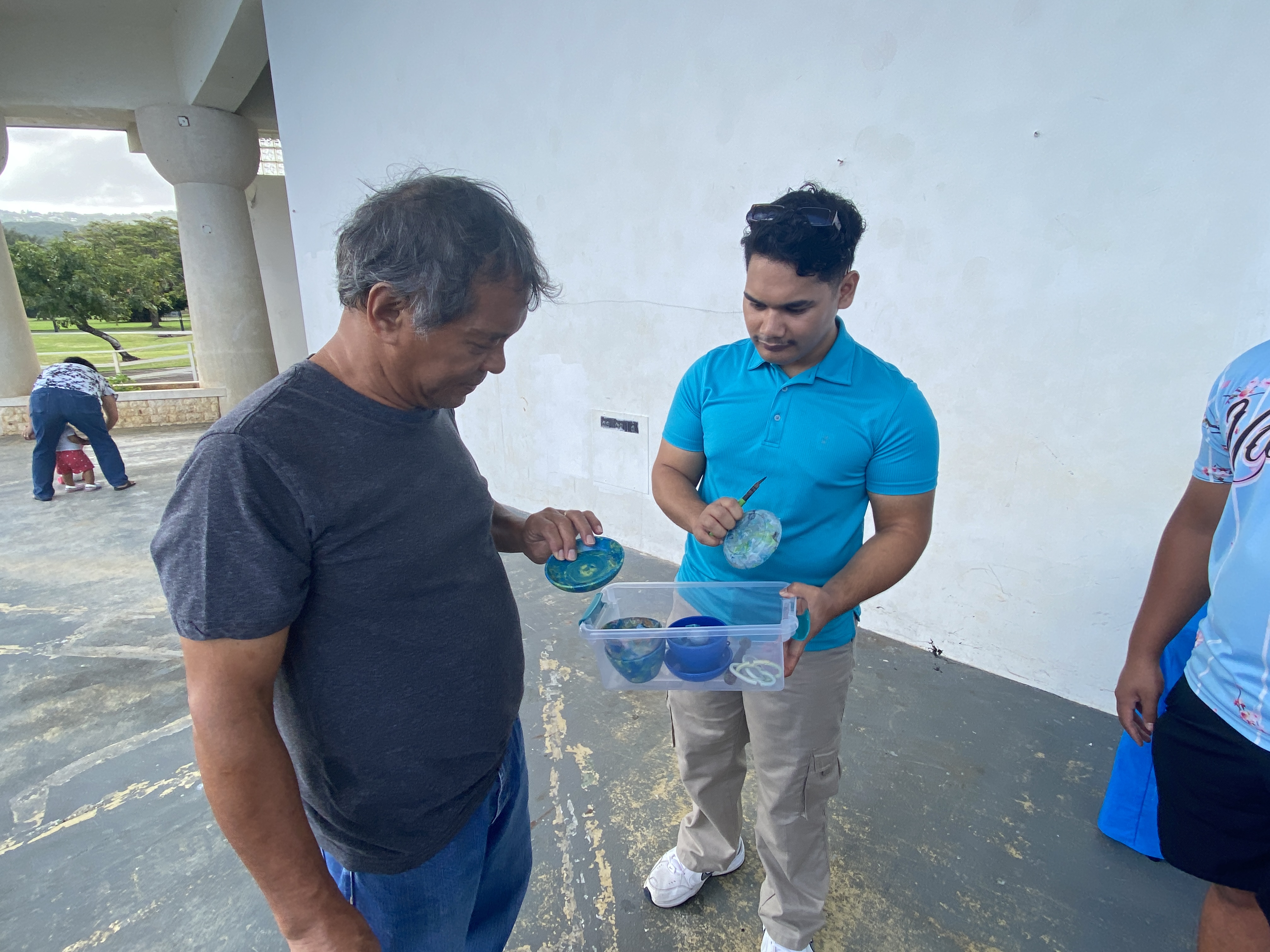
Joseph Nekaifes, right, shows a workshop participant the kind of plastic products that can be made with a 3-in-1 Upcycling Machine.
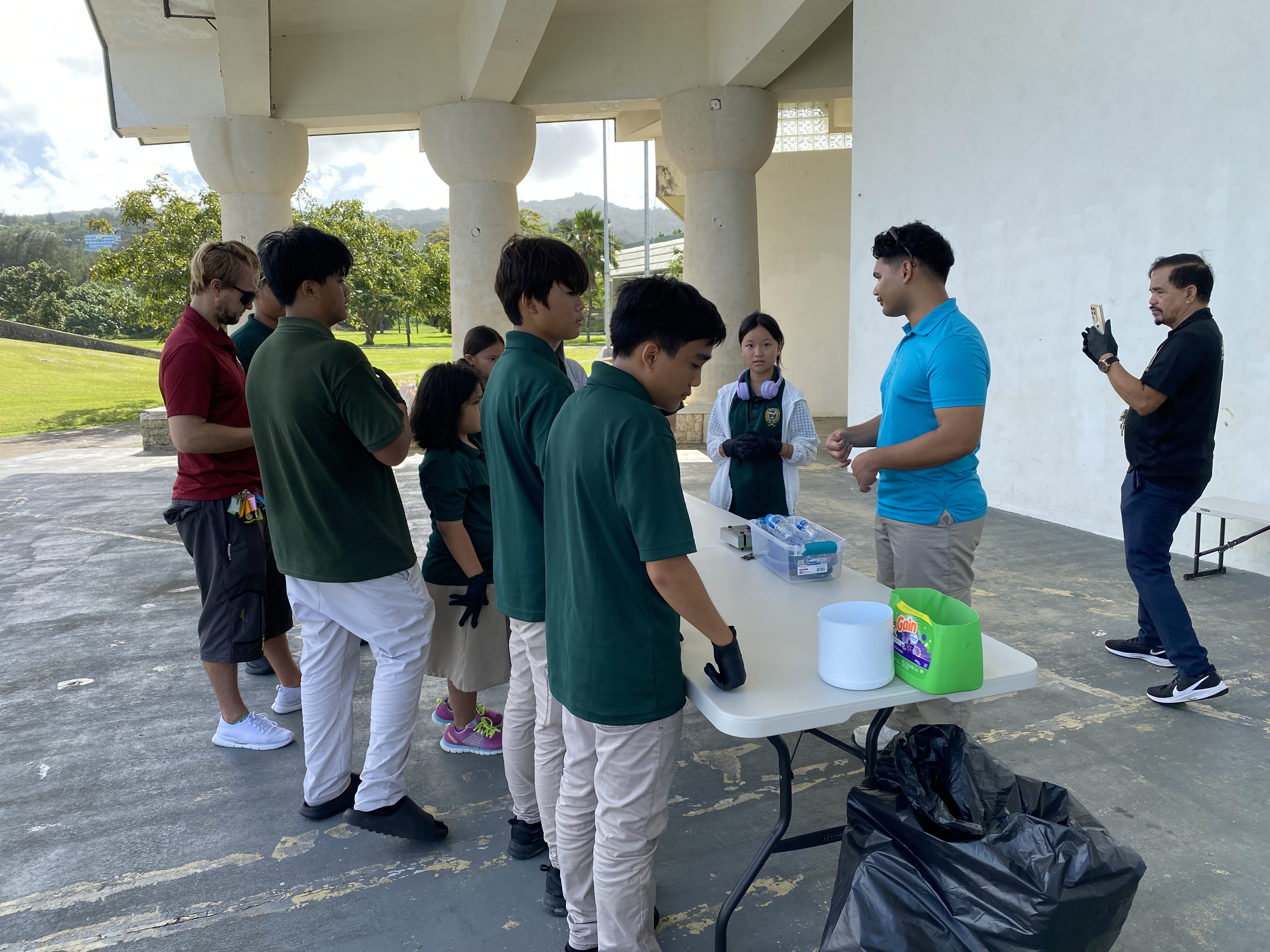
Joseph Nekaifes with Seventh-day Adventist School students at a plastics workshop.
SEVENTH-DAY Adventist School students and other island residents participated in a free Community Recycles Plastic workshop conducted by the Mariana Islands Nature Alliance on Thursday, Nov. 30, at American Memorial Park.
The workshop aimed to increase the number of people on Saipan who are able to properly sort recyclable plastics for eventual use in MINA’s 3-in-1 Upcycling Machine.
During the workshop, Joseph Nekaifes, MINA outreach and education coordinator, said the 3-in-1 Upcycling Machine can recycle high-density polyethylene, low-density polyethylene, and polypropylene into various items, such as bowls, keychains, fishing floaters, and more.
He said a fourth kind of plastic, polyethylene terephthalate, can’t be recycled with a 3-in-1 machine, but MINA still collects and shreds them because a MINA partner is finding a way to use them for 3-D printing.
Polyethylene terephthalate is also called Type 1 plastic, or PET, Nekaifes said, adding that it is commonly used to make water bottles.
He said high-density polyethylene is called “Type 2” plastic. MINA typically collects Type 2 plastic from water bottle caps.
Nekaifes said low-density polyethylene is also known as Type 4 plastic, and can be found in a variety of household items like shampoo or detergent bottles.
Polypropylene is also known as Type 5 plastic, he added, and can be found as the cap on five-gallon water bottles.
During the workshop, participants were seen emptying the bottles and separating them by plastic type.
Nekaifes said the sorted plastic from the day’s event will go directly to MINA.
Variety files state that the San Vicente Church is a MINA partner that accepts cleaned plastics. Nekaifes said as the Community Recycles Plastic program expands, more public spaces can be listed as designated areas to drop cleaned, organized plastics for MINA to pick up.
Jihan Younis, U.S. Fish and Wildlife ranger and park ranger for the Mariana Trench National Monument, said U.S. Fish and Wildlife was a partner at the day’s workshop.
She said the wider benefit from the Community Recycles Program can be a decrease in plastics that wind up on the ocean floor.
“There are already studies and evidence showing that trash is ending up in the deep,” Younis said. “Being that our islands are so close to this unique deep sea feature, the Mariana Trench, it’s our backyard and…we’re finding trash there.”
Younis said in 2016, a NOAA Okeanos Explorer voyage in the Marianas Trench was able to locate a can of Spam at the bottom of Sirena Canyon, a specific part of the trench.
“A little goes a long way,” Younis said of community training events. “This type of volunteer events that we try to get the community involved with is just to recognize that what they do on land really affects the nearshore, and also the deep sea that we’re so closely tied to.”
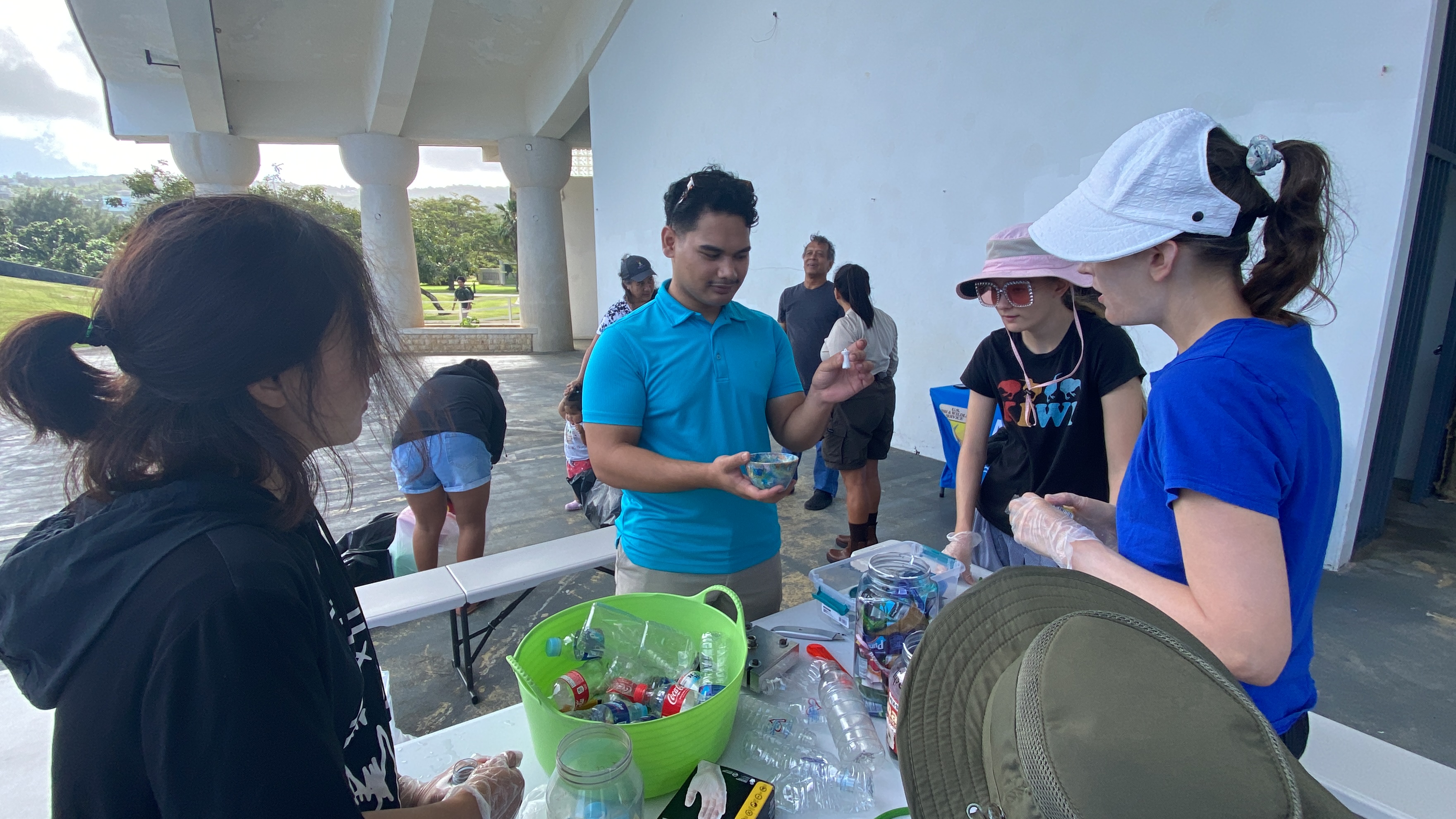
Volunteers take a break from sorting plastics to listen to Joseph Nekaifes explain where the recycled plastics wind up after they go through the 3-in-1 Upcycling Machine.
