







THE solar power system’s charge controller that caught fire at Kilili Beach pavilion on Jan. 10, 2025 was installed by another contractor, Micronesia Renewable Energy Inc. CNMI Chief Operations Officer Jeffrey Voacolo said.
According to the Department of Public Works, Micronesia Renewable Energy Inc. was the original installer of record.
In a statement on Thursday, Voacolo said:
“Our firm was selected to build an off grid solar energy system for the Kilili Pavilion on Beach Road by the Grants Office in 2023.
“This system has been inspected by the Department of Public Works and passed all code compliance inspections and was turned on and placed into service. This system…worked without any issues for over two years giving the community the ability to enjoy the lighting and power at night for get-togethers, parties and festivities.
“We were contacted by the Grants Office last Monday to go to [a pavilion] where there was an electrical fire…. Upon…inspecting this system we soon found out that the material that was procured and installed for this system, namely the charge controller and the inverter, had been change[d] by another contractor. The contractor was hired by the Grants Office to repair this system. We are not sure why [MRE] was not contacted.
“Our firm was not contacted prior to this event [and] there were no…issues with this system to our knowledge. [But] the material that the other contractor installed was not the correct material and was not wired correctly, causing this fire. This statement was given to the DPW on Tuesday, Jan. 14th,” Voacolo said.
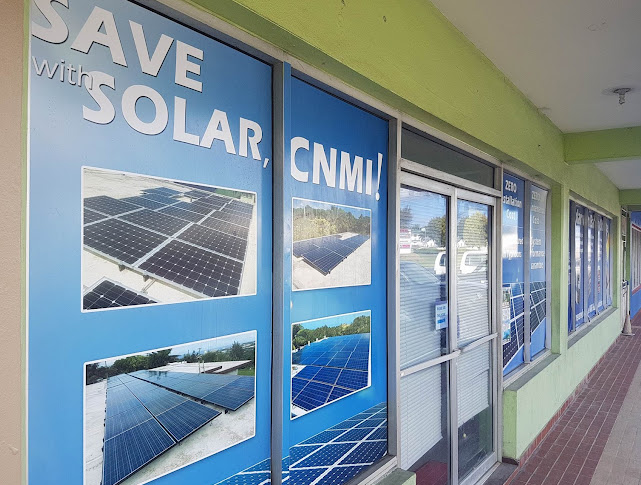
“Our firm has been in the solar energy business for 28 years and in the energy business for 45 years. We have been installing solar energy systems in the CNMI since 2015. What we are seeing are a lot of opportunists starting solar energy companies with no prior electrical or solar energy experience and this is the result of companies that are not well-versed in energy,” he added.
“If you need a heart transplant, you’re not going to [go to] the lowest-priced surgeon. Believe me, with solar energy with high DC currents, this is just as critical to your home or business,” he said.
Proper maintenance required
In a separate statement on Thursday, Office of Grants Management and State Clearinghouse Administrator Epi Cabrera said solar power system requires proper maintenance.
The Kilili Pavilion solar power system was federally funded through OGM.
“I would like to emphasize that maintaining non-grid-tied solar units has become increasingly expensive, and it is critical that these systems are properly maintained to ensure their longevity and safety,” Cabrera said.
He said his office extends its gratitude to the Department of Fire & Emergency Medical Services for its prompt response to the incident on Jan. 10, 2025.
Investigation is still ongoing in collaboration with the Department of Public Works and DFEMS, and OGM looks forward to receiving the final report once it is completed, Cabrera added.
He said after the incident, OGM reached out to MRE to inspect the system, “given their extensive knowledge of the original installation.”
OGM also contacted Celnaps Enterprises, which was responsible for removing “the non-functioning MRE inverter and installing…a charge controller,” Cabrera said.
He said over the course of a year or more, several pavilions in Saipan’s coastal areas were not consistently operational at night.
“For this specific pavilion, following this repair and maintenance activity, the system was reportedly working fine for the past three months until this incident,” Cabrera said.
MRE and Celnaps provided independent statements regarding the potential causes of the fire, he added.
Variety was unable to get a comment from Celnaps.
“While I am not an expert in this area, it is my opinion that the fire could have been caused by the plastic covering overheating due to extreme heat conditions,” Cabrera said.
Additionally, he said, it is possible that the protection system of the charge controller failed to engage, causing the unit to overcharge and overheat.
Notably, he added, the charge controller lacked adequate ventilation, which may have contributed to the overheating.
“As a precautionary measure, it might be advisable to relocate charge controllers under the concrete pavilions to better protect them from exposed elements. Furthermore, a product defect might be another reason for the charred controller,” Cabrera said.
He said OGM will collaborate with DPW’s Building Code Division to develop protocols for product specification and replacement procedures for roof-mounted solar systems.
“Furthermore, we will initiate inspections of all current solar-powered pavilion facilities to prevent a similar incident from occurring in the future,” he added.
He said, “The maintenance and safety of our solar-powered facilities are of the utmost importance to OGM, as they serve as renewable energy pillars to the community. We also urge the public to refrain from tampering with, removing, or damaging any components of these solar PV systems, as this can be costly and hazardous.”
Cabrera said the damaged component was replaced within an hour or two after the incident, and the pavilion is once again providing lighting at night.
He added that OGM is currently working with MRE on the installation of a 150kW solar PV system with a battery storage device, which is expected to be completed in March 2025 or sooner.
