

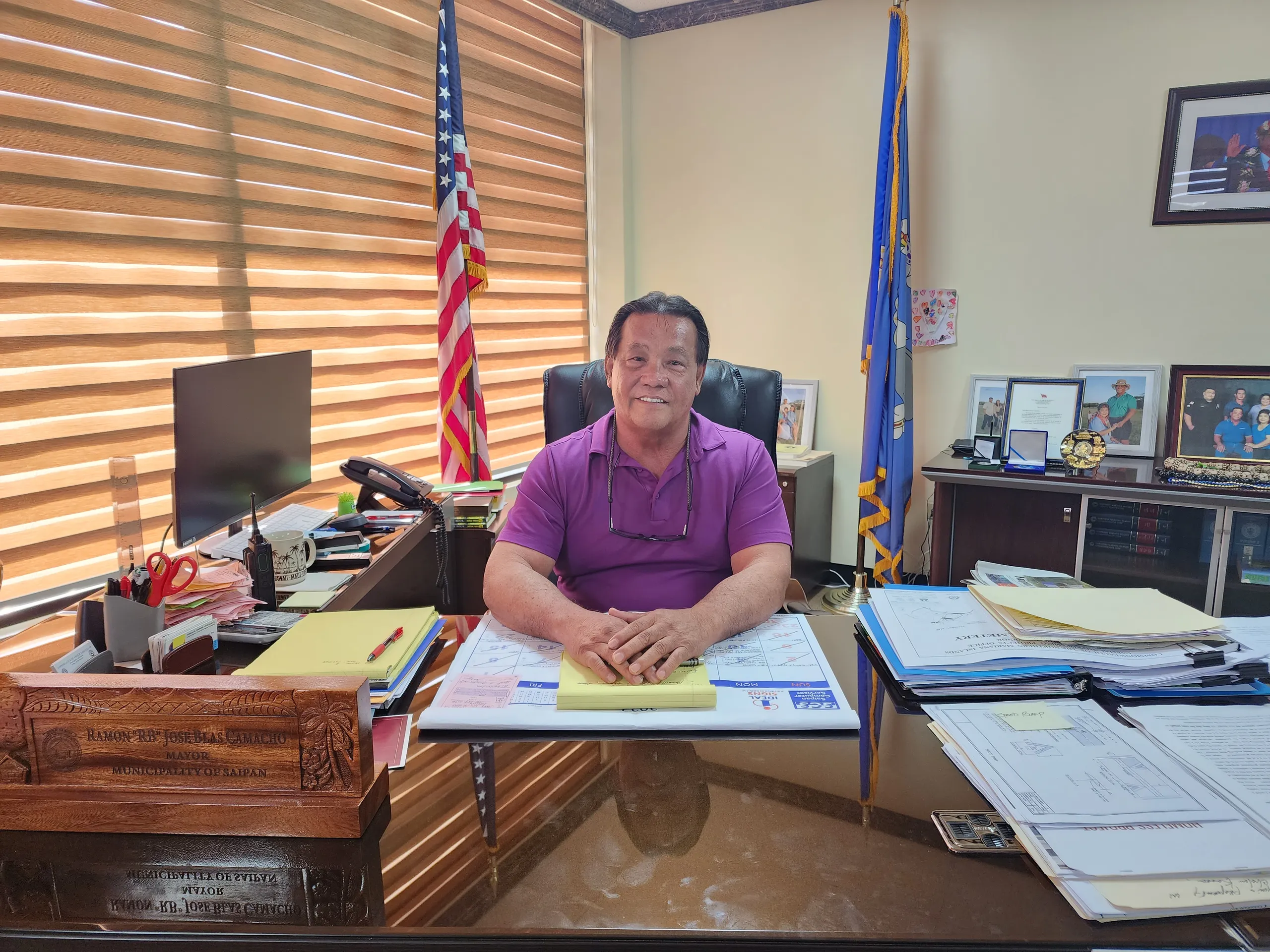

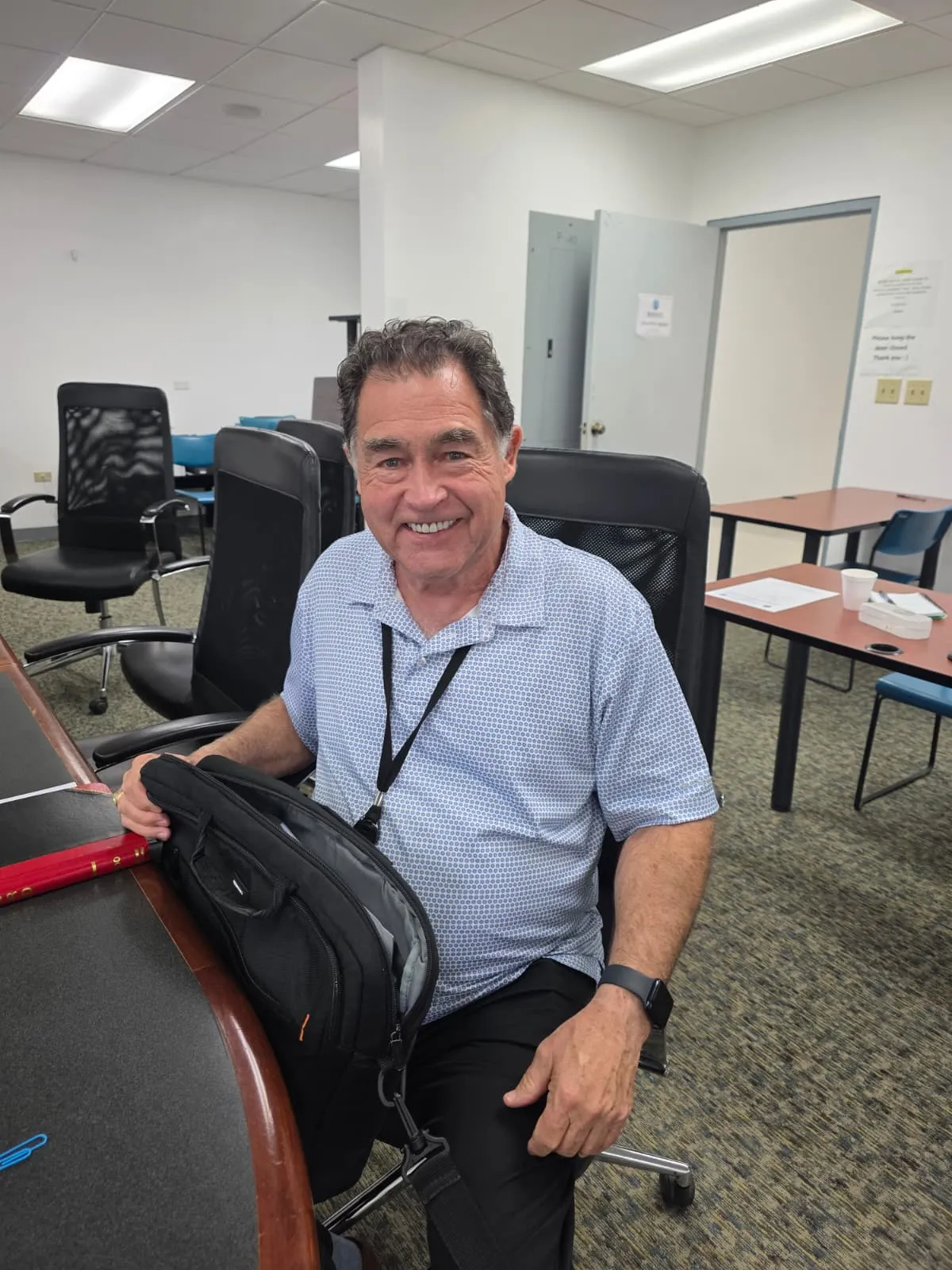
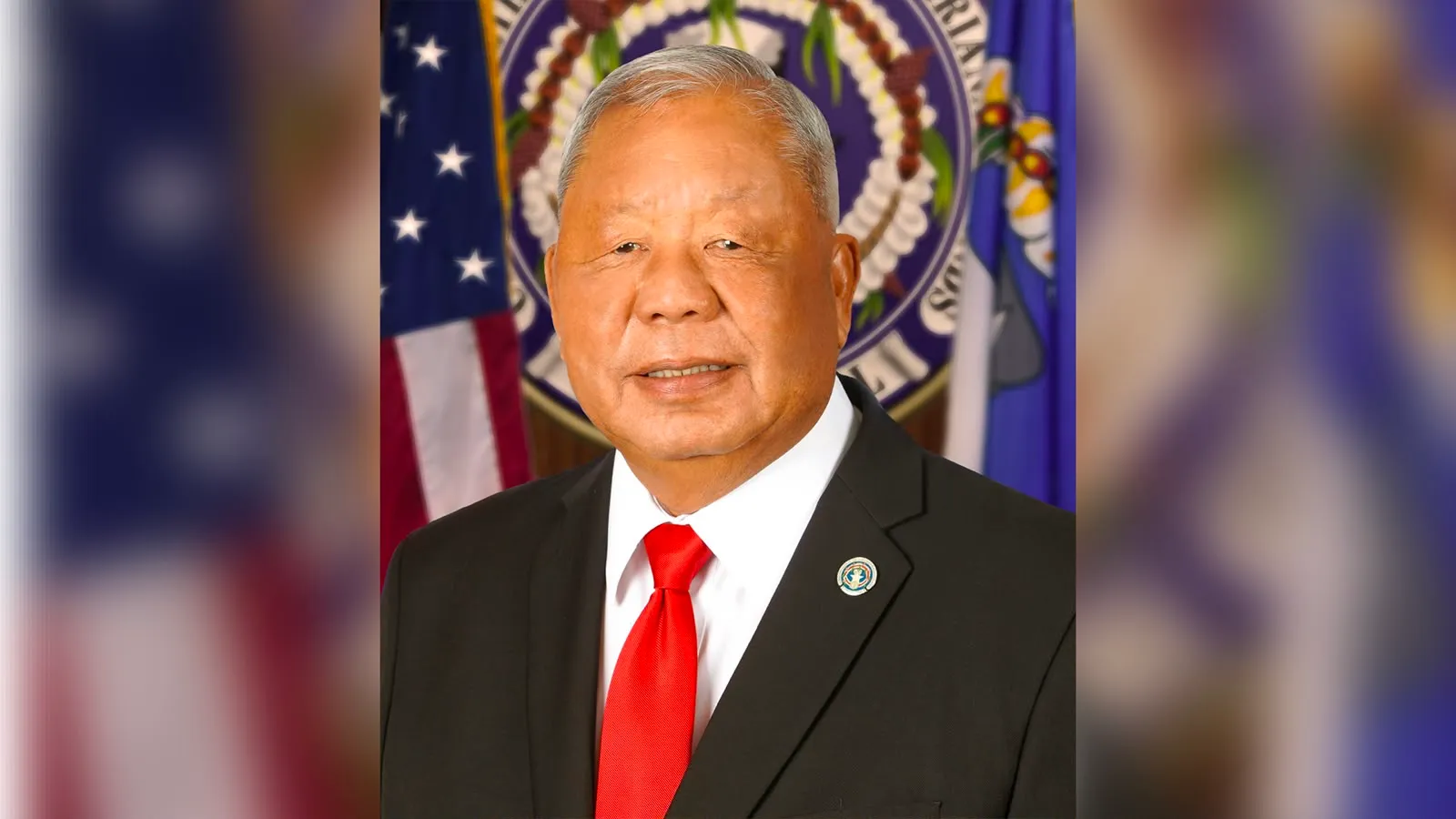


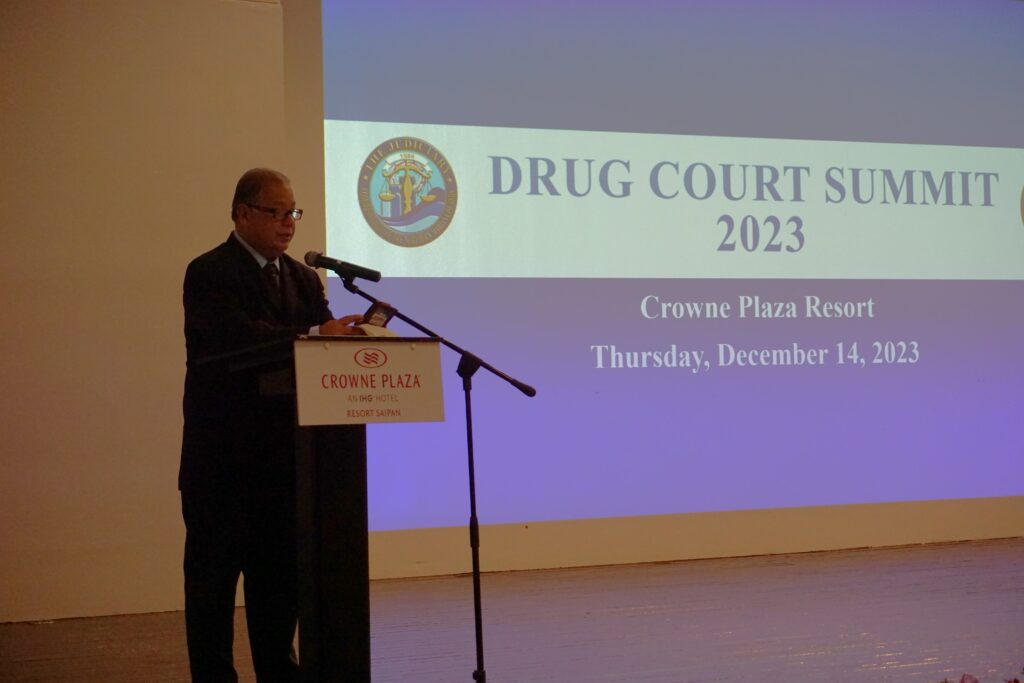
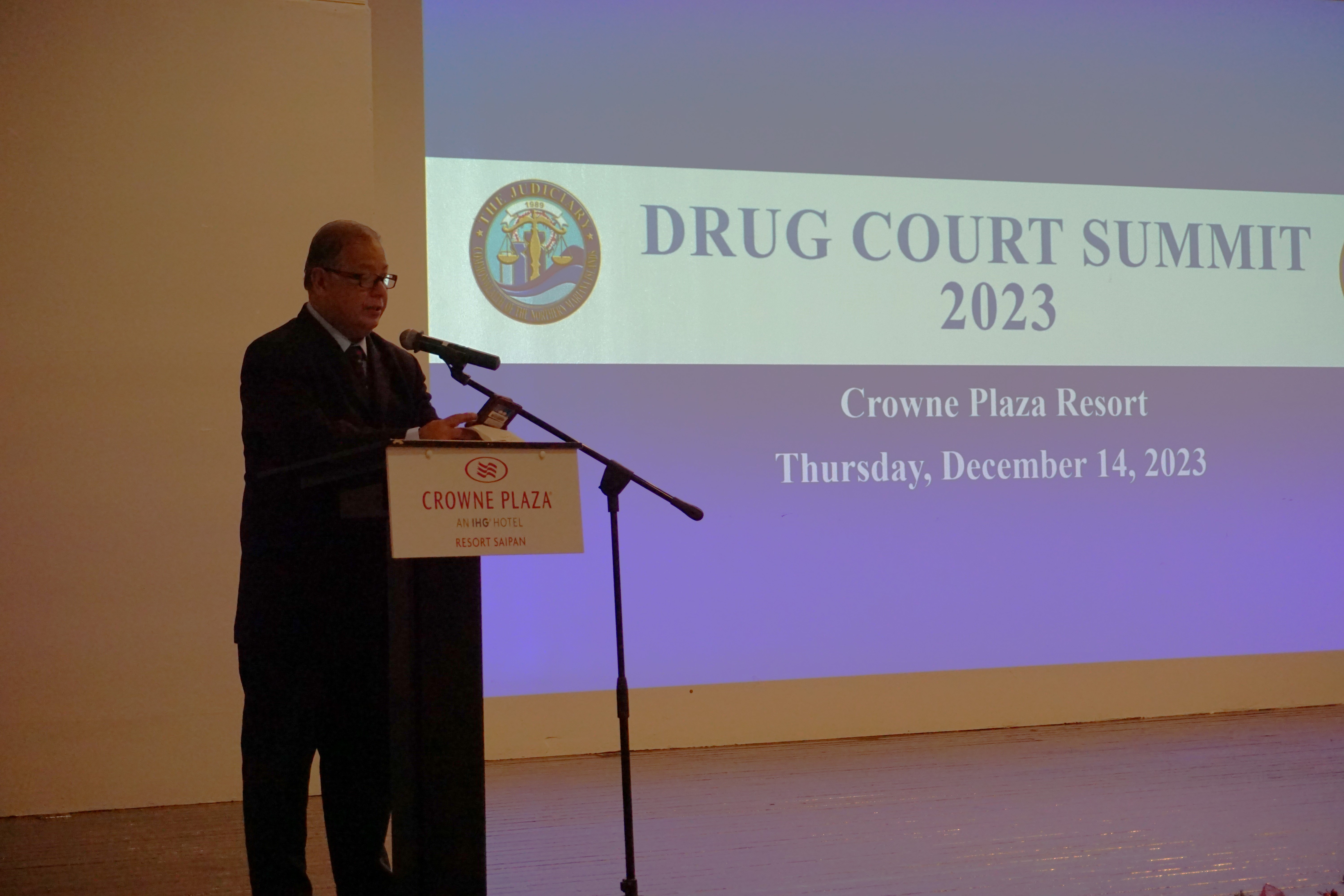
CNMI Supreme Court Justice Perry Inos delivers his remarks during the first Drug Court Summit at the Hibiscus Hall of Crowne Plaza Resort Saipan on Thursday.
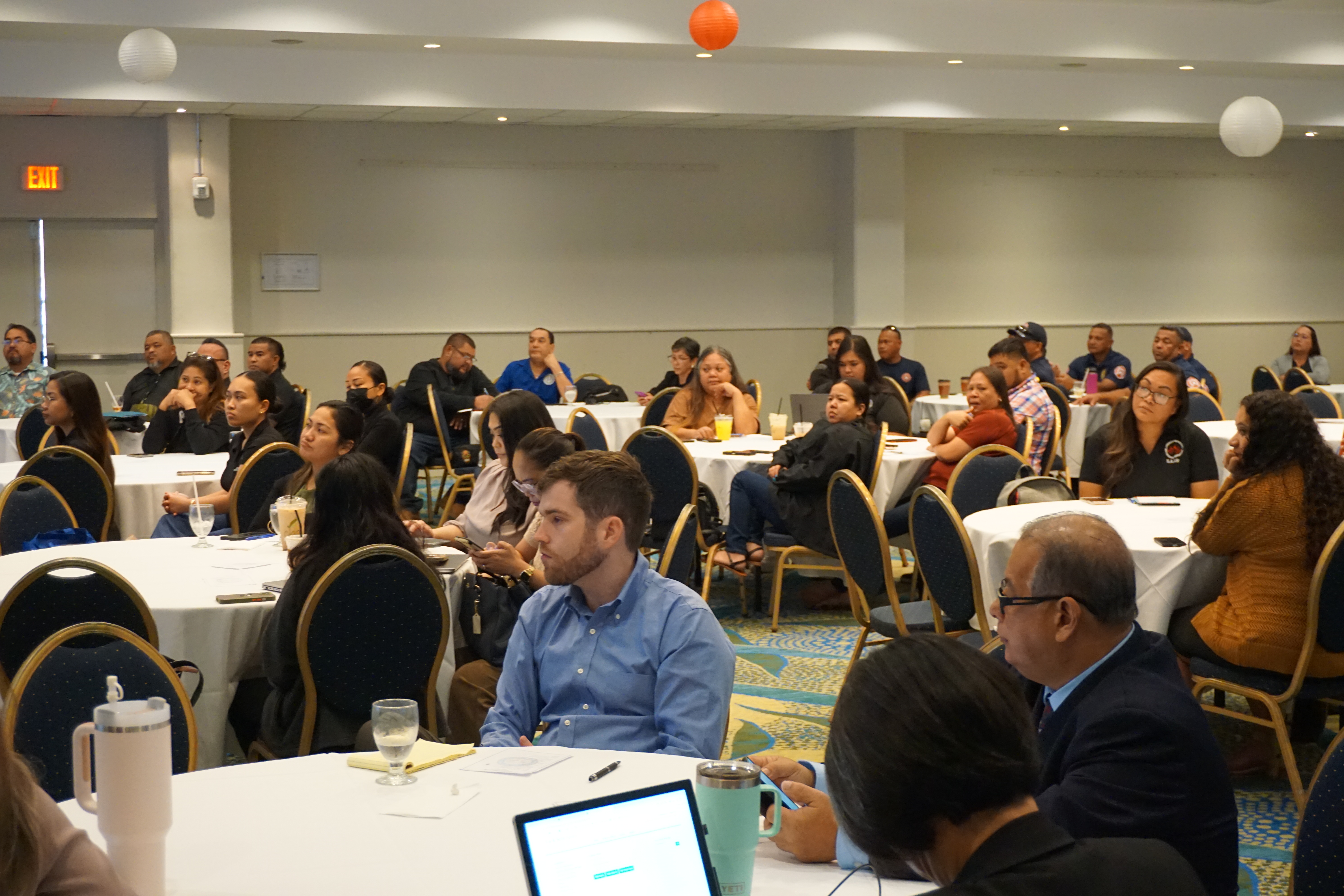
Drug Court Summit participants listen to a speaker.
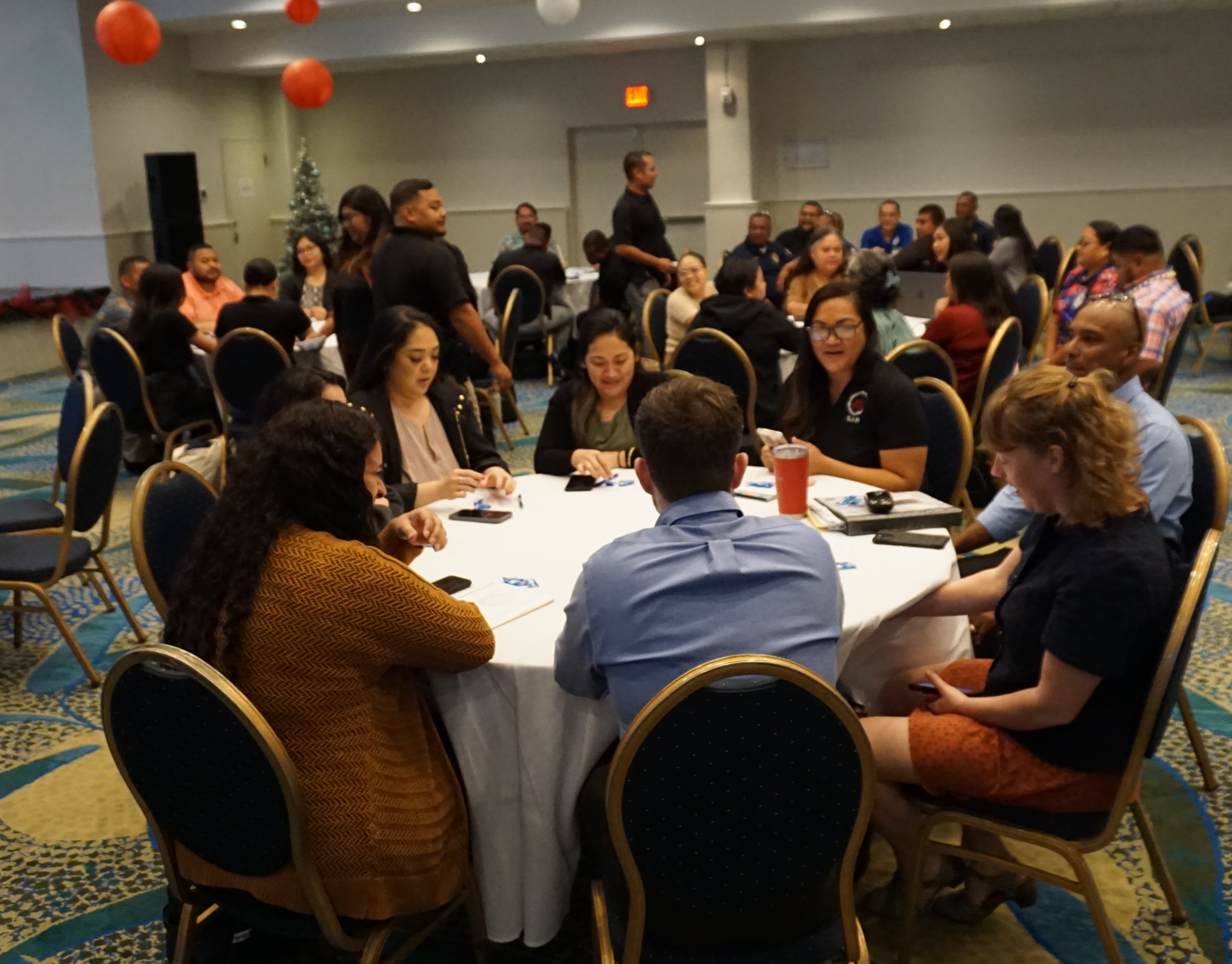
Drug Court Summit participants take part in an “ice breaker” activity.
COMMONWEALTH Supreme Court Justice Perry Inos said the First CNMI Drug Court Summit at Crowne Plaza Resort Saipan on Thursday was “a convergence of minds, spirit, and dedication toward a noble cause — the pursuit of justice intertwined with compassion.”
The summit participants included judiciary officials, law enforcement officers, emergency responders, healthcare providers, social services, and advocacy group members.
“We confront one of today’s pressing challenges, substance abuse, and its profound impact on individuals, families and communities; and we see them, and we know them by name,” Inos said in his remarks.
“This summit embodies hope, a beacon that illuminates our shared commitment to foster innovative strategies that prioritize rehabilitation over incarceration, understanding over judgment, and healing over retribution,” he said.
“Let us remember the faces behind the statistics. The individuals whose lives can be positively impacted by the decisions, and initiatives that emerge from our discussions and dialogue. Let their stories guide our actions and decisions, infusing compassion and empathy into every policy, every intervention, and every judgment that we make,” Inos added.
For her part, Drug Court Judge Teresa Kim-Tenorio said the summit aimed to engage community partners “and to give an update on the best practice standards so that the program continues to operate efficiently.”
In an interview, the judge said among the challenges that the drug court is facing right now is the lack of treatment professionals.
“We are gaining more treatment professionals, but we are still lacking. The thing is, the more you learn, the more you realize things, and so we are learning that the community we treat perhaps has more needs than we realize. We are trying to respond to that need, and of course the biggest pressure is on our treatment providers, and our treatment community,” she said.
“The reason why drug court has participants is because they have committed a crime, but obviously there’s a big population afflicted with addiction, and some of them are in family court, some are on probation, some are in the federal court system, or some are just walk-ins, and meeting all their needs and understanding their needs is crucial. Our treatment providers are at the forefront and they really are the heart of the program, and I always thank them for everything that they do because I realize that the challenges they face are huge and they are always continuing to educate themselves, continuing to update their skills so they can give the best services to our participants.”
Kim-Tenorio herself recently participated in a training specifically for judges.
“It amazes me — although I have been doing this now for seven years, I [still] learn something new. [Training sessions] update our skills, update our best practice standards. They tell us, ‘We need to switch gears, we need to do this.’ Before, the drug of choice was this, but now it’s this. And this is what’s happening now with added ingredients — different drugs are being mixed together,” the judge said.
“Why is this summit important? Do you believe people deserve a second chance? Absolutely. [Addiction is] a disease, it’s a brain disease. Unfortunately, the behavior that manifests from drug addiction is not positive, and so our people in the community treat it as a moral failure, whereas when you have a physical illness, such as diabetes or whatever disease it may be, people think, ‘Oh, it’s a medical condition, it’s not their fault.’ But with drug addiction, unfortunately it’s a crime to feed drug addiction. The way we treat people with a brain disease is different from the way we treat people with a physical disease,” Kim-Tenorio added.
The local drug court program was created in December 2016 as a “collaborative, non-adversarial system to affect the rehabilitation and recovery of drug offenders through continuous court monitoring, regular drug testing, and holistic treatment for drug dependency.”
The drug court’s stakeholders include the HOPE Recovery Center, the Community Guidance Center, the Commonwealth Healthcare Corp., the Department of Corrections, the Department of Public Safety, the Department of Labor, the Office of the Attorney General and the Public Defender’s Office.
