




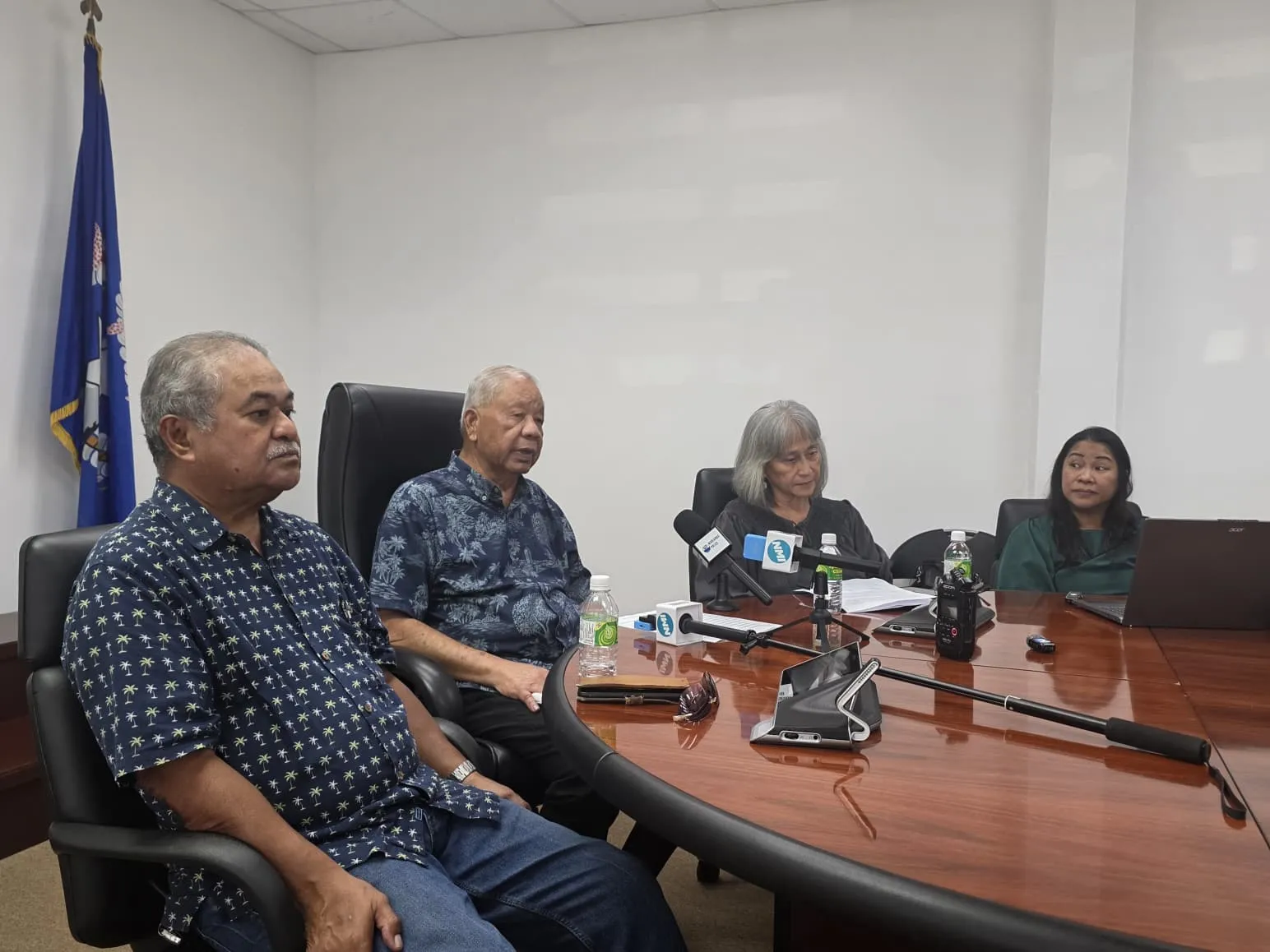


Expressing his personal opinion on the issue, CPA comptroller Derek Sasamoto said, “Regarding the shutdown, it does not affect CPA’s operations as we do not receive operational funding from the FAA.”
He added, “The FAA shutdown should not affect CPA’s revenues, unless it leads to the stoppage of airline flights which I doubt will be allowed to happen.”
Sasamoto said the effects will depend greatly on the length of the shutdown.
“If the shutdown is prolonged, adverse effects may be felt on the current projects,” he said.
Variety tried but failed to obtain feedback from CPA Executive Director Edward M. Deleon Guerrero.
President Obama called the standoff between the U.S. Senate and U.S. House of Representatives on the FAA shutdown “a lose-lose-lose situation that can be easily solved if Congress gets back into town and does its job.”
The president believes that the House and the Senate could, through a procedural agreement, do this through unanimous consent. He asked the lawmakers not to put the livelihoods of thousands of people and projects at risk.
On Saipan, the Commonwealth Ports Authority annually receives funding from the FAA for major projects at the airport.
CPA has $59 million in projects authorized by the FAA for fiscal year 2011 as reported by CPA Executive Director Deleon Guerrero at the Saipan Chamber of Commerce in March this year.
He said the projects included the FAA authorized purchase of four new fire trucks for the CNMI: two for Saipan and one each for Rota and Tinian.
Variety asked the FAA about the possible cuts in funding for fiscal year 2012 and if it would have repercussions on projects in the CNMI.
FAA public affairs manager Ian Gregor told Variety: “We can’t answer any of them at this time because we do not know what our future funding situation will be.”
Earlier, Variety reported the FAA’s anticipation of a $4 billion cut in its funding for the coming fiscal year.
FAA administrator for the Western Pacific Region William Withycombe expressed the FAA’s concern in sustaining the Airport Improvement Program, or AIP, in the territories of Guam and Northern Marianas as well as in the Freely Associated States: the Marshall Islands, Palau, and the Federated States of Micronesia — Chuuk, Kosrae, Pohnpei and Yap.
Withycombe told reporters on Saipan during the Pacific Aviation Directors Workshop that a budget cut had been proposed and if FAA’s budget was cut, some projects could be shelved.
For Withycombe, airports are important economic engines for the islands and their tourism-based economies.
Since July 23, the FAA has been shut down and this may extend up to September.
With the shutdown, FAA fails to collect $28.6 million a day in aviation taxes since midnight on July 22 and it stands to lose $1.2 billion by early September if the U.S. Congress fails to resolve the crisis.
Although safety is not compromised, it was reported that about 4,000 FAA employees and about 70,000 workers in FAA construction projects have been on furlough since then.
With the shutdown, airlines will no longer be collecting ticket taxes, revenues estimated at $200 million a week that should have gone to a trust fund to defray cost of infrastructure projects.
It was reported that the U.S. House and the Senate could not agree on the $16.5 million cut in rural air service subsidies.
