




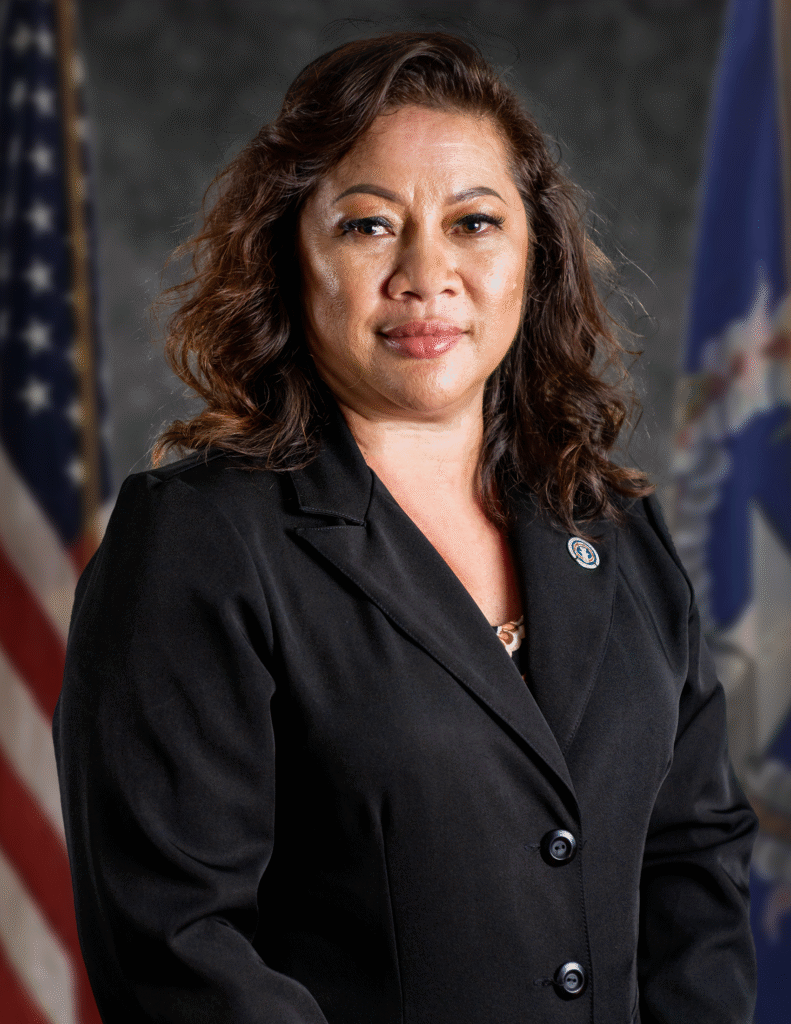
Julie Ogo
ROTA Rep. Julie A. Ogo is seeking an audience with the U.S. Congressman Gregorio Kilili Sablan in hopes of finding a solution, through federal aid, to address the sudden decision of the Commonwealth Ports Authority to increase passenger fees thereby driving the price of inter-island travel higher and unaffordable, even for the government to provide necessary medical care to the people of Rota and Tinian.
“It will escalate the cost of medical referrals and practically bring our tourism industry to its knees,” Ogo said.
“While I do understand the need to resolve budgetary challenges for the Commonwealth Ports Authority to effectively operate, I do question the wisdom of this decision at a time when the CNMI is still trying to recover economically from the impact of the Covid-19 pandemic and natural disasters,” she added.
Ogo said difficulty in resolving this challenge may be the lack of communication between the CPA board of directors and the CNMI leadership to collaboratively work toward a resolution.
“We need to seek and tap into whatever federal subsidy that may be available to the CNMI, and diligently move forward to acquire that critical Essential Air Service designation because the CNMI government simply cannot find extra funding to subsidize the landing fee to keep the cost of air transportation at the present level, at least,” Ogo said.
According to the U.S. Department of Transportation’s Small Community and Rural Air Services:
“The Airline Deregulation Act, passed in 1978, gave air carriers almost total freedom to determine which markets to serve domestically and what fares to charge for that service. The Essential Air Service program was put into place to guarantee that small communities that were served by certificated air carriers before airline deregulation maintain a minimal level of scheduled air service. The United States Department of Transportation is mandated to provide eligible EAS communities with access to the National Air Transportation System. This is generally accomplished by subsidizing two round trips a day with 30- to 50-seat aircraft, or additional frequencies with aircraft with 9-seat or fewer, usually to a large- or medium-hub airport. The Department currently subsidizes commuter and certificated air carriers to serve approximately 60 communities in Alaska and 115 communities in the lower 48 contiguous states that otherwise would not receive any scheduled air service.”
In April of this year, Congressman Kilili presented the CNMI’s case to the U.S. House Committee on Transportation, requesting regulatory exemptions that would open the pathway for the CNMI to participate in the Essential Air Service program.
Representative Ogo wants to discuss this with Congressman Kilili and see how the CNMI local leadership can assist in this endeavor.
