






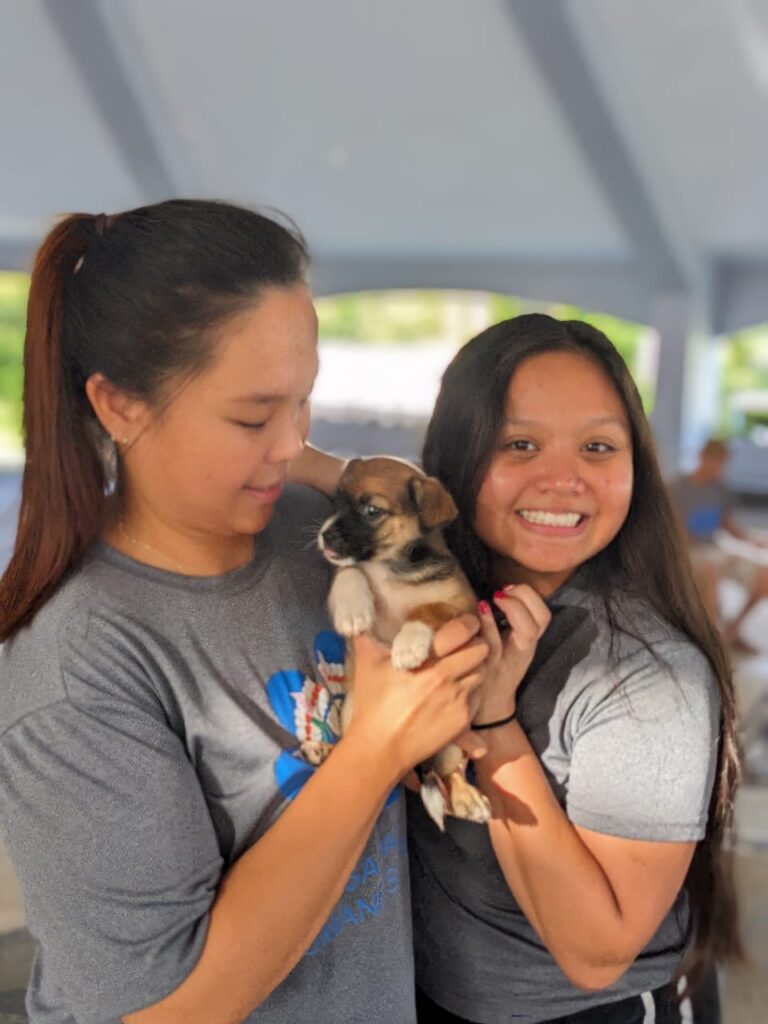
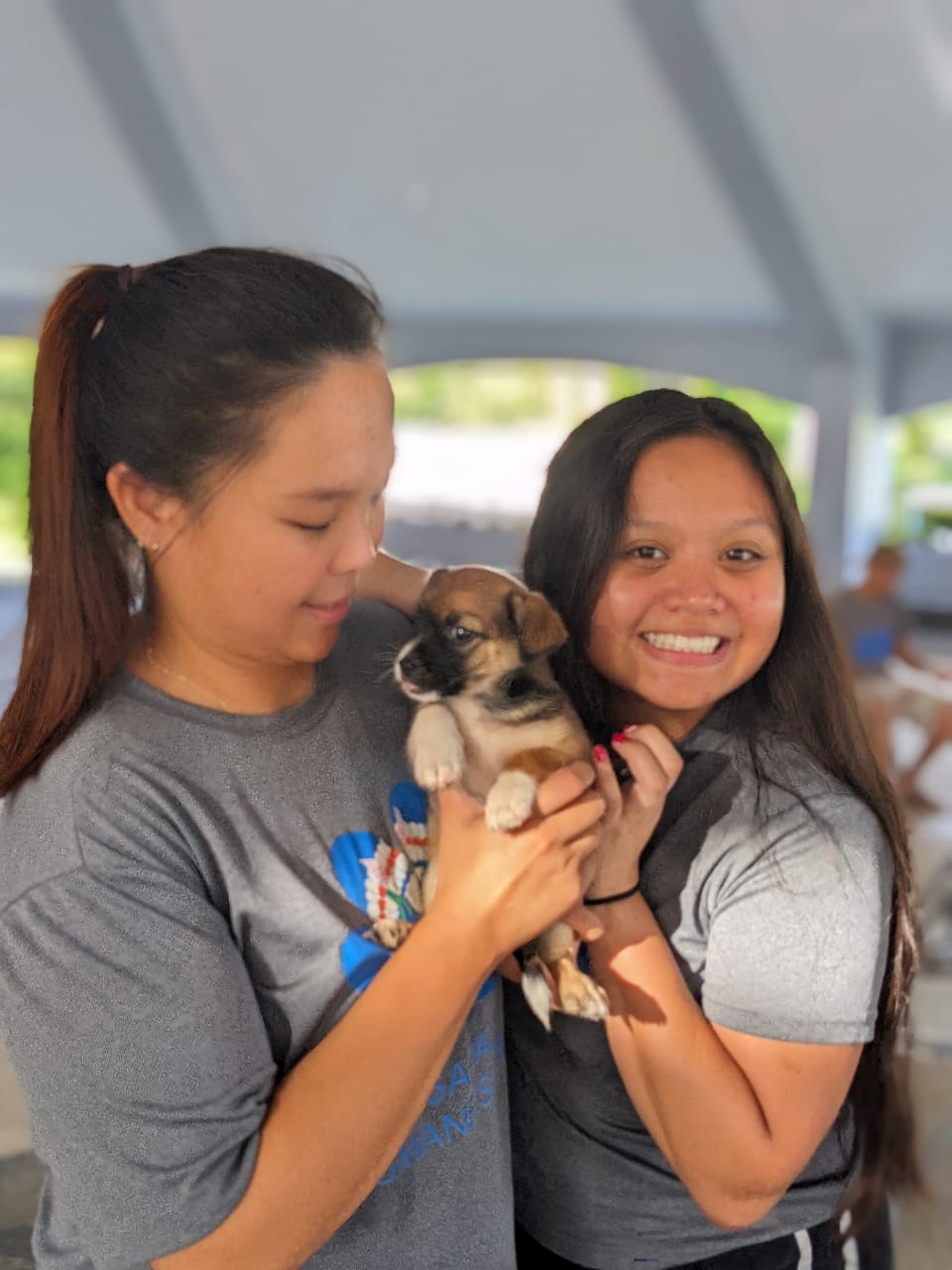
Saipan Humane Society Clinic Manager Ruby Ma, left, and staff member Jehniffer Villagomez pose with a puppy during an animal clinic on Rota in Dec. 2023.
SAIPAN Humane Society President Lauren Cabrera said they helped 3,391 pets in SHS’ first year of existence, while also supplying around 1,800 flea/tick medication doses; 1,200 dog and cat vaccines; and 600 sick and wound care visits.
Clinic manager Ruby Ma said SHS was formed in Feb. 2023 with two volunteer staff members — Ma and Cabrera. Today, SHS has four full time employees and one part-time staff.
Initially, SHS began with a mission to expand spay and neuter clinical services on island.
“In 2014 there was a dog population count which showed roughly 21,000 dogs on Saipan,” Cabrera said. “This is a huge number of dogs for such a small island. The population growth is primarily due to lack of access to consistent spay and neuter services, and allowing pets to roam freely and reproduce.”
When Saipan Cares For Animals, a separate non-profit organization, closed its full-time operations, SHS found itself providing other animal care services as well.
Next month, SHS will offer a two-week spay and neuter clinic with visiting veterinarian Dr. Jessica Nelson.
Registration has been ongoing since Jan. 10.
As SHS’ anniversary nears, Cabrera said they are looking to “partner with larger organizations to do some large-impact spay and neuter clinics in the coming years.”
But a large challenge SHS faces is the lack of a veterinarian.
Cabrera said it would be “very challenging” for a veterinarian to set up a full-time operation on Saipan. Veterinarians can rack up as much as $100-$200,000 in student loan debt in the course of their study, she added.
“It is hard to compete with these more lucrative mainland jobs, when a veterinarian here would not only have to work very hard, but also build and manage their clinic, trying to make ends meet,” Cabrera said.
She also noted that nationwide, there is a “projected shortage of 15,000 veterinarians by 2030.”
Cabrera is currently working on obtaining a veterinary professional associate degree, which would enable her to provide animal health services and basic surgery such as spay and neuter procedures.
However, she said even with this degree, the CNMI would still have a need for a full-time veterinarian.
Cabrera said part of SHS’ initiative is to bring licensure for veterinary technicians to the CNMI. She said veterinarian techs are “essentially the nurses of veterinary medicine.”
“On an island with no animal doctor, it is imperative to lean on a skilled support team to increase access to animal health care,” she said. “We are working to find scholarships for one of our staff to attend a full veterinary technician program and then practice at the top of the veterinary technician license by performing diagnostic procedures, assessments of animals, education for families, and more.”
Cabrera and Ma said they welcome volunteers to augment the work being done by the SHS staff, who partner with the Dog Control Program officers of the Saipan Mayor’s Office.
Cabrera said they will train volunteers “with hands-on tasks” that will likely involve handling dogs and cats. Otherwise, volunteers will be helping organize files or taking inventory.
Behind the scenes, Cabrera said SHS often works 40 or more hours a week. Some of that is spent on fundraising, grant writing, and strategizing “to ensure the sustainability of our clinic,” she added.
“Animal health services and visiting volunteer veterinarians cost a lot of money, but our community has limited funds and the economy is hurting. Many families want to care for their pets, but simply cannot afford full-cost veterinary services. We aim to ensure our services are accessible to all,” she added.
