





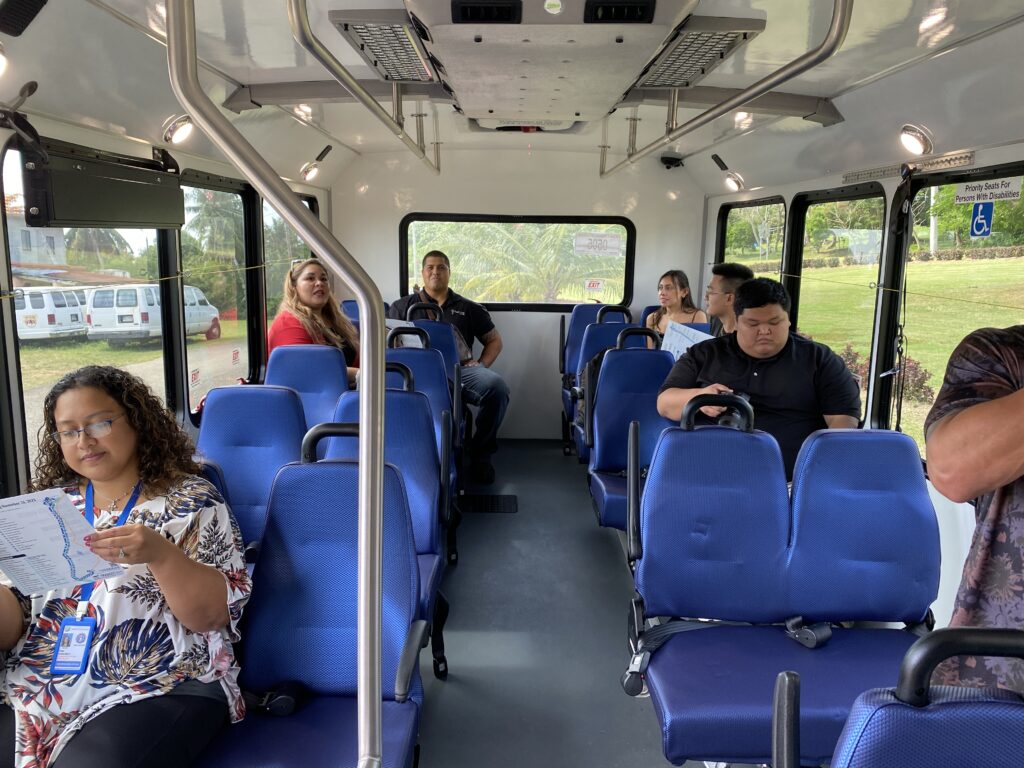
AHEAD of a scheduled Nov. 24 official launch, Transit CNMI arranged for a media ride on Nov. 17, Friday to demonstrate how Saipan’s latest mass transit system will operate when it opens to the public.
Headed north, the bus route began in Koblerville, across from Tottotville Estates and traveled through San Antonio, Chalan Piao, Chalan Kanoa, Susupe, Oleai, Quartermaster and Garapan.
Major northbound stops included the Koblerville basketball court, the NMI Soccer Training Center, Pakpak Beach, the Pacific Islands Club, Hopwood Middle School, Mount Carmel Cathedral, Joeten Susupe, the Saipan Mayor’s Office, Hardt Eye Clinic, Marianas Eye Institute, Kristo Rai Church, T-Galleria, I Love Saipan, Crowne Plaza, and the terminal stop at American Memorial Park. In total, the northbound route had 33 stops.
From American Memorial Park, the Blue Line 1B route headed to Paseo De Marianas, Hotel Street, Crowne Plaza Resort, Joeten Garapan, Garapan Fishing Base, the TSL Plaza and back to the Tottotville Estates. In total, there were 31 southbound stops.
For a full list of stops on the Blue Line 1B route, visit transit.cnmi.gov/.
Special Assistant for Transportation Alfreda Camacho Maratita said the new mass transit line was drawn up after assessing Route 1A, which used to begin at Northern Marianas College.
Route 1A was a “pilot program” for Transit CNMI that was postponed in 2019.
Maratita said Transit CNMI realized the route that would become 1B would have “more traction” and so they decided to launch it as the first bus route for the general public.
The bus route begins at 6:30 a.m. and concludes at 8:30 p.m.
A northbound bus and a southbound bus will run at the same time, picking up and dropping off passengers.
Maratita said one bus will be on standby as two other buses work the route.
Each bus can accommodate up to 20 people at a time, and is fully compliant with the Americans with Disabilities Act guidelines. All buses feature a lift to accommodate passengers in wheelchairs.
Two wheelchairs can be accommodated inside the bus. If a third passenger with a wheelchair requires bus service, the bus driver will contact an alternate bus to pick up the passenger.
Additionally, a bike rack at the front of the bus can accommodate two bicycles.
Passengers must be seated and buckled up, Maratita said. Current law must be amended to allow riders to stand and hold onto the rails inside the bus, she added.
She said the biggest challenge at this time is the construction taking place on Beach Road. She expects delays to occur at peak traffic hours as some sections of Beach Road are closed.
However, she said, for the rest of the year, there is no charge to ride the route so community members can familiarize themselves with the way the bus operates, and bus drivers can monitor the needs of mass transit clients.
Beginning on Jan. 1, 2024, rides will cost $1 for the general public, and 50 cents for veterans and their families, people with disabilities, and students.
Maratita said the transit line can be a low-cost “blessing” for community members who need to transit, but do not have access to a car or do not want to ride a taxi.
“Everyone that needs to get to and from their doctor’s appointments, their school, places of leisure, grocery shopping…just everything and anything that you want to enjoy on the island of Saipan — we’re basically here to connect our people,” Maratita said.
Transit CNMI is funded by the Bus and Bus Facilities Program of the Federal Transit Administration.
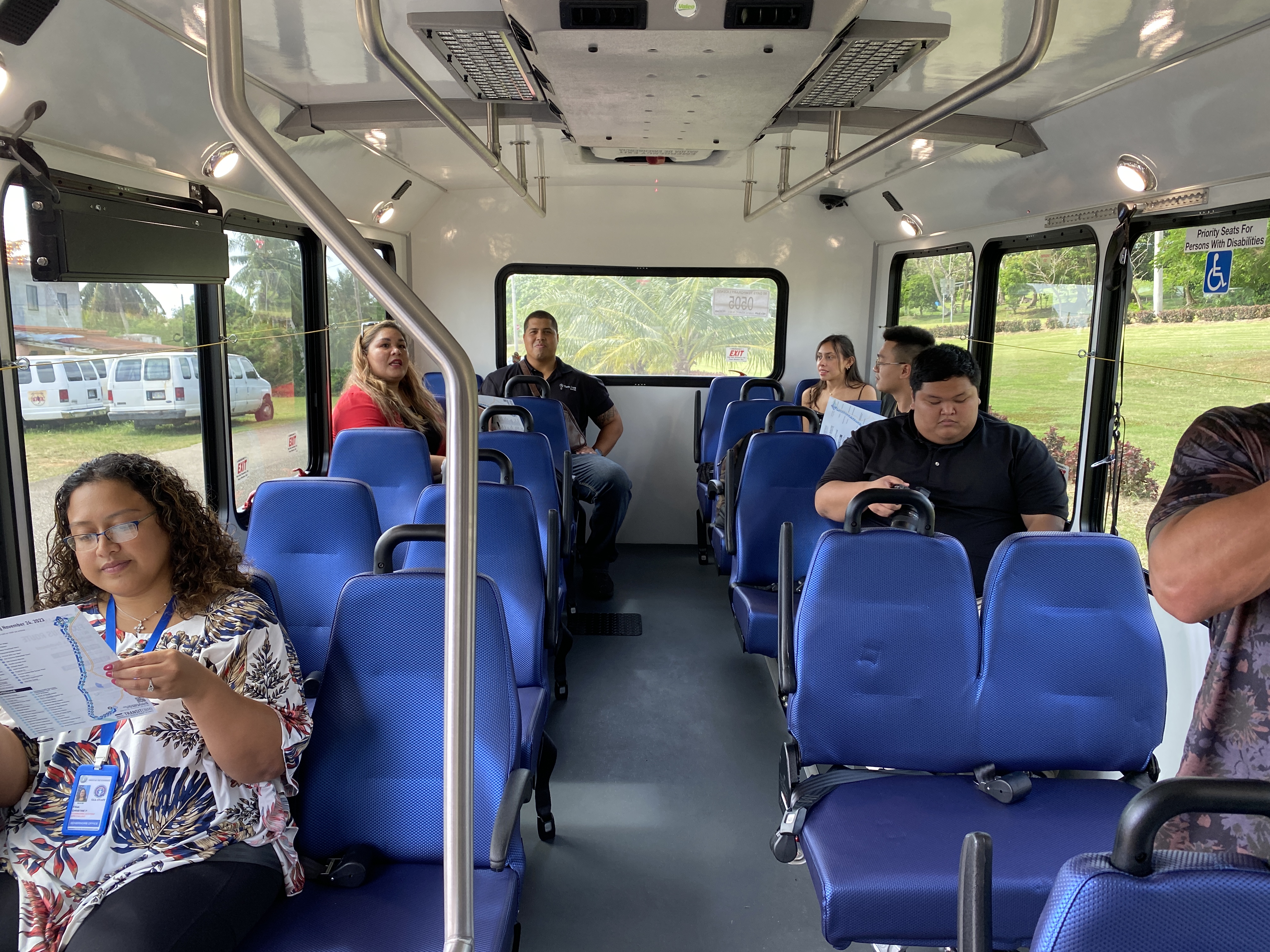
One Transit CNMI bus can accommodate 20 people.
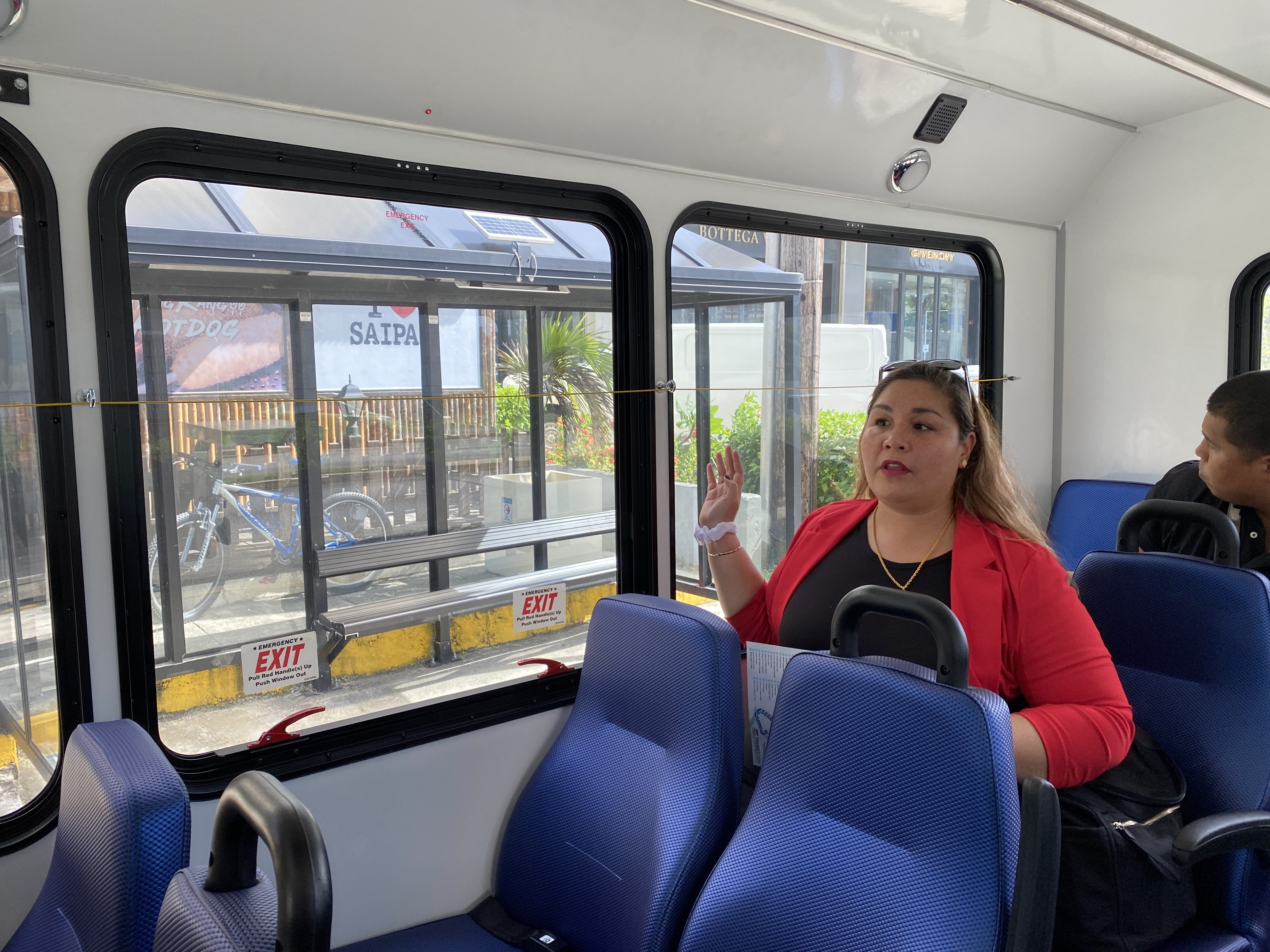
Special Assistant for Transportation Alfreda Camacho Maratita gestures as the bus stops at a bus shelter at I Love Saipan.
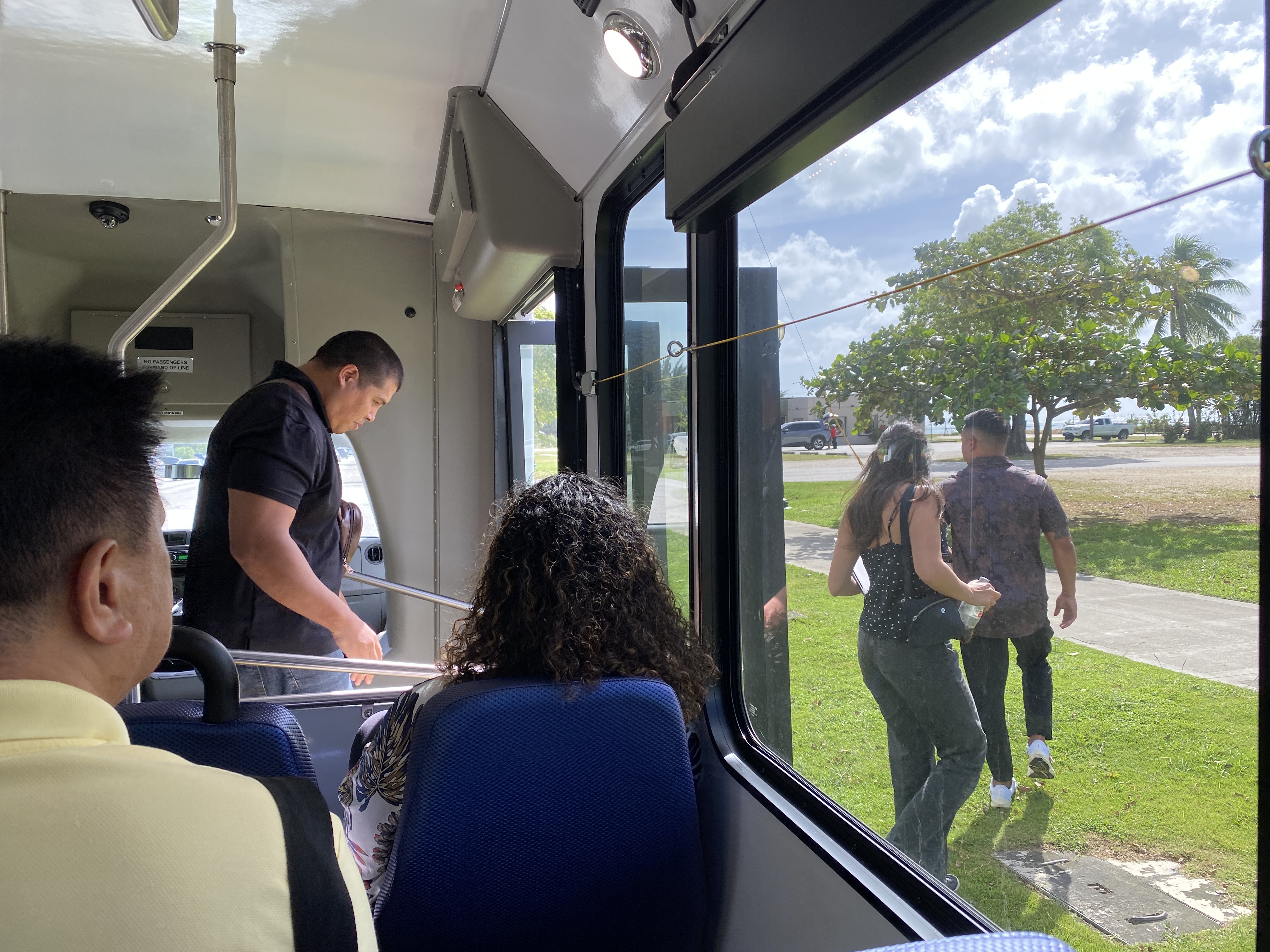
The staff of Turn Key Solutions, who were on the media ride, get off at the Garapan Fishing Base southbound stop, and walked to their nearby office.
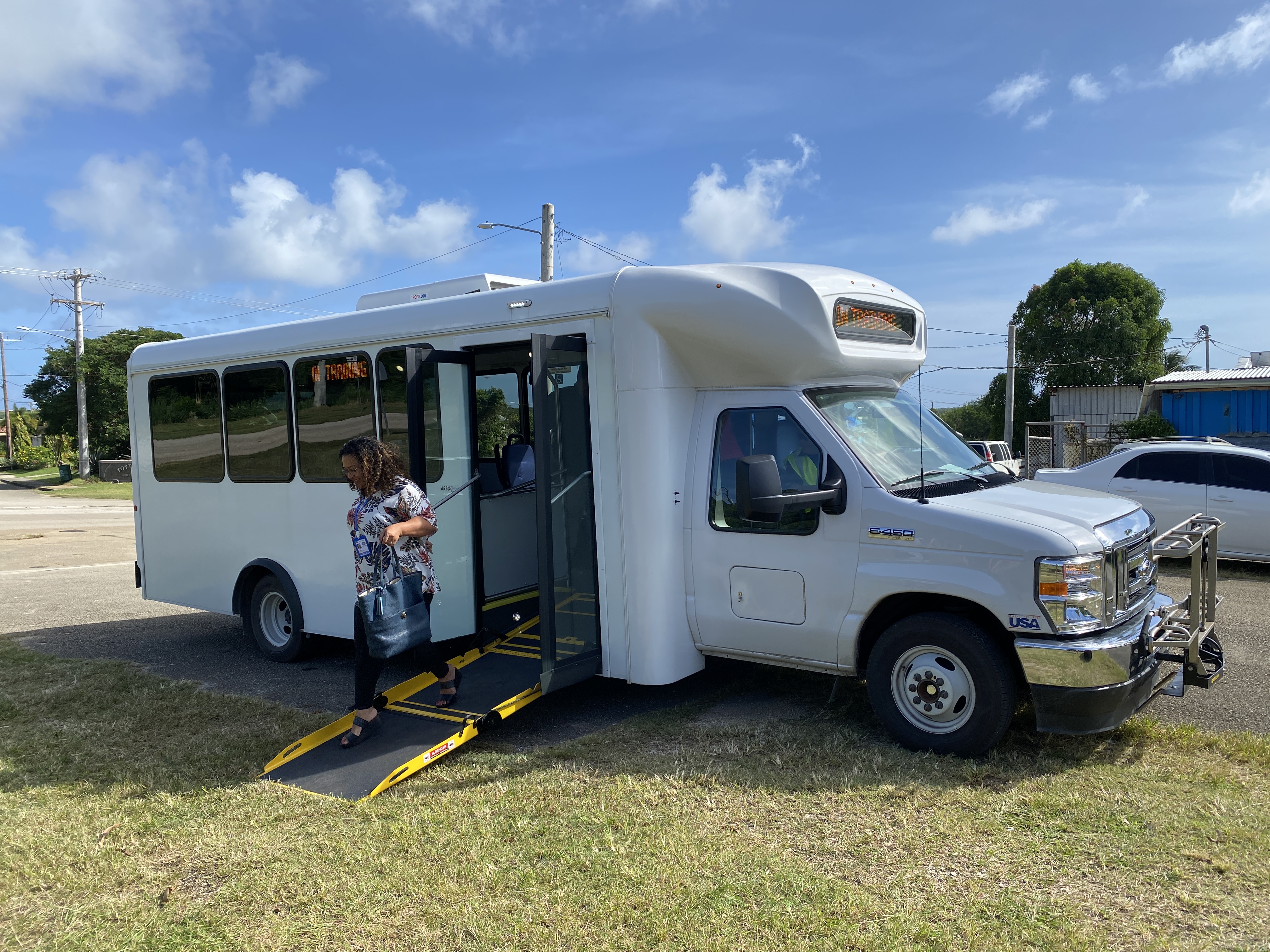
Transit CNMI buses feature ramps for wheelchairs
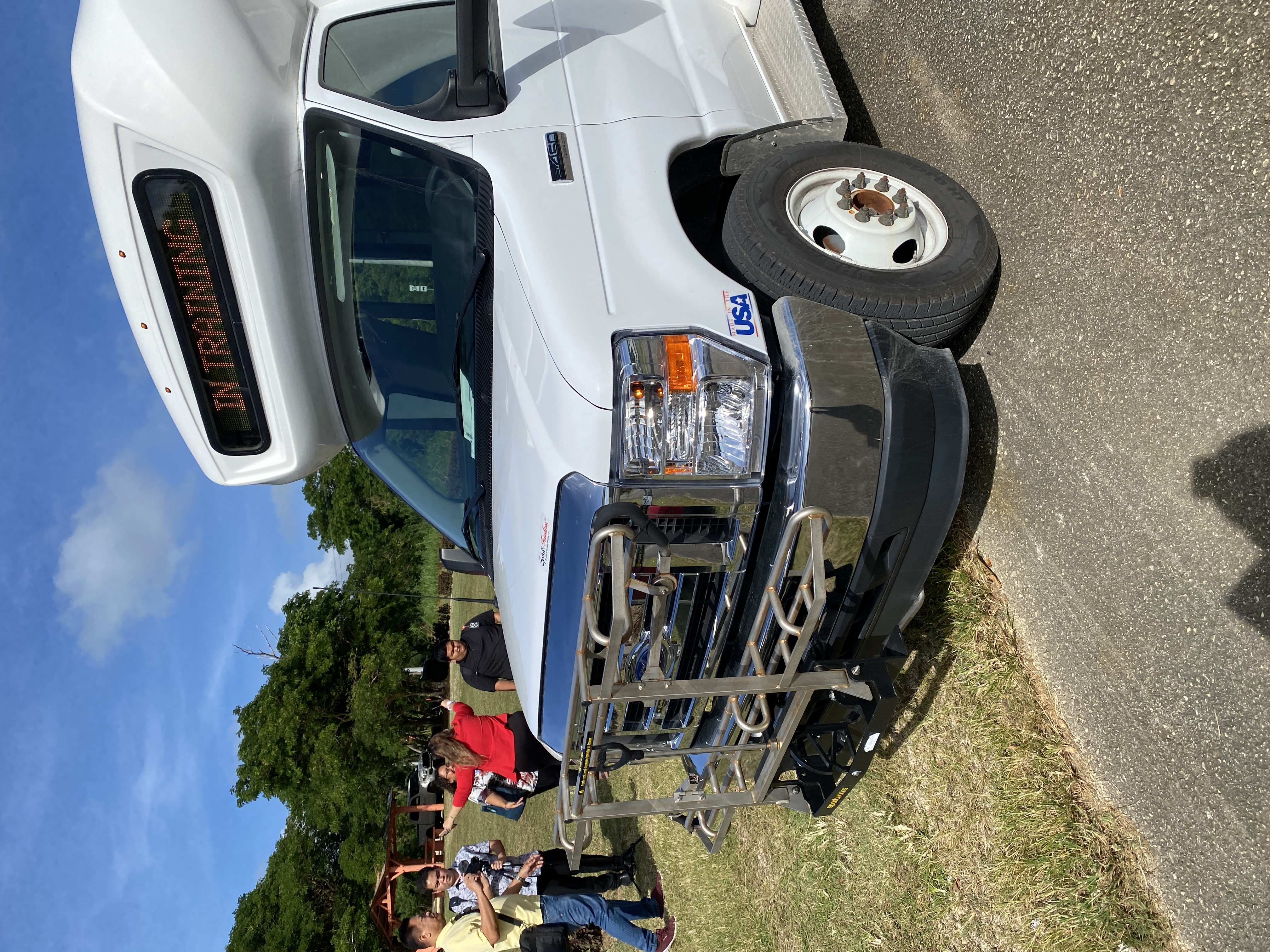
This bike rack can fit two bicycles.
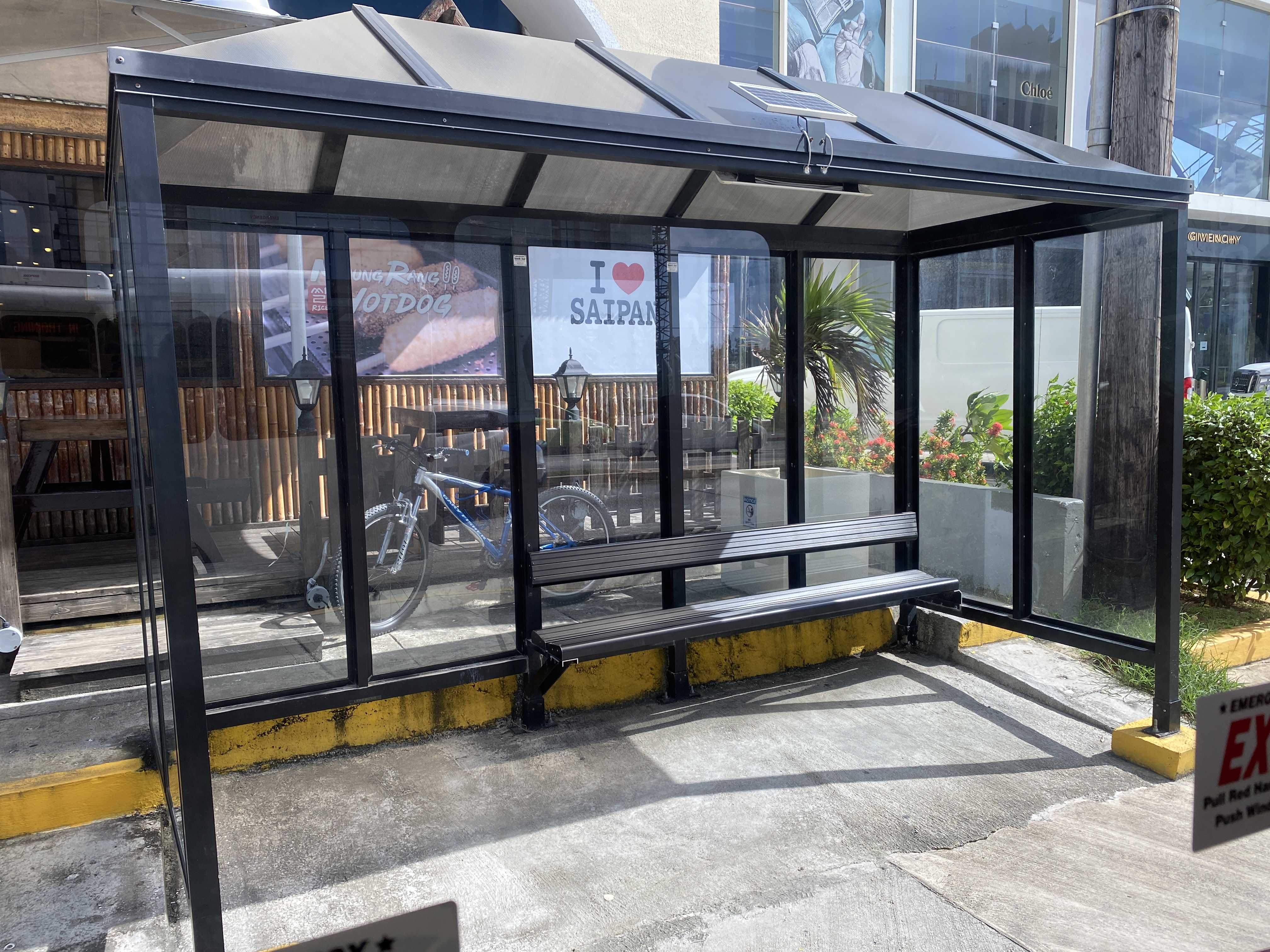
Bus shelters like this one at I Love Saipan will be erected at other sites along the bus route.
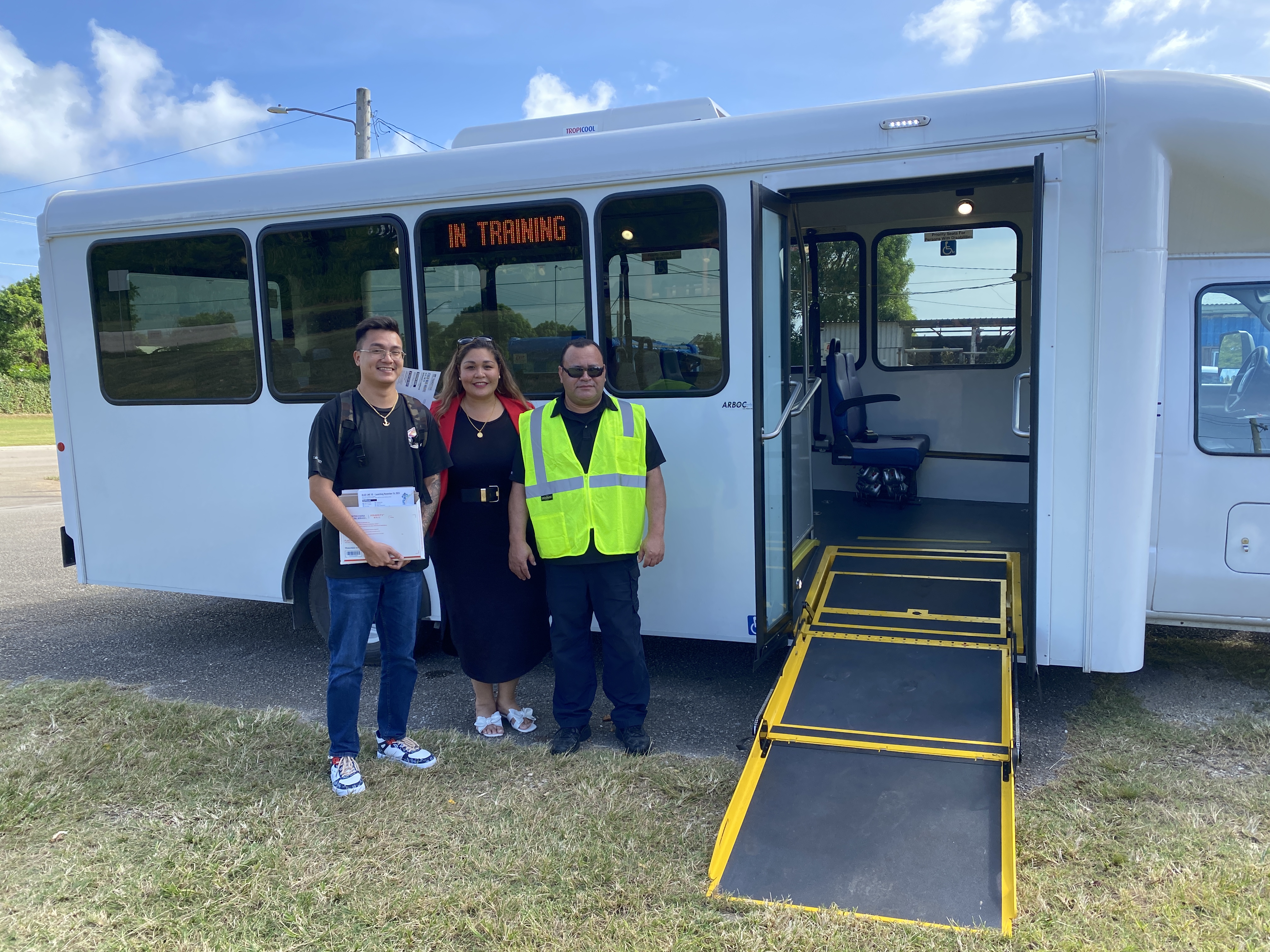
From left, Nicolas Aldan, Alfreda Camacho Maratita, and Ernie Bell, the bus driver.
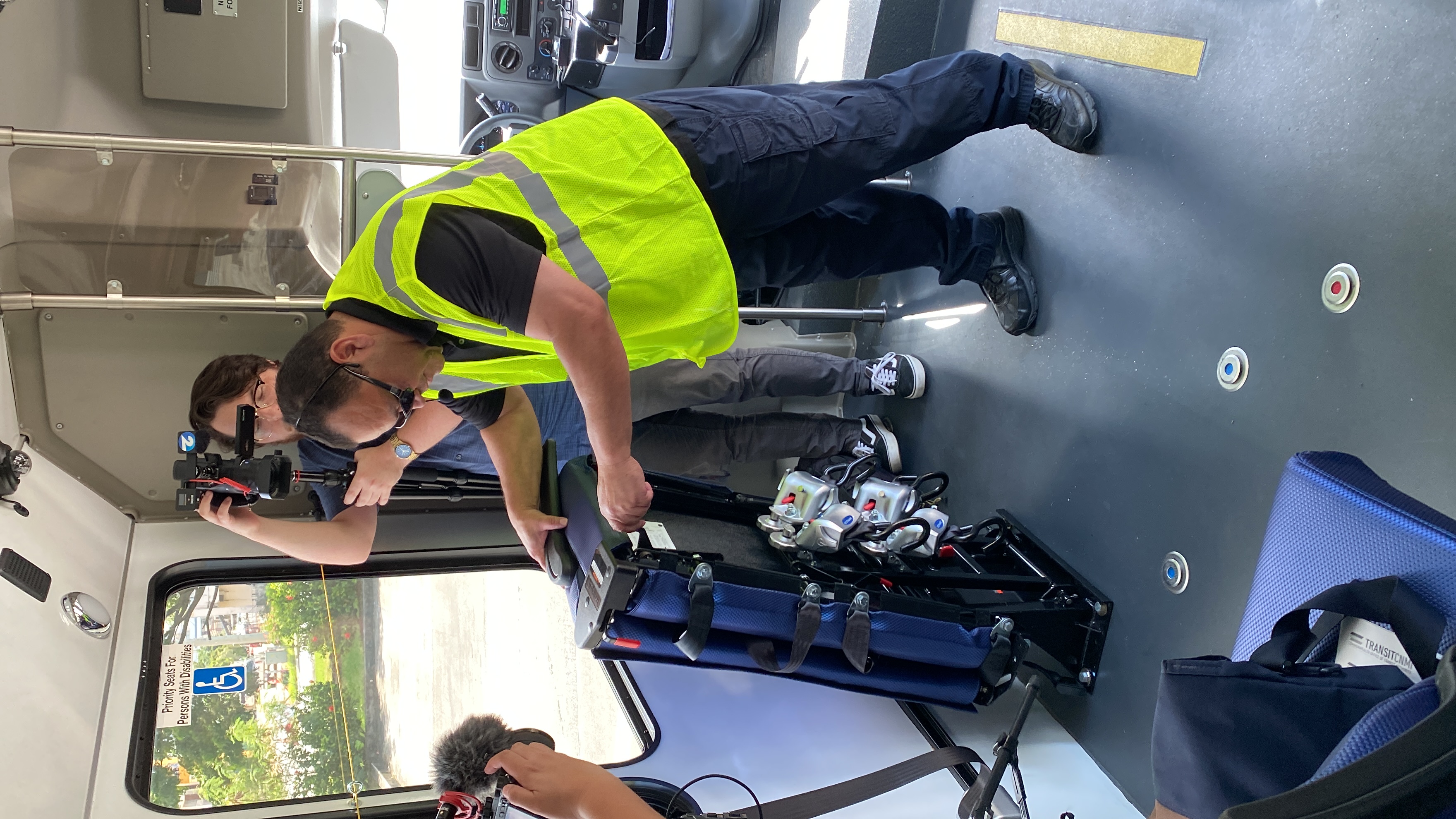
Ernie Bell, the bus driver, folds a pair of bus seats to demonstrate how he would accommodate a passenger with disabilities.
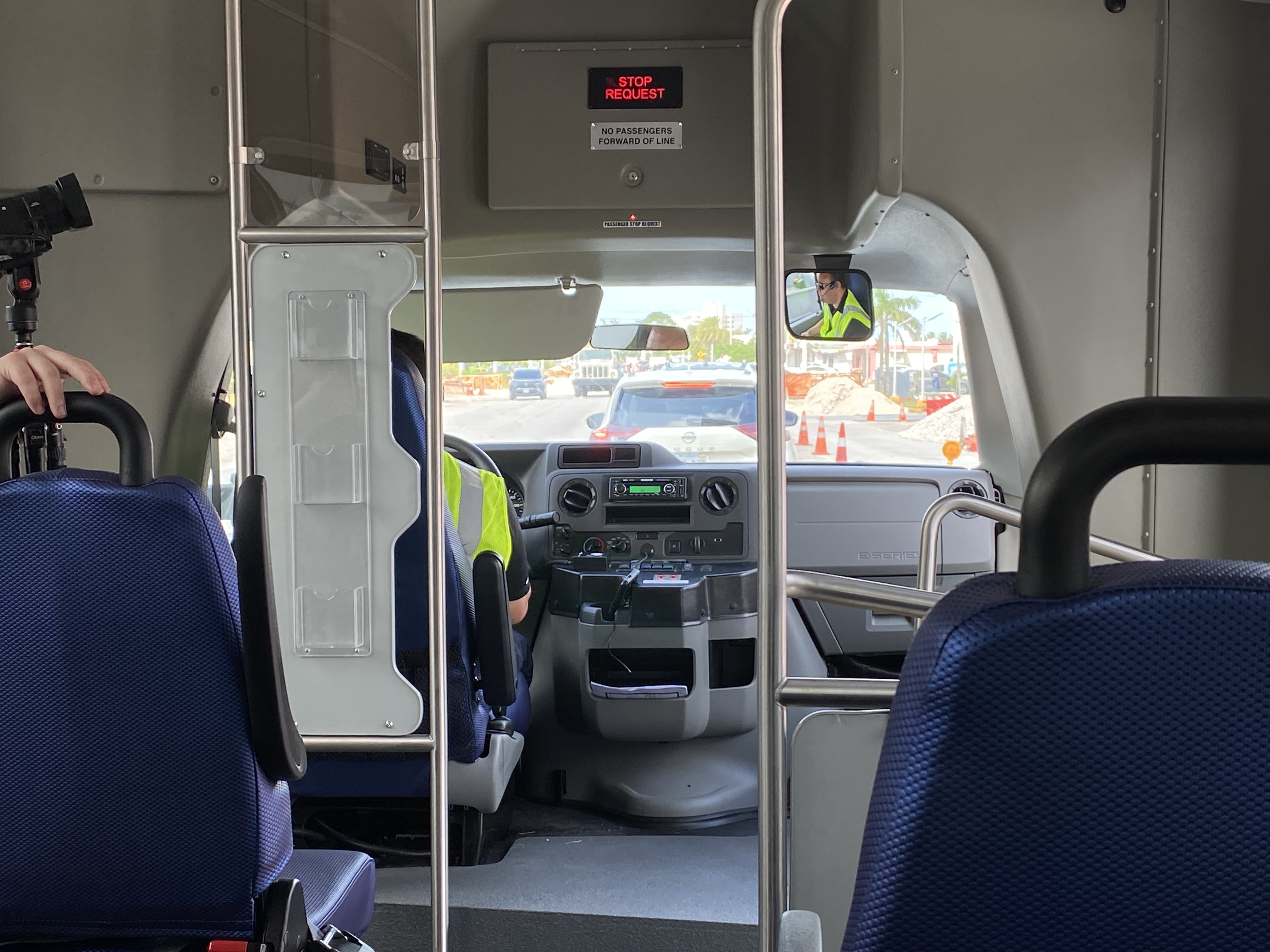
Traffic delays are expected during peak hours, as construction on Beach Road continues.
