



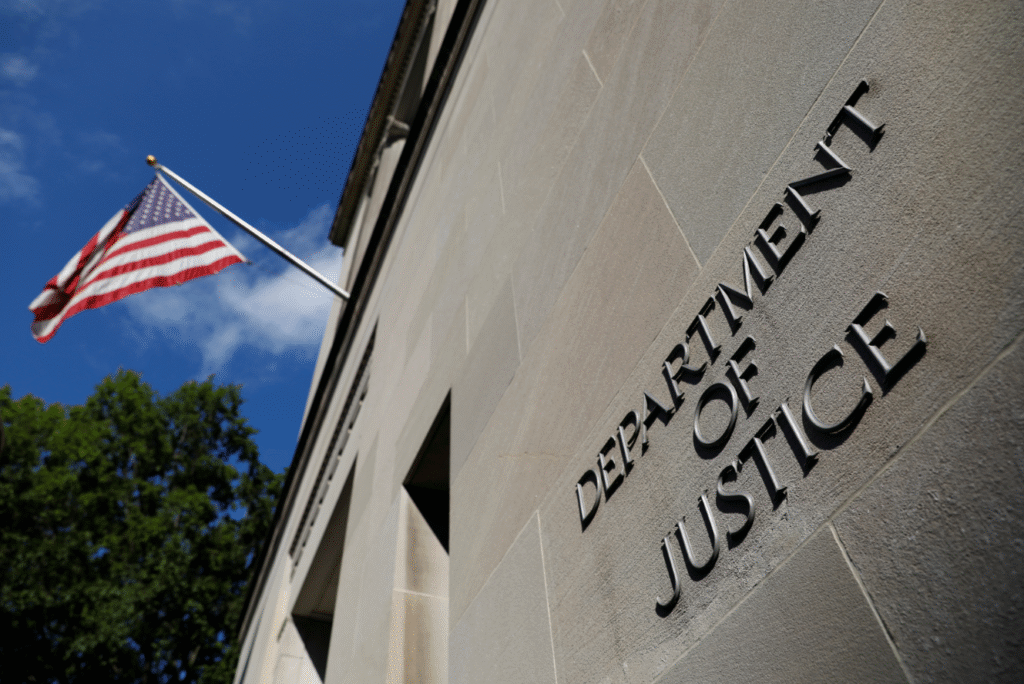
THE U.S. Department of Justice, Civil Division, Office of Immigration Litigation, has asked the District Court for the NMI to dismiss the complaint of Sukesh Chandra Barman, saying that the court lacks jurisdiction to review the denial of his CNMI long-term resident application.
Barman, represented by attorney Joseph Horey, filed for a complaint of judicial review, declaratory and injunctive relief against U.S. Citizenship and Immigration Services.
Barman requested the court for a judicial review of USCIS’ denial of his CNMI long-term resident application.
The lawsuit named Rebecca Maliuwelur, in her official capacity as director of USCIS’ Guam field office, as respondent.
Barman wants the court to issue an order declaring that his application for CNMI long-term resident or NM-1 status met all the statutory criteria of eligibility for such status as set forth in the Northern Mariana Islands Long-Term Residents Relief Act or U.S. Public Law 116-24.
The plaintiff also wants the court to order the USCIS Guam field office to approve his application and grant him NM-1 status, and to issue to all him all appropriate documentation evidencing such status.
But according to U.S. DOJ Attorney Samuel Go, the U.S. Congress amended 48 U.S.C 1806 in passing the Northern Mariana Islands Long-Term Legal Residents Relief Act.
The amended provision allowed long-term residents of the CNMI that qualified pursuant to the amended 48 U.S.C. § 1806(e)(6)(B) to “be admitted in CNMI resident status to the Commonwealth” subject to certain rules, Go said.
He said, “Congress also amended 48 U.S.C. § 1806(e)(6)(D), which states: (D) JUDICIAL REVIEW.—Notwithstanding any other law, no court shall have jurisdiction to review any decision of the Secretary of Homeland Security or the Attorney General on an application under this paragraph or any other action or determination of the Secretary of Homeland Security or the Attorney General to implement, administer, or enforce this paragraph.”
According to Go, “While Congress provided for certain CNMI residents to obtain NM-1 status in enacting 48 U.S.C. § 1806(e)(6), it expressly divested federal courts of jurisdiction to review denials of NM-1 applications in enacting 48 U.S.C. § 1806(e)(6)(D). Accordingly, as 48 U.S.C. § 1806(e)(6)(D) expressly divests this court of jurisdiction to review the denial of Plaintiff’s NM-1 application, this court should dismiss this case for lack of subject matter jurisdiction.”
Horey said the “grant of NM-1 status to plaintiff was unlawfully withheld by the [USCIS Guam field office] Director, and the denial of his application was short of statutory right and not in accordance with law. In particular, the Director’s finding that Plaintiff had not ‘resided continuously and lawfully’ in the CNMI for the requisite time period was erroneous as a matter of law and resulted from a misconstruction of the Relief Act.”
Background
On or about June 25, 2019, the Northern Mariana Islands Long-Term Residents Relief Act or U.S. Public Law 116-24, having been enacted by Congress, was signed into law by President Donald Trump.
The Relief Act established a new federal immigration status, known as NM-1, for long-term residents of the CNMI who met certain qualifications.
Persons with NM-1 status are authorized to reside and work in the CNMI indefinitely without necessity of any other immigrant visa or work visa.
NM-1 status was available for a limited time only. USCIS only accepted applications for such status between Feb. 19, 2020 and Aug. 17, 2020.
Barman’s eligibility
Barman applied to USCIS for NM-1 status on or about April 29, 2020, thus within the limited window of availability, his lawsuit stated.
His application for NM-1 status was denied by the USCIS Guam field office director on Dec. 30, 2021.
He sought reconsideration of the denial on March 22, 2022, but it was denied by the director on Oct. 14, 2022.
“The action of the Director was final and administratively unappealable, and is therefore ripe for judicial review,” Barman’s lawsuit stated.