





CHARLOTTE, N.C (TNS) — A group of former U.S. officials arrived in Taiwan to meet outgoing President Tsai Ing-wen, talks that will test the recent improvement of ties between Washington and Beijing following a pivotal election on the island.
Former National Security Advisor Stephen Hadley and ex-Deputy Secretary of State James Steinberg will meet Tsai on Monday morning, her office said in a text message.
The U.S. group would “have an in-depth exchange of views with us on various important issues and future prospects for Taiwan and the U.S.,” the Foreign Ministry in Taipei said in a statement.
The delegation is likely to also meet Vice President Lai Ching-te, whom Beijing brands a “separatist,” though no official announcement has been made. Lai’s election victory on Saturday means that in May he’ll assume the presidency of the island China has pledged to bring under its control, by force if necessary.
The U.S. usually sends a delegation to Taiwan after presidential elections.
Beijing and Washington are already bickering over the results of the election, which saw Hou Yu-ih of the Kuomintang, China’s preferred negotiating partner in Taiwan, finish second. A third candidate who pledged to try to talk with Beijing came in third.
Secretary of State Antony Blinken said the election showed the strength of Taiwan’s “robust democratic system” and said the U.S. would work with him and all party leaders in Taiwan “to further our longstanding unofficial relationship” consistent with the U.S.’s one-China policy.
China, which opposes other nations having contact with the government in Taipei, hit back, saying it lodged a diplomatic complaint with the U.S. over the comments. China’s Foreign Ministry also said Washington should “stop sending any wrong signals to the ‘Taiwan independence’ separatist forces.”
China’s foreign minister, Wang Yi, said later said that the vote result doesn’t change the fact that Taiwan is part of China, the official Xinhua News Agency reported.
“China will eventually achieve complete reunification and Taiwan will return to the embrace of the motherland,” Wang said.
After the election, President Joe Biden reiterated the U.S. stance that it does not support independence for Taiwan, a comment likely aimed at easing China’s concerns.
Biden’s meeting with Chinese leader Xi Jinping in the U.S. in November helped the two superpowers improve ties that had sunk to new lows over issues including Taiwan, trade, technology and more.
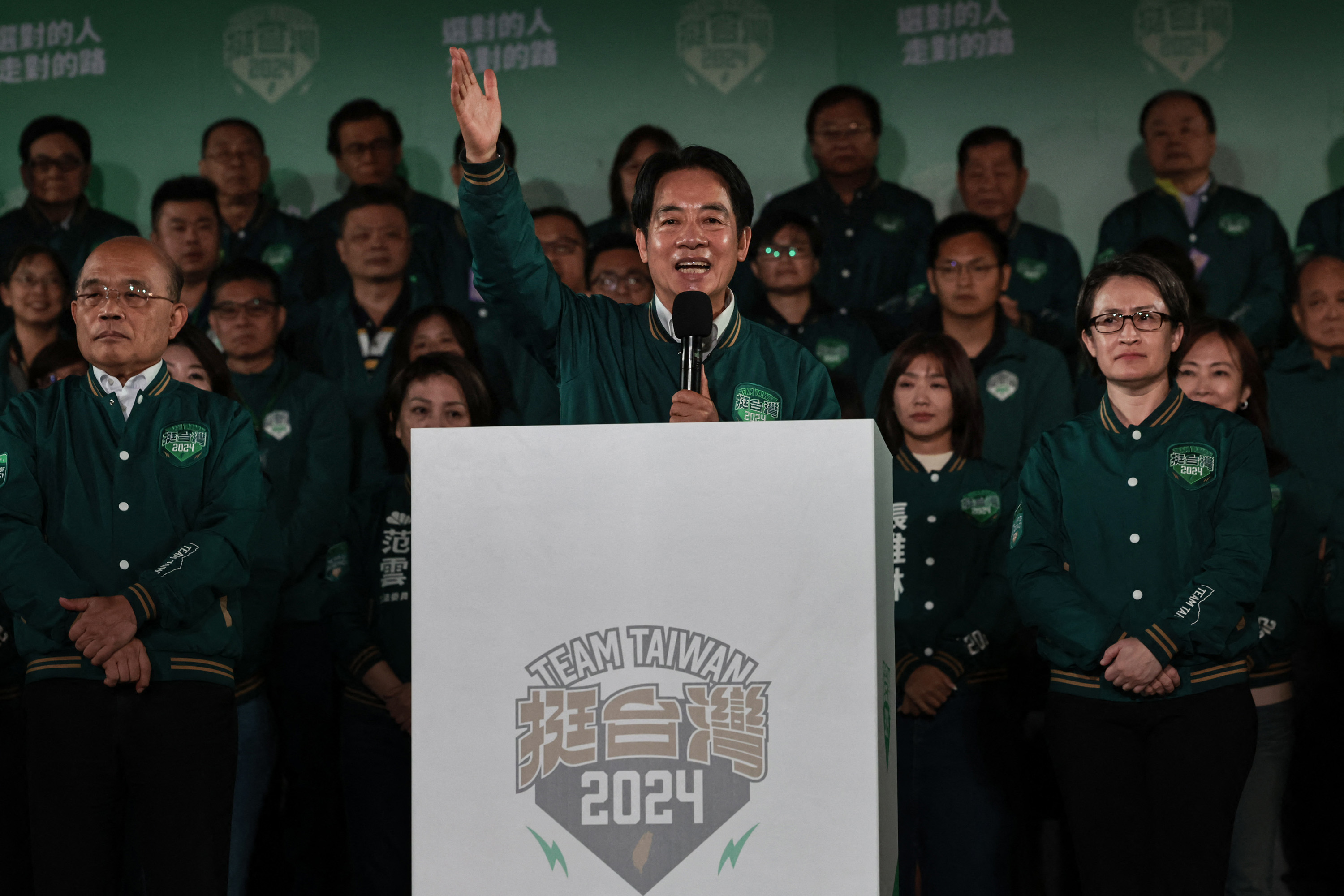
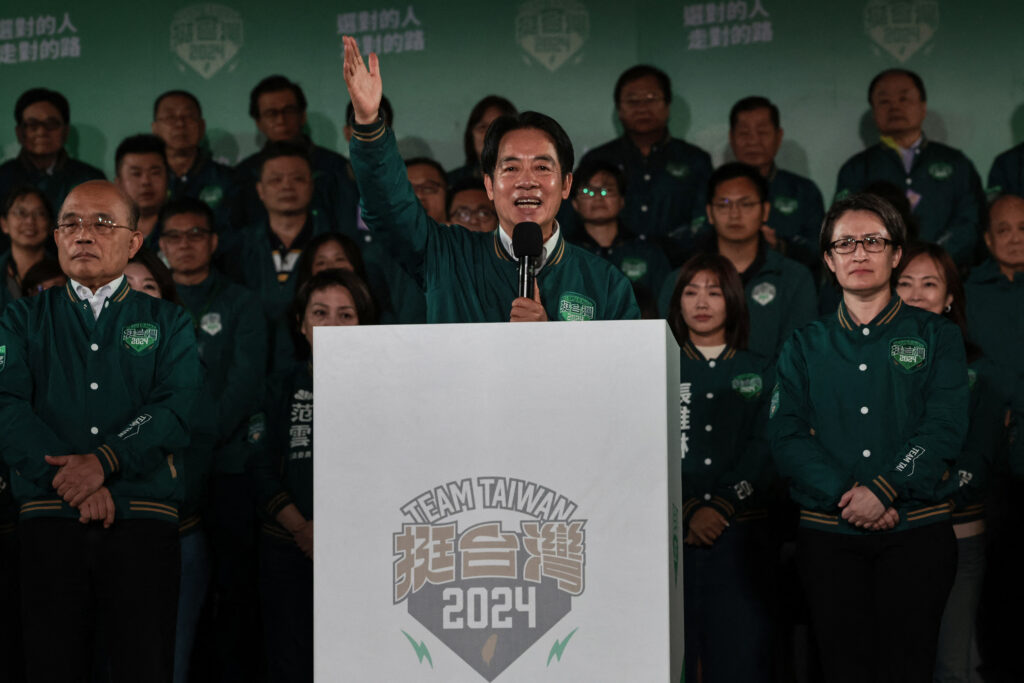
Taiwan’s President-elect Lai Ching-te, middle, addresses supporters as he stands with his running mate, Hsiao Bi-khim, right, during a rally outside the headquarters of the Democratic Progressive Party in Taipei on Saturday, Jan. 13, 2024, after Lai won the presidential election.
