






AFTER constant back and forth discussions with the U.S. Department of Housing and Urban Development, the Northern Marianas Housing Corporation is finally ready to roll out the federally funded Community Development Block Grant-Disaster Recovery programs.
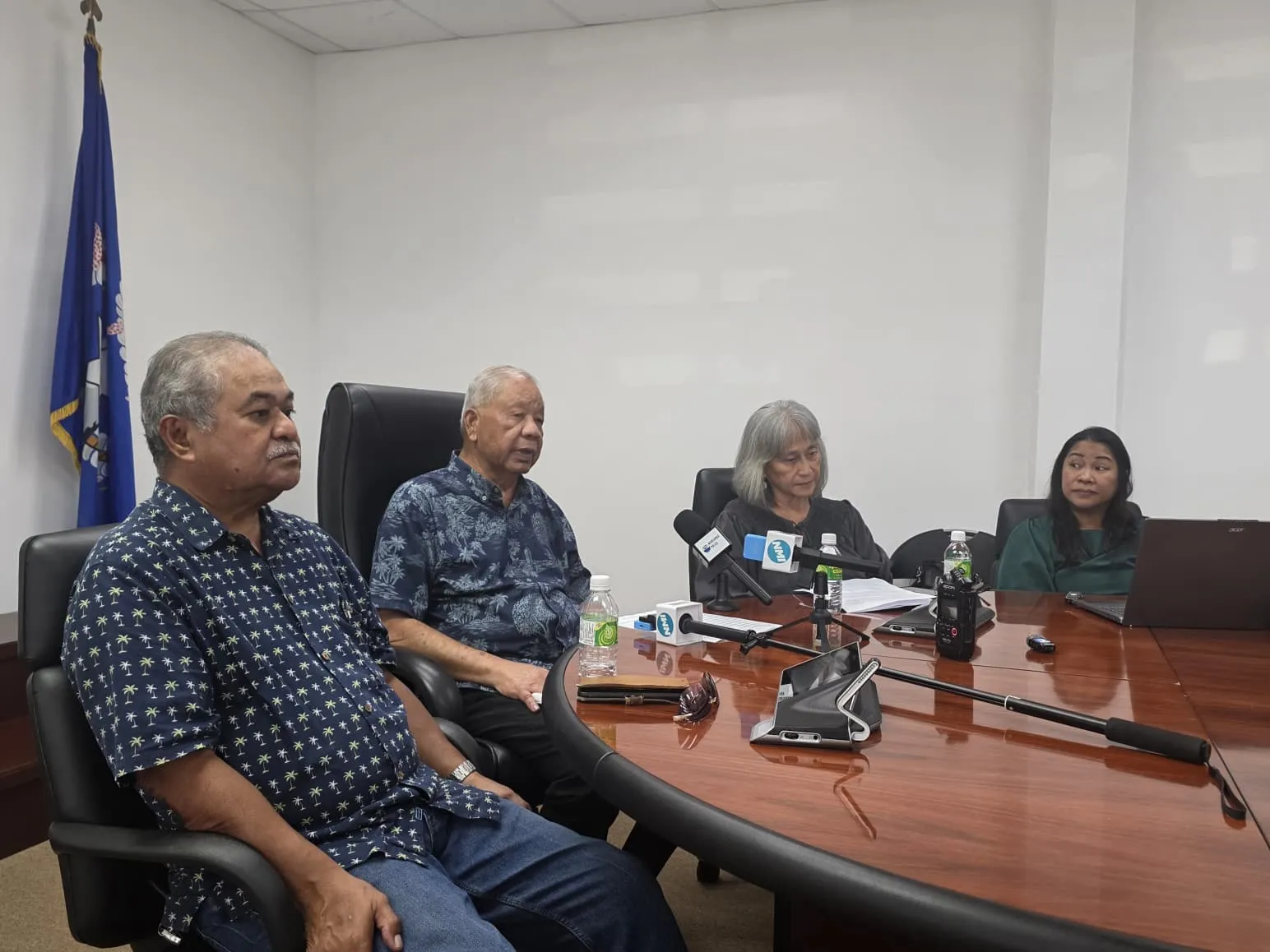
Since the awarding of $244 million in November of last year, a slew of requirements have been met, program policies and procedures have been given the stamp of approval by both the HUD and the NMHC board of directors, and now the NMHC is ready to roll, said NMHC CDBG-DR program manager Kimo Rosario on Friday in an online briefing.
NMHC was also awarded an additional $10.3 million in supplemental disaster recovery funds appropriations for housing, he added.
In order to infuse these additional appropriations into the housing programs, NMHC would need to prepare a substantial amendment for the program match plan.
The amendments have been drafted and are currently being translated into the indigenous languages before publication.
Once published, the public will have a 30-day period to provide comments.
After the 30-day period, the $10.3 million will be injected into the program, thereby providing additional funding for housing, increasing it from the initial $113 million to roughly $124 million, Rosario said.
To date, the housing programs implemented this past January resulted in over 1,800 prequalification applications being picked up from NMHC, of which 1,775 were from Saipan alone.
Of the 1,800, a little over 1,000 have been submitted, of which 929 were on Saipan, 78 on Tinian, and nine on Rota.
Once applicants are predetermined to be qualified for the program, loan packets are distributed to the applicants.
“The reason why we have the prequalification phase is because we don’t want to burden applicants in gathering documents, only to find out later that they’re ineligible,” said Rosario.
As of Friday, 497 loan packets had been distributed, of which 443 were on Saipan, 47 on Tinian, and seven on Rota.
Of the 497, 175 have been completed and returned to the NMHC, of which 155 were on Saipan, 16 on Tinian, and three on Rota.
Nine loan applications are ready for approval, of which seven are on Saipan and two on Tinian.
A majority of the applications are for first-time homeowners, while the remaining are for those seeking to reconstruct or rehabilitate their homes.
“The reason why the percentage for first-time homeowners is because of land title issues. Rather than turn these families away who have proven that they are victims of disaster, HUD was kind enough to allow us to have this first-time homeowner new construction program where there is no storm tie-back, meaning [that] they don’t have to prove that they were affected by Typhoons Mangkhut or Yutu,” Rosario explained.
Proceeds of the loan can be used towards purchasing, acquiring, or leasing property to build homes, he added.
NMHC will cover the first year of insurance policy for homeowners. After the first year, borrowers are expected to pay for every renewal.
“It is the goal of NMHC to complete reviews on at least 20 loan applications per month, and close at least 10 or more loans each month,” said Rosario.
Recognizing that there is a shortage of contractors in light of the Covid-19 pandemic, Rosario added that NMHC will be clustering or grouping together five to ten reconstruction or new construction home projects, and then putting them out for bids.
“We actually took a proactive approach with blueprints. NMHC is coming up with the designs and will basically monitor and manage projects from beginning to end. Since DR funds are subject to our procurement regulations, oversight — everything — is on NMHC,” said Rosario.
Borrowers only need to sign on the dotted line and leave the rest to NMHC, Rosario added.
“We do recognize the shortage of contractors, and that would explain why we’re grouping projects together rather than doing it in piecemeal,” he said.
The timeframe that the CNMI has to expend these funds is a benefit because it means that the money would need to be spent and be injected into the economy, said Rosario.
“For the record, NMHC is already spending [disaster recovery] funds on our office space, rent, and personnel cost. So now, a bulk of that expenditures will be focused on rolling out these projects and getting them done,” he added.
NMHC has a registry of approved contractors, but seeing as there is a shortage of contractors, the agency has also reached out to contractors abroad.
“Since there’s a shortage, basically, NMHC is just going to ‘spread the wealth.’ We don’t have enough contractors, but we’ve also been reaching out abroad, and we’ve been getting some hits from contractors from the Mainland,” said Rosario.
These homes, he added, will be built to be resilient, so as to refrain from costly and constant repairs and maintenance.
Public infrastructure & economic development
As for public infrastructure programs under the CDBG-DR program, Rosario said that as of last week Thursday, projects that have completed or do not require the architectural and engineering phase of construction will be put out for bids as early as this week.
NMHC is working with disaster recovery funding recipients — mainly government agencies, such as the Department of Public Works and the Commonwealth Utilities Corp. — to finalize specifications required for the invitations for proposals or IFPs.
Public notices for the IFPs for these projects will be publicized this week.
Requests for proposals, or RFPs, for projects that require A&E, contract management, or environmental consultant services are still being finalized by the NMHC before reaching the IFP stage of the process.
Regarding economic development under the CDBG-DR program, NMHC and the Marianas Visitors Authority are working together on the RFP for tourism marketing and promotion.
The target date for this particular project is this month.
“We really need to start spending the money in order to inject it into the economy,” said Rosario.
Similar to workforce development, the program is finalizing the RFP to also put it out this week.
“We only have six years to spend the money, and six years is not a long time… We are doing all that we can to try to spend the money,” he added.
“We have more than enough [applications], but until we deplete the funds, we cannot turn applicants away.”
Noting the low number of applications from Tinian and Rota, NMHC encourages the people there to also submit applications.
Two different appropriations for the program were provided by the U.S. Congress: one to address disaster recovery efforts from Typhoon Mangkhut, and the other for Super Typhoon Yutu.
Over $140 million was provided for Saipan and Tinian for Super Typhoon Yutu disaster recovery efforts, while Rota received over $40 million for Typhoon Mangkhut disaster recovery efforts.
For more information, contact the NMHC CDBG-DR Program at 234-6866/9447/7670 (Saipan), 433-9213 (Tinian), 532-9410 (Rota), or visit www.cnmi-cdbgdr.com

