







THE CNMI Supreme Court on Thursday heard the oral arguments regarding Gov. Ralph DLG Torres’s appeal of the dismissal of his lawsuit against the House Committee on Judiciary and Governmental Operations to invalidate the subpoena issued by the legislative committee.
Presiding over the appeal proceedings as justices pro tem were Guam Supreme Court Chief Justice Philip Carbullido, Guam Supreme Court Associate Justice Robert J. Torres, and Guam Superior Court Judge Arthur Barcinas.
Governor Torres was represented by his legal counsel Gil Birnbrich, and attorneys Richard Miller and Joseph Horey.
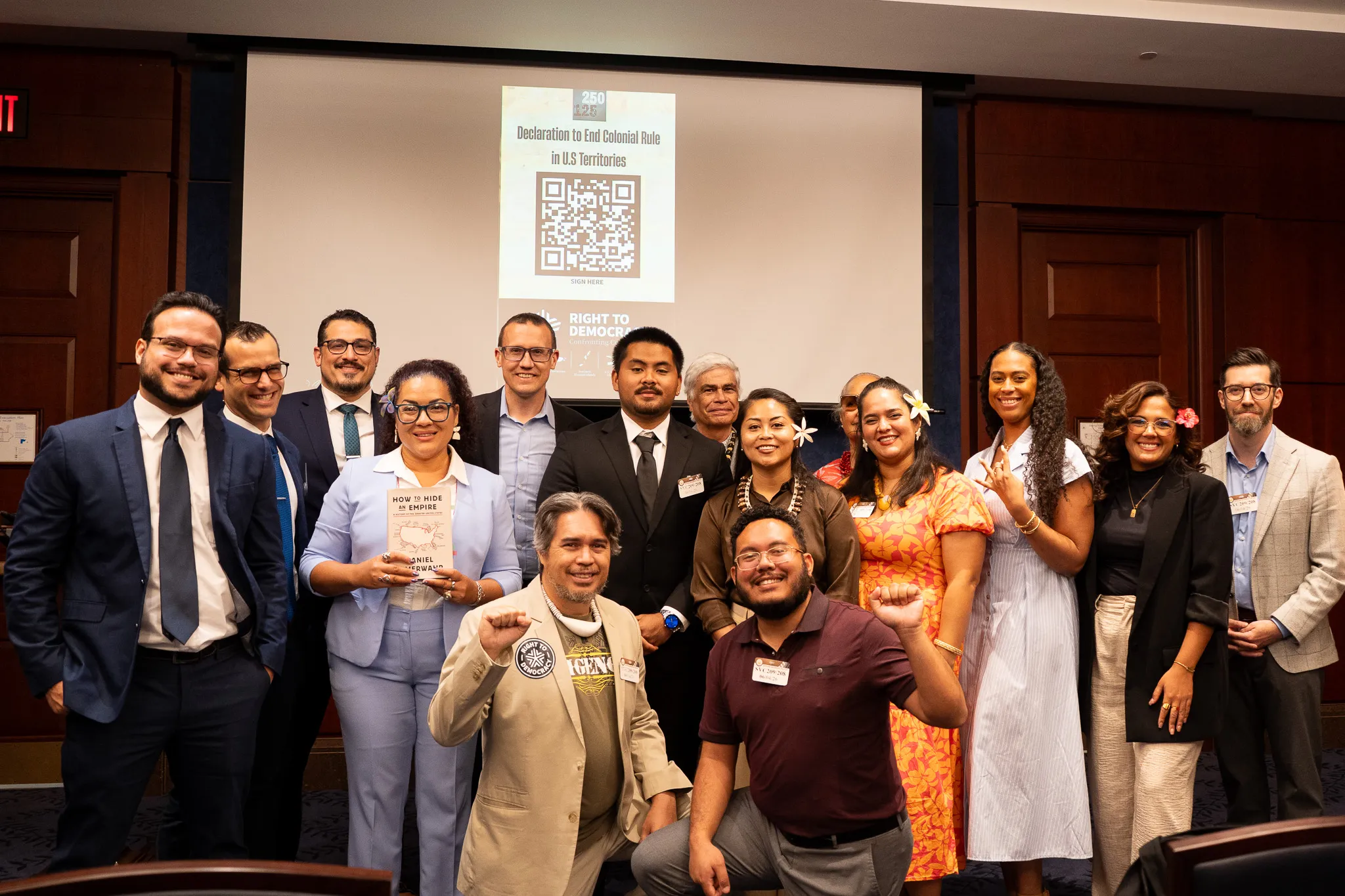
Torres was not present at the hearing, but many of his supporters were, including his wife, first lady Diann T. Torres, and his brothers Vince, Victorino and Jack.
Also present were Reps. Tina Sablan, BJ Attao, Celina Babauta and Richard Lizama who are members of the House JGO committee which was represented by House legal counsels Joe Taijeron and John Bradley, a former chief prosecutor of the CNMI Attorney General’s Office.
The issue before the appellate court is whether the Superior Court erred in its determination that the legislative immunity provided by the Speech or Debate Clause required dismissal of the case.
The facts
On Dec. 4, 2021, Governor Torres was served with a subpoena issued by the House JGO committee which required him to appear before a committee meeting to testify on a wide range of subjects.
The governor did not appear to testify at the designated date, and the committee voted to hold him in contempt.
Subsequently, the governor brought this lawsuit in Superior Court, seeking a declaration that the subpoena was unlawful and that its enforcement would violate the CNMI Constitution.
The committee moved to dismiss the lawsuit, arguing that the Speech or Debate Clause of the CNMI Constitution made them absolutely immune from suit by the governor. The Superior Court agreed and dismissed the case.
On Thursday, Miller delivered the oral arguments for the governor while Taijeron argued for the JGO committee.
Legal brief
According to the governor’s 24-page legal brief, this case is about whether a legislature is to be allowed nearly limitless power to harass and encumber the chief officer of a co-equal branch of government.
“In our system of divided government, the two political branches, legislative and executive, are often in the hands of opposing political parties. If the courts cannot exercise meaningful oversight when a legislative committee takes the extraordinary step of compelling the Governor to testify, a legislature in the hands of one party can and will use its subpoena power to mete out political punishment to a Chief Executive from the opposing party. Such a result risks rupturing the separation of powers irrevocably.
“Such a committee could regularly and repeatedly haul a Governor in to testify about any conceivable subject upon which legislation could be had; and since the Legislature’s lawmaking power ‘extend[s] to all rightful subjects of legislation,’ the Governor could be commanded by any legislative committee at any time to be interrogated about virtually anything.
“This would hamstring his ability to govern and would effectively make the executive branch subservient to the legislative branch.”
According to the governor’s appeal, “The Superior Court’s one-sided analysis failed to take into consideration any of the countervailing interests of the executive branch, or to hold the Legislature to any higher showing of necessity when it commands the Chief Executive to testify before it than when it subpoenas sales receipts from a grocery store.”
The Superior Court “set up a straw man of ‘blanket’ executive immunity — a claim the Governor never asserted — and knocked it down, thereby excusing itself from considering the unique separation of powers problems the subpoena posed. In the process, the Superior Court created blanket legislative immunity, and effective legislative supremacy.”
According to the governor’s brief, “There are indeed significant separation of powers claims that the Superior Court erred in dismissing. The Superior Court’s error in failing to adequately account for constitutional separation of powers principles was preceded and compounded by two other errors. The Superior Court misinterpreted the plain text of the CNMI’s legislative immunity clause, and it improperly considered extrinsic information without converting the motion to dismiss to one for summary judgment, to which the Governor could respond with his own evidence.”
Barred
In its 29-page brief, the House JGO committee stated that the Superior Court properly held that the governor’s first amended complaint was barred by the committee’s legislative immunity.
“This holding is consistent with the intent of the CNMI framers, with this CNMI Supreme Court’s controlling precedent, with the separation of powers doctrine, and with the interpretation of Speech or Debate Clauses in many U.S. jurisdictions,” JGO stated.
The governor’s complaint does not state a “colorable claim” of a constitutional violation in good faith, the JGO added.
“Its claim that the Committee’s subpoena lacked a legitimate legislative purpose rests on factual assertions which the Office of the Governor made despite being in receipt of documents to the contrary constituting actual notice that these assertions were untrue.
“Appellants’ assertion of absolute executive testimonial immunity is also without foundation in CNMI law and relies entirely on internal memoranda of the Office of Legal Counsel in the federal Department of Justice, whose conclusions are expressly rejected by the federal courts.”
The JGO said the trial court did not abuse its discretion in taking judicial notice of the House Minority Report which served as the basis of the JGO’s investigation of the governor’s public expenditures.
“Even if it did err in taking judicial notice of a public record, any error was harmless because the remaining exhibits taken under judicial notice were sufficient to establish the Committee’s legitimate legislative purpose. The Superior Court expressly set forth its reasons for refraining from converting the motion to dismiss to a motion to summary judgment.
“Appellant’s assertion that this decision was in error is not supported by any caselaw to show that the court abused its discretion,” the JGO added.
Background
Superior Court Judge Pro Tem Timothy Bellas granted the request of the JGO to dismiss with prejudice the lawsuit on May 17, 2022.
On May 18, 2022, the governor’s legal counsel filed a notice of appeal.
In his 17-page order, Judge Bellas asserted that legislative immunity applied in the case because the subpoena serves a valid legislative purpose.
He said the subpoena “plainly falls within the ‘legitimate legislative sphere’ protected by the Speech or Debate Clause.”
Bellas also said that the “separation of powers doctrine does not afford even the United States President blanket immunity from subpoenas.”
“It is true that the separation of powers doctrine safeguards the independence of each branch of the government and protects it from domination and interference by others,” the judge said.
“Nevertheless, separation of powers does not mean that a sitting executive may never be called to task by the legislature,” he added.
Governor Torres, a Republican, was found by the Democrat-Independent-led House JGO committee in contempt of a legislative subpoena for refusing to appear before the panel which was investigating his public expenditures.
On Jan. 12, 2022, the House impeached the governor who was accused of corruption, neglect of duty and felonies of theft as well as contempt.
On May 18, 2022, the Republican-led Senate acquitted the governor of all charges.

