

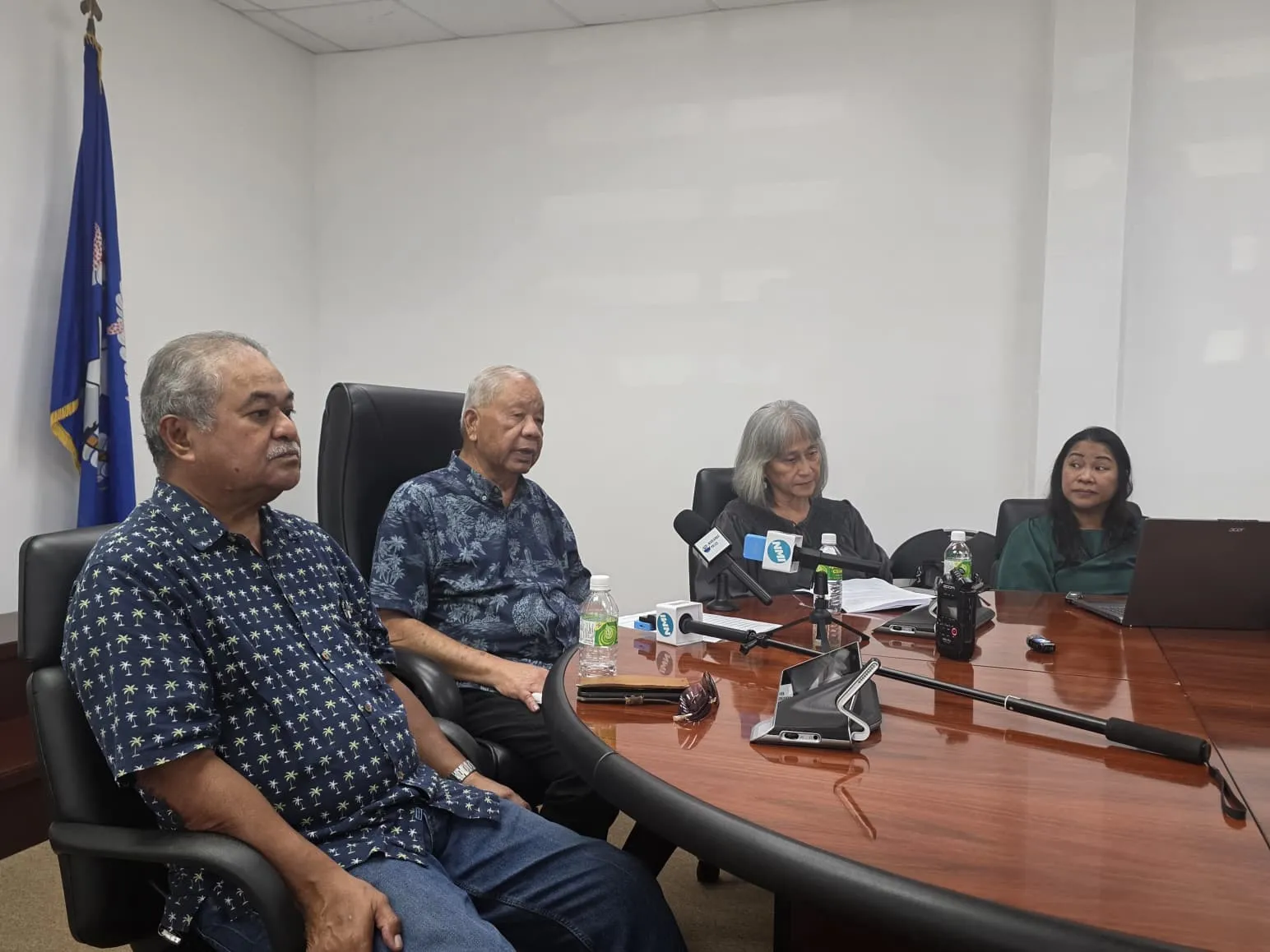



THE Marianas Visitors Authority board unanimously approved a tourism resumption proposal presented by the CNMI Tourism Resumption Task Force on Tuesday in the governor’s conference room.
The plan, which will be funded by the American Rescue Plan Act, aims to “create demand” and revive the CNMI tourism industry.
It was first presented by the task force to Gov. Ralph DLG Torres and Lt. Gov. Arnold I. Palacios on Tuesday morning before the MVA board voted on it in the afternoon.
The task force was created in March by the governor — in collaboration with MVA and tourism industry stakeholders — to create a plan that combines effective risk mitigation protocols with necessary and cost-effective investments to resume economic activity, employment, and stability in the tourism market.
Led by facilitator Kimberlyn King-Hinds, who chairs the Commonwealth Ports Authority board, the task force noted that tourism is “the lifeblood of the CNMI economy” and is the primary means by which private sector employment is fostered.
The task force said under the CNMI Tourism Resumption Investment Plan, or TRIP, an eight-week pilot program will be launched in partnership with South Korean-based airlines. South Korea is the CNMI’s primary tourism market.
Two airlines will be selected based on their agreement to meet certain requirements, such as having ticket prices set at $400 or less per passenger, and providing two flights a week.
Flights with up to a 40% load factor would qualify for a $45,000 government subsidy while flights with a load factor exceeding 40% would not be subsidized.
The task force estimates that the eight-week pilot program would cost $7,610,400 for a 20% load factor; $8,840,800 for a 50% load factor; and $12,181,600 for a 100% load factor.
These include the costs of the airline incentive, the hybrid quarantine facility, PCR testing, travel bucks, the travel agency incentive program, and the familiarization tour scheduled for later this month.
The task force estimates that a 5% increase in load factor would have a total economic value of over $18 million for the CNMI from July to December of this year, and over $20.9 million for a 15% increase in load factor.
In the low range, it would cost the CNMI about $11 million for the pilot program, from which it would later benefit over $18.4 million by the end of this year.
In the high range, it would cost the CNMI about $15.6 million for the pilot program, out of which it would later gain just under $21 million by the end of this year.
The MVA board stated that this plan also aims to bring people back to work, given that over 5,400 CNMI workers in the tourism industry have been affected by this economic downturn.
There are also incentives in place for tourism or ticket agents to fill these flights through the travel agency incentive program.
The travel agency program would provide a $100 incentive for a Saipan-only tour, $200 for a two-island tour, and $300 for a three-island tour.
For a 20% load factor, this would amount to $56,000 for a Saipan-only tour; $56,000 for a two-island tour; and $84,000 for a three-island tour.
For a 50% load factor, this would amount to $139,200 for a Saipan-only tour; $139,200 for a two-island tour; and $208,800 for a three-island tour.
For a 100% load factor, this would amount to $278,400 for a Saipan-only tour; $278,400 for a two-island tour; and $417,600 for a three-island tour.
The program would also include up to $1,500 in “travel bucks” per passenger. Travel bucks are not actual cash, but more like vouchers. How much each tourist receives depends on the trip that they have booked. Each tourist can receive up to $500 in travel bucks per island that they visit. For example, if a tourist decides to visit Saipan, Tinian, and Rota, s/he can receive up to $1,500 in travel bucks. If a tourist decides to just visit Saipan, s/he can receive up to $500 in travel bucks.
Hybrid quarantine facilities would be a part of the visitors’ experience in the CNMI with five days of quarantine.
On the first day of their arrival, visitors, vaccinated or not, would be required to receive a PCR test after being transported to the designated quarantine site.
All visitors must remain in their rooms on the first day. Those who test negative would follow the regular isolation procedures that are already in place today.
On the second day, upon receiving negative results, the visitors would be free to enjoy the facilities that include a waterpark, beaches, different restaurants, and a golf course, all within the bubble.
After the fifth day, visitors would receive another PCR test, in which they would then be allowed to leave the travel bubble facilities and enjoy the rest of the island should they test negative.
All staff members who come in contact with the visitors would also stay in their facilities.
Facilities would have a “Safe Travels” stamp from the World Travel and Tourism Council, or WTTC, the lead agency with the authority to issue these stamps to tourism businesses in an effort to help ensure the safety of the Marianas community while supporting the tourism industry.
In order to receive this stamp, businesses would have to register online via the MVA website.
Corridor hotels are included in the program. These would provide 24-hour service — inclusive of front desk service and housekeeping, available rooms, dining accommodations, water sports activities — and would be willing to operate in compliance with Covid-19 safety rules.
Governor Torres and Lt. Gov. Palacios, after receiving further clarification from the task force on certain aspects of the plan, have expressed their support, calling it a “road to recovery.”

The Marianas Visitors Authority board met on Tuesday afternoon in the governor’s conference room to discuss the proposed tourism resumption plan.
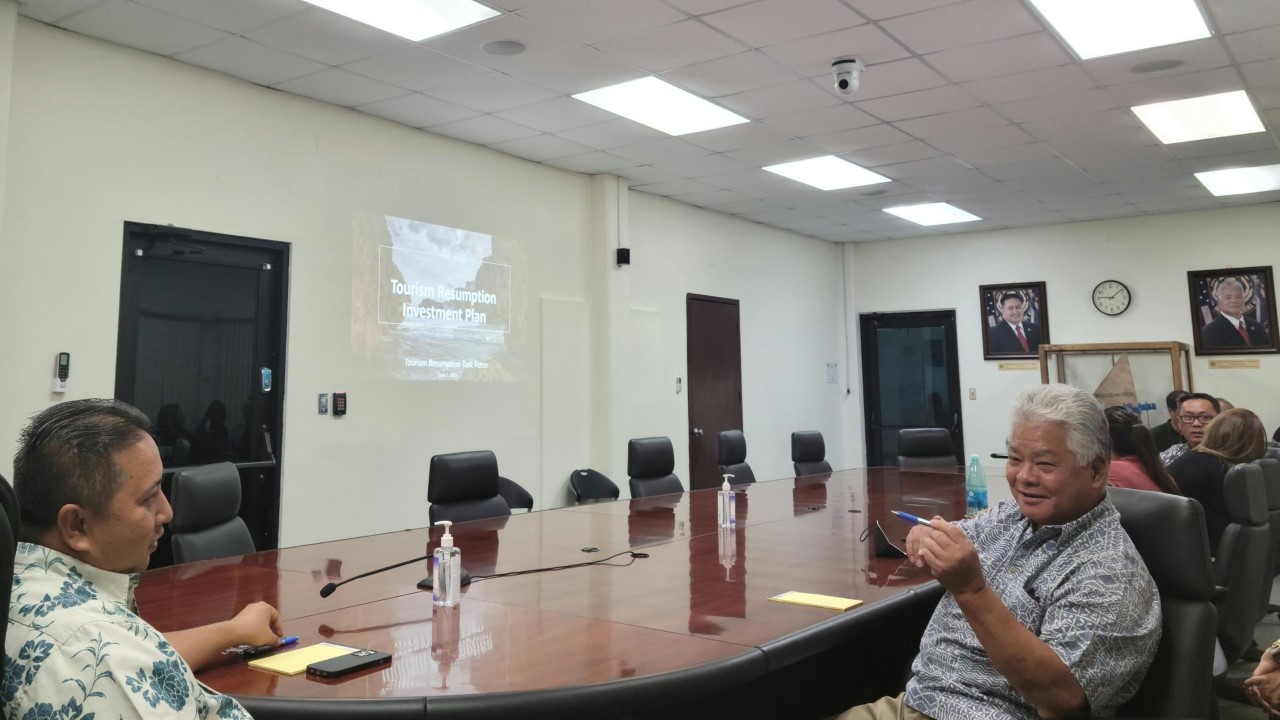
Gov. Ralph DLG Torres and Lt. Gov. Arnold I. Palacios converse on Tuesday in the governor’s conference room prior to a meeting on tourism resumption.
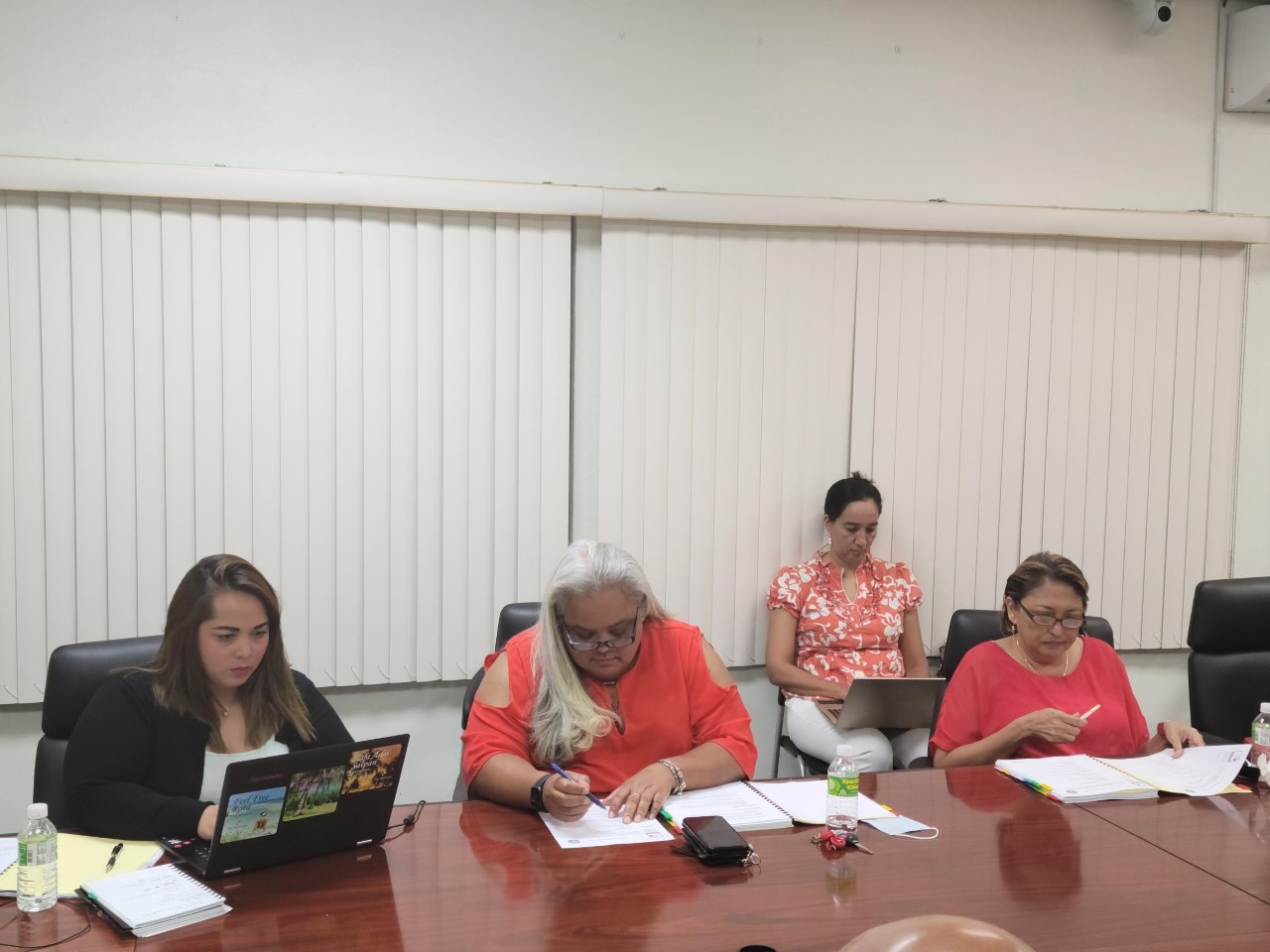
From left, Marianas Visitors Authority Managing Director Priscilla M. Iakopo, MVA board chair Viola Alepuyo, Catherine Perry of Integrity Communications and MVA board vice chair Gloria C. Cavanagh.
