







BECAUSE the court has suppressed Search Osilek Jr.’s confession and evidence in a sexual assault case, the Attorney General’s Office says it has no recourse but to ask for a dismissal, which Superior Court Associate Judge Kenneth L. Govendo granted.
Assistant Attorney General Coleen St. Clair filed a motion to dismiss the criminal case against Osilek on April 21.
St. Clair stated that “the court’s suppression of the defendant’s confession and evidence, as well as rulings on competency issues, leave the Commonwealth unable to proceed.”
She asked the court to dismiss the case without prejudice.
On Thursday, Judge Govendo dismissed the case without prejudice.
Without prejudice means the case can be refiled in the future.
Chief prosecutor John Bradley, in a statement, said: “Without the evidence of a confession and physical evidence collected by police, the Commonwealth is unable to proceed to trial. In addition, the court’s findings regarding the limited mental capacity of the defendant for understanding what is going on interferes with the process of a normal trial.”
He added, “We are unhappy that the victim in this case will not get her day in court and an opportunity to seek justice. We will begin working with police officers in developing additional methods of collecting information that can provide clearer information to the judges and perhaps avoid results like this ruling by Judge Govendo.”
Osilek was accused of sexually assaulting a then-15-year-old girl in January 2018.
His court-appointed attorney, Joseph E. Horey, moved to suppress statements and all evidence relating to or deriving from the defendant’s statements made to the police officers on Jan. 23, 2018.
The lawyer also asked to suppress the physical evidence of condoms and wrappers that were collected based on statements made by Osilek at the scene of the alleged crime.
Horey said suppression was warranted because Osilek’s Fifth Amendment rights were violated when he did not knowingly, voluntarily and intelligently waive his constitutional rights before the interrogation.
Fifth Amendment rights are an individual’s rights against self-incrimination.
Horey asked the court to suppress Osilek’s statements made to police and the physical evidence collected on Jan. 23, 2018.
Osilek was 19 years old when he was arrested for the allegation against him.
In his ruling, Judge Govendo said Osilek did not knowingly and intelligently waive his Fifth Amendment rights and Miranda protections before any statements were made in response to police interrogation.
The judge said he based his ruling on Osilek’s limited reading and comprehension skills, and his “heightened susceptibility to police coercion which resulted in signing a form that was misrepresented by the police.”
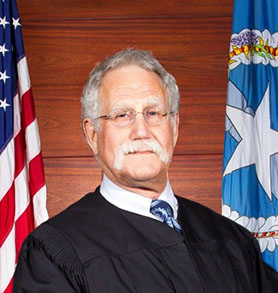
Kenneth L. Govendo
