




By Walter Ulloa
For Variety
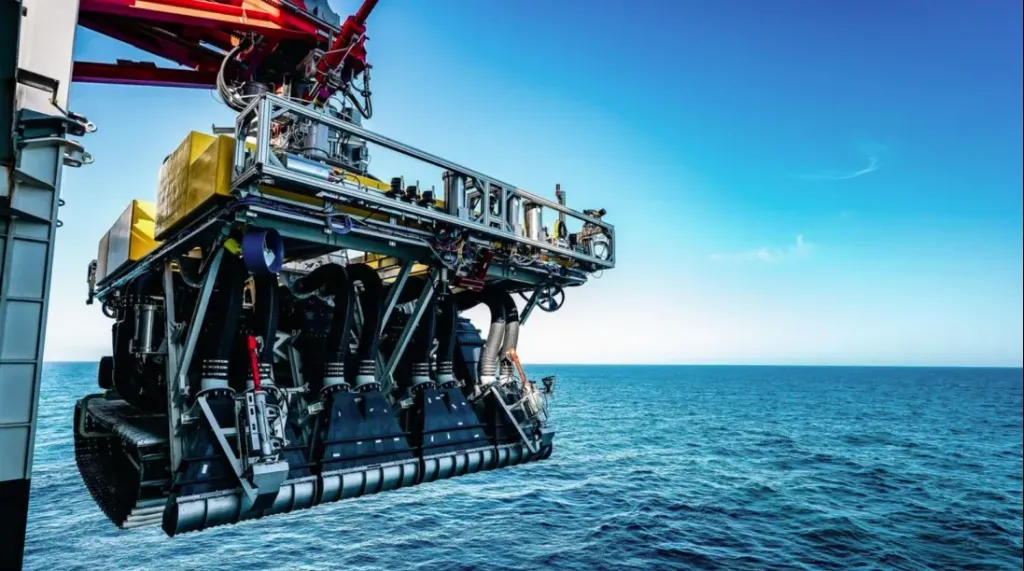
HAGÅTÑA (The Guam Daily Post) — Gov. Lou Leon Guerrero signed into law a prohibition on seabed mining in Guam’s territorial waters, a move the island’s political leaders are calling both a stand and a warning. But with federal lease sales for Pacific critical minerals already on the calendar, the law may matter most for what it gives Guam to work with, not what it stops outright.
Public Law 38-129, authored by Sen. Therese Terlaje and passed 13-1 by the 38th Guam Legislature, bans the extraction, removal, and mining of minerals from Guam’s seabed and blocks related infrastructure from operating within territorial marine waters. It carves out exemptions for scientific research and protects CHamoru rights and practices. It also hands the Port Authority of Guam a new tool: the authority to delay or deny port entry or departure for vessels connected to unlawful undersea mineral extraction or other environmental violations.
That port provision is the law’s most practical lever. The Bureau of Ocean Energy Management has already expanded its proposed lease area near the Marianas to roughly 69 million acres, with potential mining as close as 46 miles from Guam’s coastline. Territorial jurisdiction runs only three miles out. Everything beyond that belongs to Washington.
The governor framed the signing in terms of identity as much as policy.
“Our island’s connection to the ocean is inseparable from who we are as a people,” Leon Guerrero said in a press release issued Wednesday. “This law sends a clear message that Guam will not support activities that threaten the health of our waters, our reefs, and the natural resources that sustain our community. At a time when these discussions are expanding across the Pacific, Guam is choosing to act with caution and responsibility.”
Lt. Gov. Joshua Tenorio pointed to the broader regional dimension, noting the Pacific’s long-standing calls for restraint on deep-sea extraction.
“Our people have depended on the ocean for centuries,” Tenorio said. “Protecting these waters is not only an environmental responsibility, but also a cultural and economic one.”
In a statement issued Friday, Delegate James Moylan applauded the signing, calling it a unified effort to protect the marine environment. He is also a co-sponsor of two House bills by Hawaii Rep. Ed Case, H.R. 663, which would direct the United States to push for a moratorium on deep seabed mining permitting, and H.R. 664, the American Seabed Protection Act, which would bar federal licenses for deep seabed exploration outright. At a House Natural Resources Subcommittee hearing in January, Moylan told lawmakers Guam’s voice had to be heard on this issue, not as an afterthought, but as a requirement.
“By restricting seabed mining and equipping the Port Authority of Guam with the tools to deter environmental violators, we are sending a clear message: Guam’s marine ecosystems are not for sale, and we will defend our resources from the local shores all the way to the halls of Congress,” Moylan said.
Terlaje, who introduced the bill in January and steered it through significant revisions before its passage last month, said implementation is now the critical next step. She said agencies must develop the procedures and enforcement rules, including civil penalty provisions, to back the prohibition with real consequences.
“The goal is to ensure that the prohibition on deep-sea mining is backed by meaningful enforcement and not just policy alone,” she told The Guam Daily Post.
The civil penalties, added in response to testimony from the Department of Agriculture, allow fines against businesses or entities that attempt to stage or support mining operations from Guam’s ports or waters.
Terlaje said she also sees the law giving Guam firmer footing in negotiations with federal regulators. BOEM, she noted, has repeatedly ignored the island’s concerns.
“Having this law passed might strengthen Guam’s opportunities for meaningful consultation in the face of irreversible harm,” she said. “By taking this stand, we are making it clear that we will not back down in protecting our waters, our culture, and our resources.”
Co-sponsor Sen. Telo Taitague, in response to questions from the Post, said the law’s most important outcome is the message it delivers to BOEM and the Trump administration. She recalled the wave of public opposition after BOEM announced its interest in the Marianas, with island communities raising alarms about ecosystem damage, the threat to culturally significant seamounts, and lasting economic harm.
“Though our protests and condemnation have been discarded by BOEM, this Public Law along with Resolution 132-38, sends a clear message to the BOEM and the Trump Administration: we have staunchly and consistently opposed deep-sea mining in and near our waters and our shores and our ports are not to be used to aid in any deep sea mining operation that will ultimately and irreparably harm our marine ecosystems, food sources, and our cultural heritage,” she said.
Co-sponsor Sen. Joe S. San Agustin said the law speaks to every dimension of island life that is at stake, from food to culture to the environment. He was direct about what the federal case for offshore critical minerals is worth measured against what Guam stands to lose.
“The devastating risk of destroying the environmental, cultural and food security livelihood of our island is not worth the miniscule benefits of mining in our island waters,” San Agustin told the Post.
Sen. William Parkinson connected the signing to questions of political power, arguing Guam has already shouldered more than its share of the nation’s strategic commitments and should not also be made a convenient staging ground for extractive activity whose benefits would flow elsewhere.
“The real question is who benefits, who bears the risk, and who gives consent,” Parkinson told the Post. “Guam has already carried more than its share of America’s strategic burden in the Pacific. We should not be treated as a convenient staging ground for risky extractive activity near our home.”
He tied the issue squarely to Guam’s unresolved political status, arguing that without a vote in national policy, the island is exposed to federal decisions it cannot block.
“A transition to a permanent political status would move Guam out of this ambiguous and temporary unincorporated status that leaves us with fewer rights than other Americans and too little say over policies that may affect us directly,” he said.
The law puts Guam alongside Hawaii and the West Coast states of Washington, Oregon, and California in enacting protections against seabed mining. But the federal clock has not stopped. According to a U.S. Department of the Interior budget document reviewed by The Guam Daily Post in April, BOEM has scheduled lease sales for American Samoa in August 2026, the CNMI in November, and the Alaska region in December.
For Guam, the question now is whether a law that controls its ports and infrastructure can do what letters, public comments, and 65,000 voices of opposition could not: make Washington think twice.
“Our ocean feeds our families, sustains cultural practices, supports tourism, and connects generations of island people. Protecting it is not optional,” Parkinson said.
