





By Walter Ulloa
For Variety
HAGÅTÑA (The Guam Daily Post) — The possibility of deep seabed mining near the Marianas triggered an unprecedented wave of opposition from Guam and the Commonwealth of the Northern Mariana Islands throughout 2025, uniting government leaders, activists and scientists in a fight against federal plans they say could devastate island waters and ways of life.
The year began with early warnings. In August, Carlotta Leon Guerrero, Gov. Lou Leon Guerrero’s special adviser on military and regional affairs, raised concerns that the federal government was sidelining Guam’s input on mining decisions, part of what she described as the Trump administration’s pattern of bypassing international regulatory processes. Her comments came as American Samoa faced similar proposals that drew tens of thousands of public comments in opposition.
Guam Delegate James Moylan was already demanding territorial consent before any mining could proceed. His early stance foreshadowed what would become a months-long battle after the Bureau of Ocean Energy Management issued its request for information on Nov. 12, seeking input on commercial leasing for minerals in waters east of the Marianas Trench Marine National Monument.
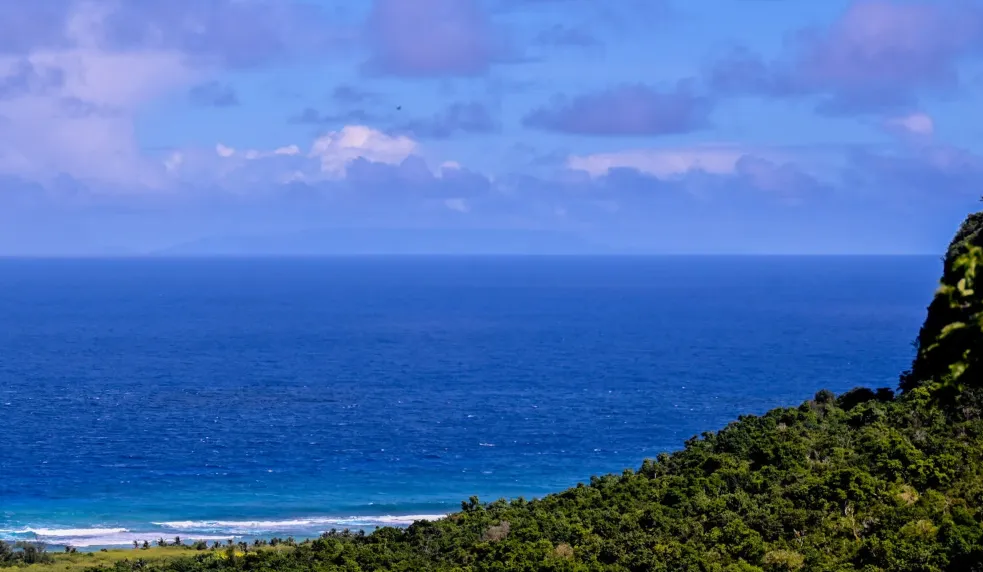
The BOEM RFI set off alarm bells across the region. The proposal covers roughly 35.5 million acres in waters between 3,700 and 25,100 feet deep, targeting areas considered prospective for ferromanganese crusts and nodules containing critical minerals that the administration says are essential for defense systems and technology.
But the federal government gave the territories just 30 days to respond, a timeline island leaders immediately challenged as insufficient for communities to provide comprehensive feedback on proposals that could bring mineral extraction to waters between Guam and Rota.
Moylan and CNMI Delegate Kimberlyn King-Hinds formally requested a 120-day extension in November, arguing BOEM was risking decisions without fully understanding the impact on fisheries, marine ecosystems and island economies.
“Current deep-sea mining technologies pose tremendous risks of disrupting fisheries and marine ecosystems, which could endanger Guam and the CNMI’s interconnected economies,” the delegates stated.
Govs. Leon Guerrero and David Apatang of the CNMI also requested more time, with Leon Guerrero emphasizing that island communities need a process that respects the time it takes to consult residents, scientists and cultural leaders.
BOEM granted a 30-day extension in mid-December, moving the deadline to Jan. 12, 2026, but the extension disappointed island leaders who said it fell far short of what was needed and pushed the deadline into the Christmas and New Year holiday season.
“While extending the comment period is a step in the right direction, it is not enough,” Leon Guerrero said.
Lt. Gov. Josh Tenorio traveled to Washington to advocate for Guam’s position, meeting with Defense and Interior Department officials while calling out what he characterized as the Trump administration’s aggressive posture on resource extraction.
“It’s very clear that this expedited time frame is in line with the aggressive posture that the administration, the Trump administration, is taking on getting resources for its needs,” Tenorio said. “But here, you know, these waters are untouched.”
He pointed to American Samoa’s experience, where approximately 76,000 comments were submitted, with roughly 98% opposing mining, yet BOEM announced it would move forward with environmental review.
“This is why there needs to be a significant amount of awareness on the congressional side,” Tenorio said.
On Dec. 22, Leon Guerrero, Tenorio, Moylan, Speaker Frank Blas Jr. and Sen. Tina Muna Barnes met to coordinate their response, creating a unified front that Blas said gives the territories a larger voice.
“If you see that coming from all three of us at the same time, it’s got a larger voice,” Blas said of the unified opposition from Guam, the CNMI and American Samoa.
Activists mobilized through organizations such as Prutehi Guåhan, hosting workshops to help residents prepare comments and pushing back on what they called false promises of economic benefits.
“The truth of the matter is that there are absolutely no benefits,” said Monaeka Flores, Prutehi Guåhan’s executive director. “There’s no amount that is enough for the permanent destruction of our ocean, of our Marianas.”
Scientists warned that damage from mining could potentially last generations, while local experts said the proposal lacks critical research.
As 2025 closed, more than 1,000 comments had been submitted to the federal docket, with governments planning additional community education efforts in 2026. The fight continues, with leaders making clear they will not back down on protecting island waters and heritage.
“Our ocean is not a commodity,” Leon Guerrero said. “It is our lifeline, our heritage and our responsibility to protect for generations to come.”
