





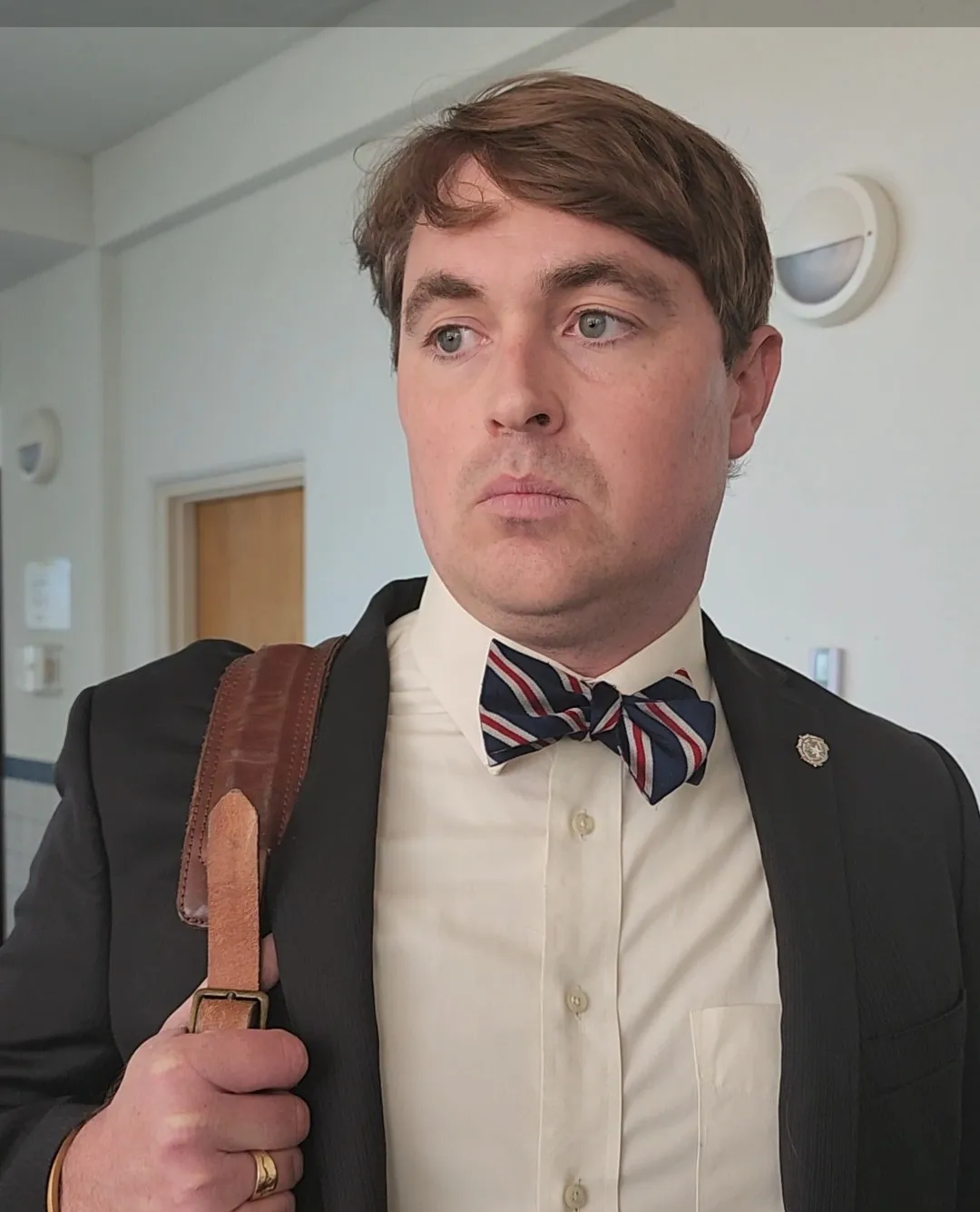



By Gregorie Michael Towai – CNMI resident
WHEN investigative reporting unsettles people, the first instinct is often to ask a narrow question: What law was broken? Closely followed by, Everyone did it, or This is just politics — especially during election season.
Those reactions have surfaced again following Kandit News’ investigative reporting on legislative subsistence allowances, including the $153,672 paid to former Sen. Dennis Mendiola over 31 months, and his attempted request for an additional $5,000 after leaving the Legislature — a request that was ultimately denied.
It must be said plainly: this reporting does not accuse anyone of committing a crime. It does not need to.
Accountability is not the same as accusation, and legality is not the same as integrity.
The wrong question dominating the conversation
Public discourse has fixated on whether the allowances were permitted under Senate rules. They were. But that framing avoids the question that actually matters: Should they have been taken at all, at that scale, during austerity — and without meaningful transparency?
A system can function exactly as designed and still fail the people it is meant to serve. Rules can be technically compliant while being ethically hollow.
What the records reveal
The documents released by the Department of Finance reveal not an isolated incident, but a pattern:
– Over $2.5 million in legislative subsistence allowances since FY 2023
– 31 of 33 legislators received allowances
– Many legislators received more in allowances than in salary
– Most requested the maximum amount nearly every month, even during austerity
– The Senate does not require receipts or spending logs subject to disclosure
– At least one legislator received $10,000 in a single month
None of this is illegal on its face. All of it warrants scrutiny.
Why austerity is central to this discussion
Some have criticized linking allowances to austerity and food stamp suspensions, arguing it is emotionally charged or unfair. But austerity is not an abstract budgetary concept — it is measured in the practical consequences felt at kitchen tables.
During the same period legislators continued to draw full monthly allowances:
– Government employees absorbed reduced hours and income
– Families delayed bills and medical care
– Social services were curtailed
– The government struggled daily to prioritize which obligations could be paid
To separate these realities from legislative spending is not neutrality — it is selective vision.
What public service actually looks like
Importantly, not every leader chose insulation over solidarity.
Some public officials voluntarily reduced their own pay or declined compensation during austerity, explicitly citing shared sacrifice. They recognized that leadership is not defined by what one is entitled to receive, but by what one is willing to forgo when the public is being asked to endure hardship.
That is the distinction between authority and service.
Remembering Gov. Arnold Palacios
This conversation cannot proceed without acknowledging the integrity of the late Gov. Arnold Palacios.
In the days before his passing, Governor Palacios personally asked journalists to scrutinize legislative spending — not to target individuals, but to expose a culture of contradiction. He had inherited a financial disaster, uncovered massive deficits, and imposed austerity not as punishment, but as necessity.
He was deeply frustrated that many who promised reform after the Torres administration reverted to familiar habits once in power. His call was for transparency, consistency, and honesty with the public.
That request deserves respect — not deflection.
‘Everyone did it’ is not a defense
The claim that allowances were bipartisan and normalized is true. It is also the problem.
When questionable practices become routine, responsibility does not disappear — it multiplies. Normalization does not transform excess into virtue. Silence does not equal consent.
And the public must look inward as well.
The role of the voter
Year after year, many of the same officials return to office. We reward incumbency, tolerate opacity, and accept explanations rooted in technical compliance rather than moral clarity.
Then we express outrage when nothing changes.
Democracy is not a transaction completed on Election Day. It is a continuing obligation — to question, to demand better, and to remember.
This is bigger than one person
This is not a referendum on one official. It is not an indictment of a single party or newsroom. It is a reckoning with a political culture that too often confuses entitlement with service.
If the rules are flawed, they should be changed.
If transparency is lacking, it must be imposed.
If public trust has eroded, it can only be restored through restraint and honesty — not defensiveness.
Calling this discussion “politics” does not make it disappear. Calling it “legal” does not make it right.
The real question is not what law was broken, but what standard we are willing to accept.
Governor Palacios understood that the future of the Commonwealth depended not just on balanced ledgers, but on restored credibility.
That work remains unfinished — and it belongs to all of us.
