

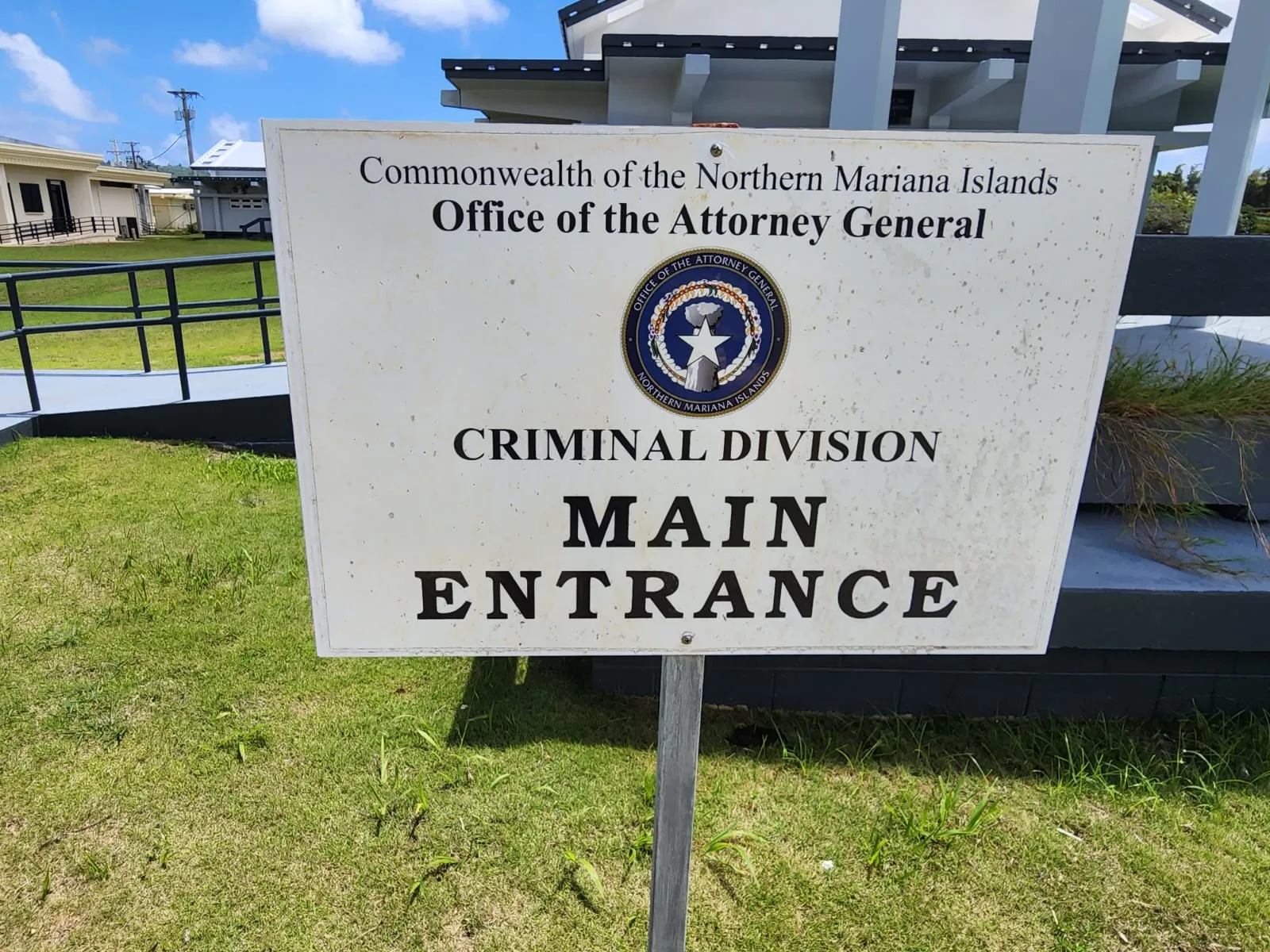




The lead agency administering the new system will be the Department of Homeland Security and its constituent agencies: Customs and Border Patrol; Immigration and Customs Enforcement; and United States Citizenship and Immigration Services.
This is the end of an era that has brought tremendous economic development as well as irrevocable social changes to the CNMI community. Everyone in the community — native islanders, outsiders who have made the commonwealth their home and guest workers — will be touched, in one way or the other, by the coming change. There is a considerable level of anxiety in the community, especially among those whose status is unsettled, and their friends and their families, as to what will happen to them.
One thing we know for certain: only aliens who are “lawfully present” in the commonwealth on Nov. 28 will be protected against removal by federal authorities. In other words, aliens who do not have legal status in the commonwealth, under either CNMI or U.S. law, will be subject to deportation, sooner or later. The following is a guide to what can still be done to extend, ensure and clarify status:
Employers
If you have foreign employees who are contract workers, you can amend their contracts to allow for fresh two-year permits that will commence prior to Nov. 28. You may have already done this earlier this year. It is a business decision whether the extension available is justified economically since it will inevitably involve additional fees. Although the regulations for the CNMI-Only Transitional Worker Program remain unavailable, we anticipate that most of the current work force will be able to convert to the new status. The program will apply to all but professional and upper level management workers. For those, other types of U.S. visas will be available after the transition date. (It is not yet clear whether permanent skilled workers such as people in the construction trades will be required to apply for H-2 visas, which are for temporary workers, or whether they can join the CNMI-only transitional worker program.) For your employees who are immediate relatives, their status options depend on the status of their “sponsor.” See discussion below on Immediate Relatives.
Employees
If you are a contract worker, and you are currently employed, see the discussion on Employer, above. Even if your employer is unable or unwilling to extend your contract for a new term of two years, you are still protected provided your entry permit expires after Nov. 28, 2009. As long as you are “lawfully present” on that date, you will likely have an opportunity to convert to another U.S. visa status. Your dependents will be able to remain for the term of your current permit; their permit is dependent on yours; they do not have an independent basis for presence in the commonwealth. The only requirement is that you must show an income equivalent to full time employment at the federally mandated minimum wage for the CNMI. It is our understanding that all qualified CNMI government alien employees will receive two-year contracts and permits that will run for two years after Nov. 27, 2009. Remember if you are a professional or high level management employee, you may be eligible for an H-1 visa. However, you cannot petition for an H-1 visa, only your employer can. If you are eligible for an H-1 visa, or for any other U.S.-issued visa under the INA, the CNMI-Only Transitional Worker Program will not be open to you.
Immediate Relatives
If you are an immediate relative, the options available to you depend on the status of your “sponsor.” If you are the immediate relative of a U.S. citizen, you probably have a two-year CNMI IR permit. Some time prior to the expiration of that permit, you will need to apply USCIS for adjustment of status (“green card”). If you are the immediate relative of a U.S. lawful permanent resident, or LPR, you probably also have a two-year CNMI IR permit and you can likewise apply for adjustment of status. However, you may be in for a long wait. (For example, spouses and children of an LPR from the Philippines currently have a four-year wait; adult unmarried children have an 11-year wait.) You will probably need to return to your home country to wait for the visa. If you are the immediate relative of a citizen of the Freely Associated States (FSM, Marshalls and Palau), you probably have a one-year CNMI IR permit. There is unfortunately no visa status available for you under U.S. law. However, the CNMI-Only Transitional Worker Program should be available to you. That might be a good option for you so that you can gain some time to wait how the transition will evolve. There is a chance that DHS may make some accommodation for people in your situation. There are small categories of IRs, such as surviving spouses (who may be able to self-petition under the proper circumstances) and abused spouses (who may self-petition under the Violence Against Women Act) of U.S. citizens and permanent residents, and the IRs of CNMI permanent residents. If you are in one of these categories, you are eligible for a two-year CNMI IR permit; your future options are unknown at this time.
Persons with Temporary or Lapsed Status
There are a number of people who have only temporary work authorization in the CNMI. These include people with pending cases in the Department of Labor, in the Commonwealth Superior Court or in U.S. District Court for the NMI. They also include victims and witnesses to crimes and people with refugee status. It is our understanding that the CNMI Division of Labor is planning to issue two-year conditional permits for people in these categories.
There is another category of people, who entered the CNMI lawfully, and who for various reasons have either fallen out of status. The most common scenario for falling out of status is the inability to secure a new employer within the time allotted for a transfer after contract expiration and non-renewal. People are often unwilling to leave the CNMI because they have spent a significant portion of their adult lives here and are embedded in the community. They often have children, spouses and other family members whom they do not wish to leave behind.
If you are in this last category, you best strategy is still to find a willing and able employer. If you are cohabiting with someone who is either a U.S. citizen, LPR or an employed contract worker, and if both of you are free to marry, this would be a good time to do that and apply for IR status. We believe that regulations that may assist some persons in this category are forthcoming.
Deadlines for Permit Applications
Because of the short time remaining, relevant CNMI government agencies will need to set deadlines for various types of permit applications. This is to ensure that the permits can processed and actually issued prior to midnight, Nov. 27. For example, the Department of Commerce set a deadline for long term business entry permits: Aug. 21, 2009 for new applications and Aug. 30, 2009 for new applications. We anticipate that deadlines for other types of permits will issue soon. Please pay very close attention to notices and media coverage in this regard.
The information contained in this column is intended as general information only, and not as individual legal advice. Readers should obtain professional legal advice before taking action with respect to their individual situations. Readers may submit questions regarding federalization or immigration issues to the authors by e-mail to [email protected]. Readers may also e-mail written questions through the Marianas Variety at [email protected].
