


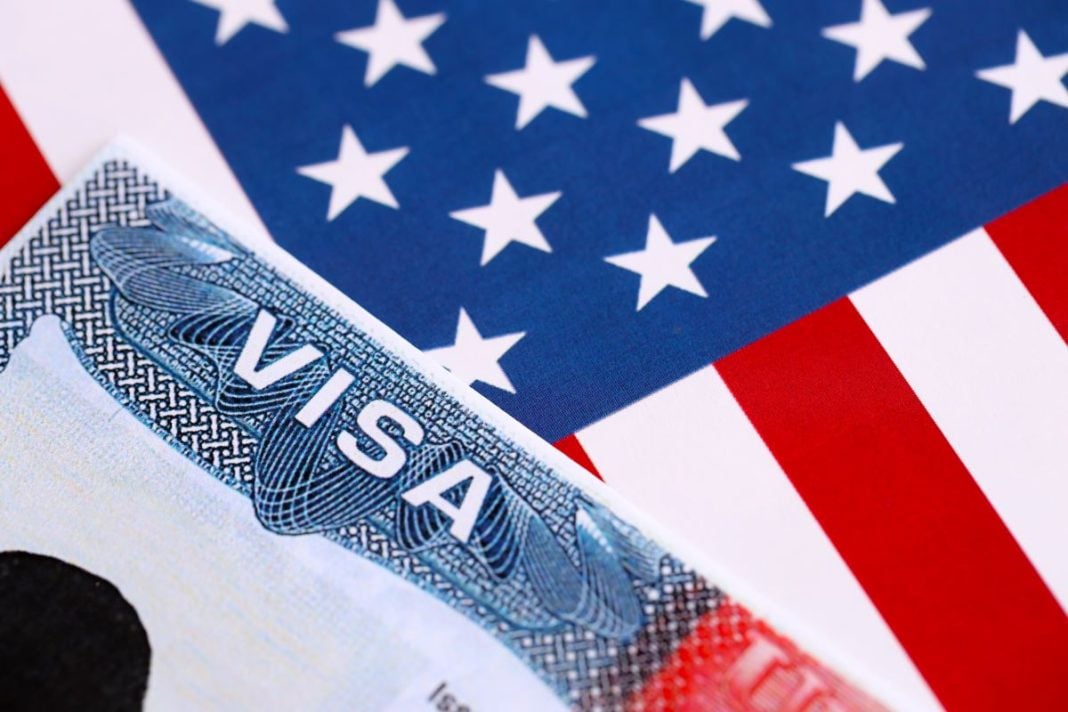


Q: Some contract workers are trying to obtain “degrees” via offers on the internet for bachelor’s, master’s and even higher degrees. The idea is that if they have a degree they just might qualify as a professional requiring a college degree under U.S. immigration. Will such degrees work?
A: H1B visas require a four-year college degree. There are some exceptions for rare circumstances (for example, there are a number of H1B fashion models with only a high school education), but “rare” is the operative word. H1B visas do require a degree from an “accredited” institution. The accreditation and legitimacy of degrees offered over the Internet are variable. We would advise anyone to proceed cautiously and check out the bona fides of any online program before investing time and money. There is an experience equivalent to a college degree for H1B applicants, but it is a very complex process, requiring certifications not easily available from the CNMI. A more significant obstacle is that H1B workers’ salaries must be approved by the U.S. Department of Labor, which bases its decisions on a national average wage for the same job category. For example: foreign accountants employed as contract workers in the CNMI earn approximately $12,000 to $24,000 per year. The mean annual salary for accountants, published by the Bureau of Labor Statistics, U.S. Department of Labor for May 2009, is $65,840. In order to hire a foreign accountant on an H1B visa, the CNMI employer would need to match or exceed the national average salary. We think that few CNMI employers will have either the incentive or the resources to fund such salaries. The other thing to keep in mind is that the applicant for both H1B and H2B visas is the employer; the worker cannot initiate a request for these visas.
Q: U.S. Immigration probably will not allow CNMI employers to bring in unskilled workers or retain them after the transition period. Are there any chances of retaining unskilled workers after this transition period or will we have to advertise at prevailing U.S. wages? Ditto for skilled workers although skilled workers are probably able to come in under H Visas.
A: You are right that after the transition period, CNMI employers will have the same difficulty in bringing in unskilled foreign workers as employers anywhere else in the United States. Remember, however, that the transition period may be with us for quite some time. The initial transition period will last from November 28, 2009 until December 31, 2014. There can be extensions of the transition period, in five year increments, indefinitely. The CNMI-only Transitional Worker Program, unlike the CNMI-only Investment Program, will continue to exist for the duration of any future transition periods. The decision whether the transition period shall be extended will be made by the U.S. Secretary of Labor, in consultation with other federal agencies, and will be based on a determination whether the extension “is necessary to ensure [that] an adequate number of workers will be available for legitimate businesses in the commonwealth.” Whether or not the transition period will be extended will depend on many unforeseeable factors in addition to any continued need for foreign workers in the CNMI: immigration reform in the United States, the political relationship between the U. S. and the CNMI, and economic conditions in the CNMI, the United States and the world at large.
Q: Is the intention of the federal immigration to do away with contract workers? With the U.S. economy still mired in a deepening recession, leaving millions of American workers without work, is the U.S. government going to be sympathetic to the plight of contract workers seeking permanency in the U.S.?
A: We don’t know the answer to this question. The main problem for CNMI employers after the transition, as you clearly realize, will be maintaining a sufficient workforce while doing business in a place geographically isolated from every other U.S. jurisdiction except Guam. The USCIS officials with whom we have met have generally been sympathetic to alien guest workers, although a worker seeking immigration status in the U.S. must have a legitimate basis for a U.S. visa. We think the intent of the federalization law was to do away with a system perceived by federal lawmakers as unworkable and unfair. Our impression is that there are potentially a lot of unintended consequences of the federalization law. For example, neither federal lawmakers nor officials seemed to have been aware of several of our affected immigration categories, such as CNMI permanent residents, surviving spouses of U.S. citizens, and the numerous IRs of U.S. and FAS citizens who will be at risk of losing their currently legitimate CNMI status with no functional U.S. equivalent. They appeared surprised when we brought these vulnerable groups to their attention. We are hoping that some accommodation will be made in the regulations to mitigate the harshness of the law relative to these groups.
The information contained in this column is intended as general information only, and not as individual legal advice. Readers should obtain professional legal advice before taking action with respect to their individual situations. Readers may submit questions regarding federalization or immigration issues to the authors by e-mail to [email protected]. Readers may also e-mail written questions through the Marianas Variety at [email protected]
