



WHILE the CNMI travel bubble with the Asian market has yet to launch, one of its neighbors to the south has already reopened its borders to tourists.
During the University of Guam’s online conference on island sustainability Friday, Palau President Surangel Whipps Jr. talked about the Palau-Taiwan travel bubble launched on April 1, the first of its kind in Asia.
Known as the “sterile corridor” in Palau, the travel bubble allows residents to travel to and from these two countries quarantine-free, provided that they follow certain guidelines.
Prior to departure, inbound passengers to Palau are tested and receive their results at the originating airport before being cleared to board.
Once in Palau, visitors are restricted to tour groups with strict itineraries.
President Whipps said 42% of the private sector payroll in Palau was affected because of the economic downturn caused by the Covid-19 pandemic.
Palau had no tourists for an entire year, he said, which really had a negative impact on businesses and the people of Palau.
“Anything that we can do to get back on track is critical,” he said, adding that it was also important for Palau patients needing to obtain medical attention in Taiwan.
Without the flights to Taiwan, many of these patients who need advanced care were not being treated, he added.
Prior to last year’s elections, Whipps said he raised questions about why Palau could not reopen its borders to Taiwan, given that Taiwan had been doing relatively well in mitigating the virus.
Dialogues continued even after the November elections, in which he stressed the importance of doing everything possible to revive the local economy while taking into account various concerns, including infrastructure.
Whipps expressed his gratitude to the U.S. government for including the Freely Associated States in Operation Warp Speed, which allowed Palau to receive doses of the Covid-19 vaccine.
“That was the first ray of hope that we were going to make it through this crisis,” he said.
The vaccine built people’s confidence in taking a little bit of risk.
A team from the U.S. Department of Health and Human Services came to Palau to train people on how to treat Covid-19, as well as to share statistics that aided in Palau’s decision to move forward with the sterile corridor.
What is important to note from these discussions, Whipps said, is that it was calculated that there was a 1 in 4 million chance that Palau — a country with no positive Covid-19 cases — would have a positive Covid-19 case after reopening its borders.
“To get to where we are today, we had to look at the risk, we had to be prepared and, most importantly, establish it with a country that we know was basically in the same situation as Palau,” he said.
Taiwan also shared similar concerns, Whipps noted, but was able to send a team over to Palau to see for themselves that Palau is indeed Covid-free.
“They came to Palau. They went around. They saw what we have, the infrastructure we have in place, then they built the confidence that yes, we are truly Covid-free. They realized that we were not just testing people that came on flights, we were also testing people that had possible flu symptoms in the community,” he said.
When that trust was built, then both countries started a dialogue.
“This process to get to where we are today did not just begin yesterday. It began a long time ago,” he said.
Using the analogy of persons being sterilized before entering an operating room, Whipps said Palau wants to make sure that everyone is sterilized before entering Palau.
He credited the Palau Ministry of Health, the Taiwan Ministry of Health, and the governments of Palau, Taiwan, and the U.S. for the launching of the Palau-Taiwan sterile corridor.
The challenge that Palau is tackling now is how to convince their tourism markets to visit Palau for three days at the hefty price that comes with all of these strict requirements, Whipps said.
“The next step is how do we make it more efficient, how do we make the experience more pleasant, and how do we really entice more visitors to come to Palau,” he said.
As of Sunday, Taiwan reported 1,057 Covid-19 cases and 11 deaths, while Palau had zero.
In the CNMI, 160 cases had been reported and two deaths since last year, while the U.S. had reported roughly 31.2 million cases and 562,000 deaths.
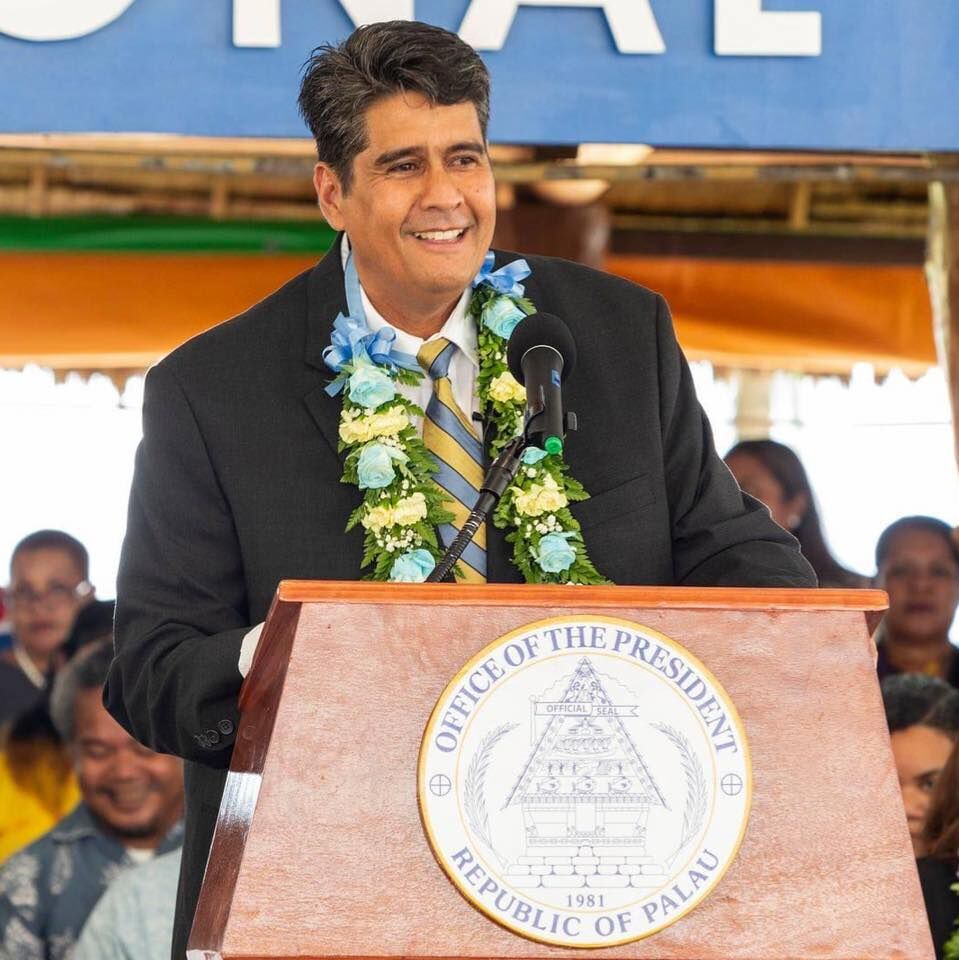
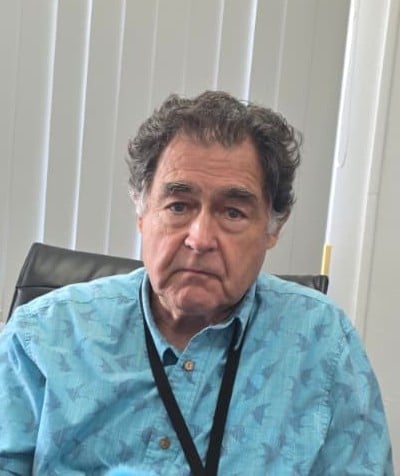
Surangel Whipps Jr.
