


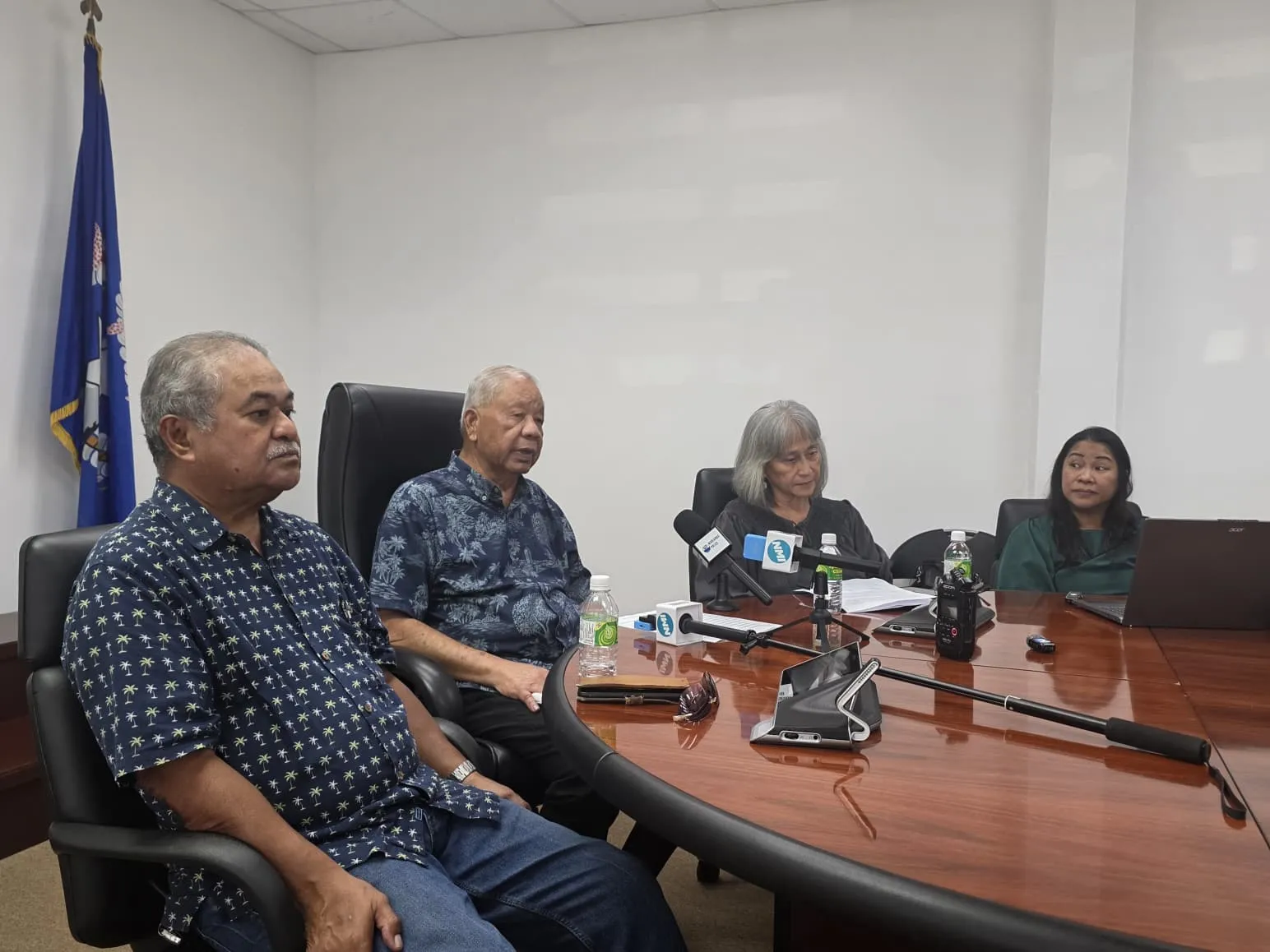


During a public forum on Cultural Policy and Human Rights organized by MCCA on Wednesday and Thursday at the Ngarachamayong Cultural Center, the community was given a venue to voice out their concerns, what they wanted to be represented in the cultural policy.
“Palau has been discussing the idea of developing a cultural policy,” Ann Kloulechad-Singeo, Chief of Division of Gender, Bureau of Aging and Gender of MCCA, said in an interview. “This public forum on cultural mapping will give us a road map on where the strengths and weaknesses of Palau are in terms of cultural preservation. How do we go about developing ways or programs to strengthen the preservation of the Palauan culture. We aim to develop a national cultural policy.”
Before they can do that, however, Singeo said they have to go through these phases. The first phase is the cultural mapping. Singeo has been traveling throughout Palau, interviewing stakeholders and the people who are participating in some sort of cultural activities.
According to Singeo, the interviews she did were so interesting.
“I was humbled. The people that I interviewed were not representing high titles. They were common people. But the amount of wisdom they have and shared really humbled me. The transfer of information of culture is not easy because it’s considered personal wealth,” she explained.
After that the interviews, MCCA then can start drawing a map as to who is doing what; and what functions are they playing in the preservation of culture. That way, Singeo said, they can see where and how we they can assist one another other.
Singeo will write a complete report of the mapping, as well as a strategic plan. “And from that strategic plan comes cultural policy,” she said.
The determination of how the policy goes will probably take the country five to 10 years. After Singeo drafted the cultural policy, it will be submitted to the upper leadership, both the traditional and government.
“They will review, address and make comments. Then MCCA will revise the draft. The chiefs are the ones who are going to stamp the policy,” Singeo added.
In Singeo’s presentation during the public forum, she mentioned the four main functions in the structure of cultural preservation — policy making, application of culture in the lives of the community, cultural research and education, and deposititories, mostly within the government.
During the forum, one of the activities was looking at these functions and the concerns underneath each function. The participants were grouped into four and they addressed each function in their own groups.
“The result of the discussion will give us some sort of a backbone to develop what becomes the national policy,” Singeo said.
In Palau, there are a few non-profit organizations and private companies that are doing their own cultural contributions. Some have begun to collect information or artifacts for display, like the Etpison Museum.
Through this cultural policy project, MCCA also looks at the basic foundation of Palauan culture — what was there before and what’s there now and how do they support each other to strengthen those foundations.
Singeo said the stakeholders will review the common concerns that were brought out during her interviews with the community to see what is wrong, or what areas need improvement.
She said she has to complete the whole project by December. She has six months to finish the real product.
“It’s good so far,” she said. “We’re on the beginning of the second phase. We’re not too far.”
//
