




By Emmanuel T. Erediano
[email protected]
Variety News Staff
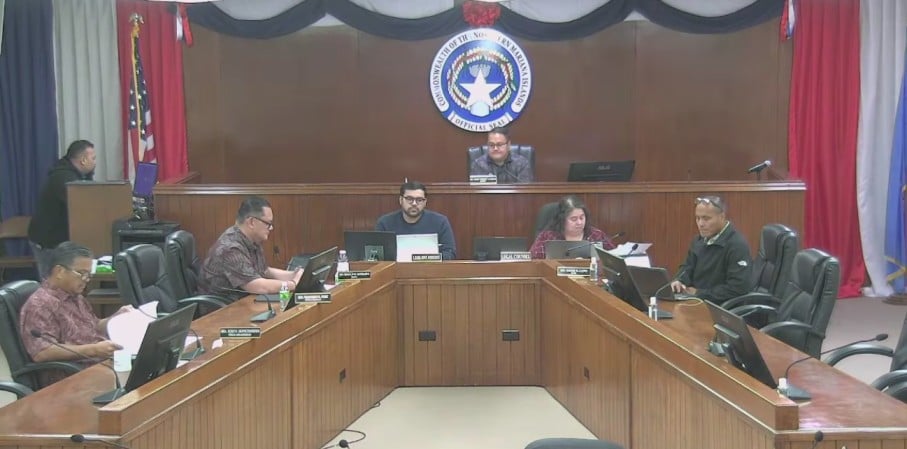
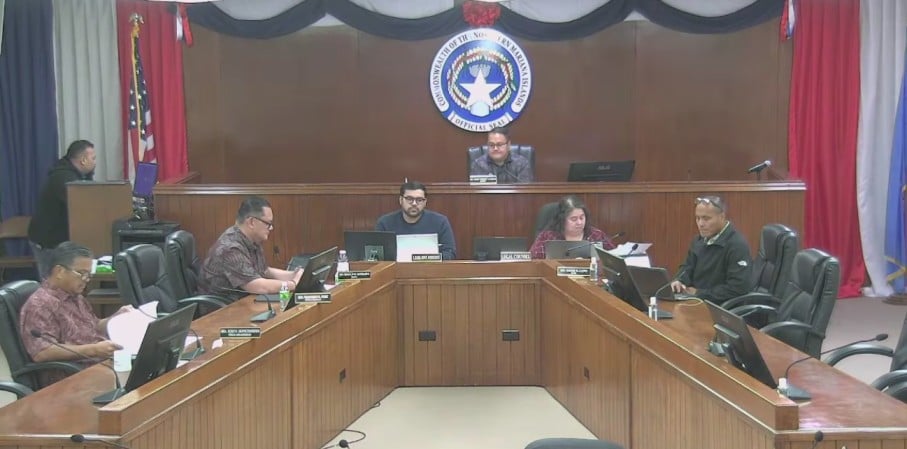
THE Commonwealth Utilities Corporation presented a united front Friday in opposing House measures that would require an independent valuation and additional audits of the CNMI’s sole provider of power, water and wastewater services.
During a public hearing conducted by the Senate Committee on Public Utilities, Transportation and Communications, CUC Executive Director Kevin Watson and board member Miranda Manglona testified against House Bill 24-87 and House Bill 24-88, both authored by Rep. Vincent “Kobre” Aldan. CUC legal counsel Assistant Attorneys General Tina Ngo and Mike Ernest also spoke in opposition to the measures.
House Bill 24-87 would require an independent valuation of CUC, restore constitutional oversight, and modernize procurement and review procedures to protect ratepayers. House Bill 24-88 proposes a comprehensive, independent third-party audit of the utility.
Watson said the bills send a confusing message and make it unclear whether the Legislature intends to expedite CUC’s renewable energy initiatives or delay them indefinitely.
He said the measures appear contradictory to a House joint resolution directing CUC to accelerate planning, permitting and deployment of variable renewable energy projects. Watson warned that passage of the bills could freeze current renewable energy initiatives, including solar farm projects on Saipan, Tinian and Rota.
He added that the measures would also impose a significant administrative and legal burden on CUC each time it seeks to enter into a public-private partnership or power purchase agreement.
Manglona said CUC fully supports transparency, accountability, operational improvements and responsible governance, while also recognizing its obligation to maintain public trust and ensure reliable and sustainable utility operations.
After careful review, she said she opposed House Bill 24-87 and House Bill 24-88, as well as Senate Bill 24-58, which would require quarterly reconciliation of billings; Senate Bill 24-14, which would temporarily suspend collection of certain charges; and Senate Bill 24-34, which would restructure the CNMI electricity market by deregulating electric services.
Senate Vice President Corina Magofna introduced S.B. 24-58 and S.B. 24-34 while Sen. Celina Babauta authored S.B. 24-24.
Manglona said she opposed the measures “due to the significant financial, operational and regulatory impacts these measures may impose on the utility and, ultimately, CNMI ratepayers.”
Extremely challenging
Manglona noted that CUC continues to operate under extremely challenging conditions, including aging infrastructure, rising fuel and operational costs, federal compliance mandates, workforce limitations and supply chain delays. She said the utility’s greatest challenge remains ongoing recovery and restoration efforts following the devastation caused by Super Typhoon Sinlaku.
She also said CUC employees continue to work tirelessly under difficult circumstances to restore and maintain essential services.
Manglona cautioned that while the proposed measures may be well-intentioned, several provisions could create overlapping oversight requirements, expanded administrative burdens, mandated audits, reporting timelines, penalties and procurement restrictions. She said these could divert limited financial and personnel resources away from critical infrastructure repairs, emergency response efforts and essential utility operations.
She further expressed concern that the measures could increase operational costs without sustainable funding sources, delay urgent procurement and infrastructure projects, weaken long-term financial planning, and limit the utility’s ability to respond efficiently during emergencies, ultimately increasing financial pressure on ratepayers.
Scary number
Ngo said Aldan, in referencing Public Law 16-17, which allows for the full privatization of CUC, “brought up a very scary number.”
She said the lawmaker referenced a provision suggesting that independent power producers would need to front approximately $250 million. However, she noted that no current proposal before the committee involves full privatization of CUC, and therefore the figure should not be a concern.
She added that Public Law 16-17 was amended in 2011 by Public Law 17-34, which exempts renewable energy projects from its provisions. As such, she said any partial or full privatization tied to renewable energy projects would be exempt from the original requirements.
Ngo said she opposed House Bill 24-87 because it could force CUC into comprehensive audits and power purchase agreements for renewable energy projects, including solar initiatives. She warned that such requirements could delay or potentially halt renewable energy development.
Ernest said he was generally not in support of the bills in their current form, though he supported their intent and suggested they could be improved through further refinement.
He urged the committee not to advance the measures in their current form, adding that he would be willing to assist in redrafting them.
Ernest warned that the proposed legislation could significantly increase costs and potentially lead to higher utility rates for consumers. He also said the timing was inappropriate given ongoing recovery efforts following Super Typhoon Sinlaku.
He criticized the immediate implementation clauses in all of the bills, saying it was “cruel and shocking” to impose regulatory changes during a disaster recovery period.
CUC Chief Financial Officer Betty Terlaje also strongly opposed House Bill 24-87 and House Bill 24-88 in their current form, urging the committee not to advance them. She described the proposals as largely duplicative of existing oversight mechanisms.
Terlaje said CUC supports transparency, accountability and independent oversight, noting that such measures are already in place and necessary for continuous improvement.
She said the utility regularly undergoes extensive review by independent auditors, regulators, federal agencies, grantors and the federal court system.
According to Terlaje, the issue before the committee is not whether CUC should be audited, but whether the proposed legislation provides meaningful additional benefit beyond existing oversight. In her view, it does not.
She said CUC is already one of the most heavily regulated public utilities in the CNMI, subject to oversight by the Commonwealth Public Utilities Commission, federal agencies and judicial authorities.
Terlaje added that CUC finances are routinely scrutinized by federal funding agencies and that no major infrastructure grants are awarded without extensive financial review and verification of internal controls.
She further noted that CUC operates under federal stipulated orders and judicial oversight, with regular meetings involving the U.S. Environmental Protection Agency and the U.S. Department of Justice. She said the utility also participates in semiannual court proceedings in which a federal judge reviews compliance status, finances, operations, collections, progress and corrective actions under strict deadlines.
Emmanuel “Arnold” Erediano has a bachelor of science degree in Journalism. He started his career as police beat reporter. Loves to cook. Eats death threats for breakfast.
