


HAGÅTÑA (The Guam Daily Post) — The Guam Memorial Hospital Authority continues to tackle the mold issue at the island’s only public hospital. While there are planned capital improvement projects to mitigate the spread of mold, some of which will be funded by federal dollars, shortages in the hospital’s projected revenues for the fiscal year have sparked concerns over whether those plans can be fully funded.
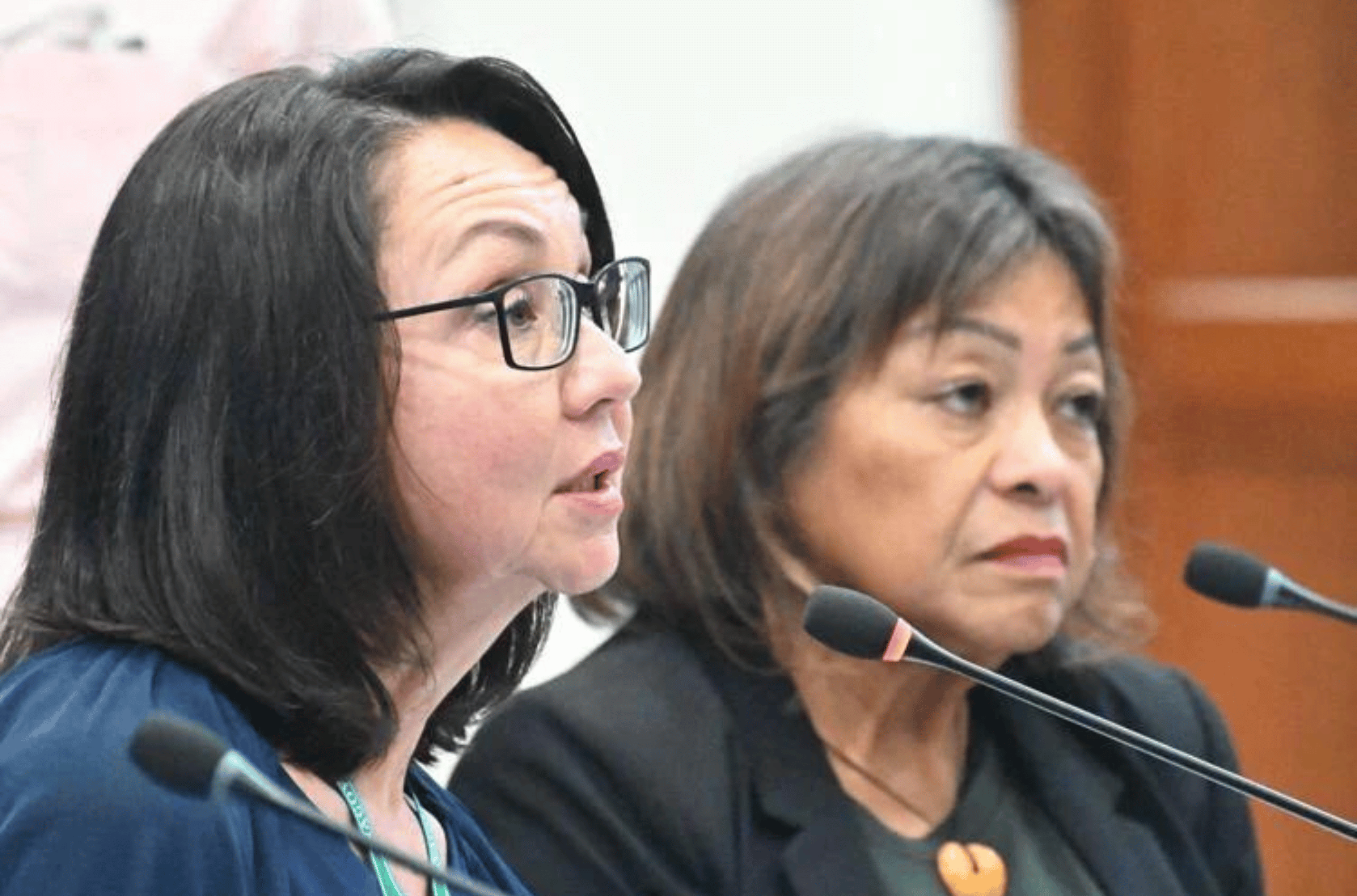
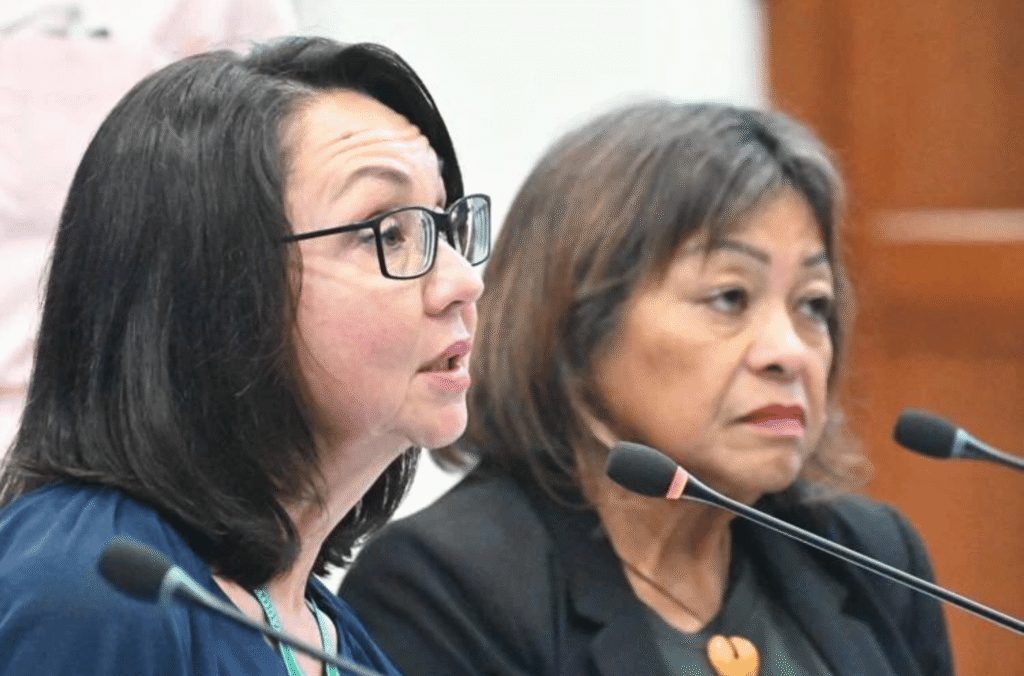
GMHA is replacing ceiling tiles where there is obvious mold growth, but the issue “is really deeper” inside the hospital facility, according to GMHA CEO/Administrator Lillian Perez-Posadas, who spoke to lawmakers Tuesday during an oversight hearing regarding various hospital issues.
The mold problem was said to have been caused by Typhoon Mawar, which battered Guam in late May 2023, and is also said to be greater than any prior mold issue that GMHA has had to deal with.
GMHA hired an industrial hygiene firm to assess the mold situation.
At the oversight hearing, the hospital authority presented various capital improvement projects related to mold mitigation.
Other than removing and replacing ceiling tiles, these projects include upgrades for the hospital’s heating, ventilation and air conditioning, or HVAC, system. These range from replacing air handling units to procurement planning for hospitalwide duct cleaning.
According to that presentation slide, the design phase for the hospital’s envelope upgrade is also in progress. The envelope upgrade includes replacing windows/doors and their seals, replacing typhoon shutters, wall hardening and replacement of mechanical systems.
It appears some projects will have to get done before others or go through additional consideration before getting done. For example, while GMHA will be developing a request for proposal for duct cleaning services, the recommendation from the hospital’s contracted industrial hygiene firm is “not to get to that point yet,” Perez-Posadas stated Tuesday.
“We need to really fix all these other stuff first before we do those wall hardening and duct cleaning,” she added.
GMHA hasn’t yet publicized a report on the mold issue from their industrial hygienist. Perez-Posadas said the report is still in draft form, and they wanted to give the hospital’s board “that respect as a governing body” to be the first to see and discuss it.
However, she did explain that the industrial hygienist took samples from 40 different sections at the hospital and analyzed the carbon content, temperature setting and relative humidity.
“And that’s what they reported on,” Perez-Posadas added.
During the hearing, Sen. Chris Barnett asked whether the draft mold report discussed potential health impacts that may be brought on by the mold issue.
“Not by the industrial health hygienist. The (firm) did not really say what those risks are for the patient. But just the facts as far as the contents in the environment,” Perez-Posadas said.
Barnett later noted that the breadth of projects for mold mitigation made it appear that the situation was serious, and people had a right to know about it. Perez-Posadas said they take the situation seriously but added that, so far, there hasn’t been any hospital-acquired fungal infection.
ARP can partially cover costs
There is some overlap between the mold mitigation CIPs and projects that will utilize $20 million in American Rescue Plan funding granted by the governor last year.
William Kando, the assistant administrator of operations at GMHA, said the overlap had to do with HVAC upgrades, as that would be the long-term solution to ensuring mold does not proliferate throughout the hospital.
Kando said the $20 million will cover a portion of the upgrades but not all. The rest will have to come from operational revenues, according to Perez-Posadas.
Hospital revenues coming up short of projected
However, Yuka Hechanova, the hospital authority’s chief financial officer, confirmed that GMHA revenues are not entirely meeting projections for fiscal year 2024.
“We need collections of at least $11 million a month. As of December (2023), we are about $2.5 million short of that goal,” Hechanova said.
She also confirmed that mold mitigation was not part of GMHA’s planned use of fiscal 2024 revenues.
“So you’re already short on revenue. You have not predicted these costs. So you seem, to me, to be doubly short in that regard,” Speaker Therese Terlaje, head of the legislative committee overseeing health, stated during Tuesday’s hearing.
“This doesn’t seem like a feasible plan at this point. Please talk to your fiscal team about that, your fiscal advisers that you meet with every month,” she added.
$30 million appropriation
Another major issue discussed at the oversight hearing was the status of vendor payments.
Lawmakers appropriated at least $30 million to GMHA last year through Public Law 37-43, to pay off outstanding vendor payables.
Hechanova reported Tuesday that the Department of Administration paid out $23.6 million to vendors from the $30 million appropriation. However, GMHA also owes money to DOA, in the amount of $4.7 million, for travel nurse invoices paid by DOA a couple of years ago.
That leaves behind $1.7 million from the appropriation.
That balance has some relevance to Bill 225-37, the nurse pay bump measure introduced by the speaker, which seeks to utilize $5 million in fiscal 2024 general fund excess revenues. It’s just one of several measures seeking to utilize general fund excess, including another measure from the speaker to construct the Nåftan Mañaina-ta Shrine.
The fiscal note for Bill 225 states that $5.2 million was available in unobligated excess funds, based on the November report on the general fund. The December report identifies a little less unobligated excess, at $5 million. That’s still enough for the speaker’s nurse pay bill but not enough for other proposals to be considered.
However, Terlaje had also suggested reprioritizing any remaining funding from the $30 million as an alternative source to fund the nurse pay bump, according to the fiscal note for Bill 225.
But there are also “stragglers” among vendors, those who still haven’t been paid due to some issues with invoices or some other technical matter, according to Hechanova. Those outstanding payables amount to $1.7 million, she added.