


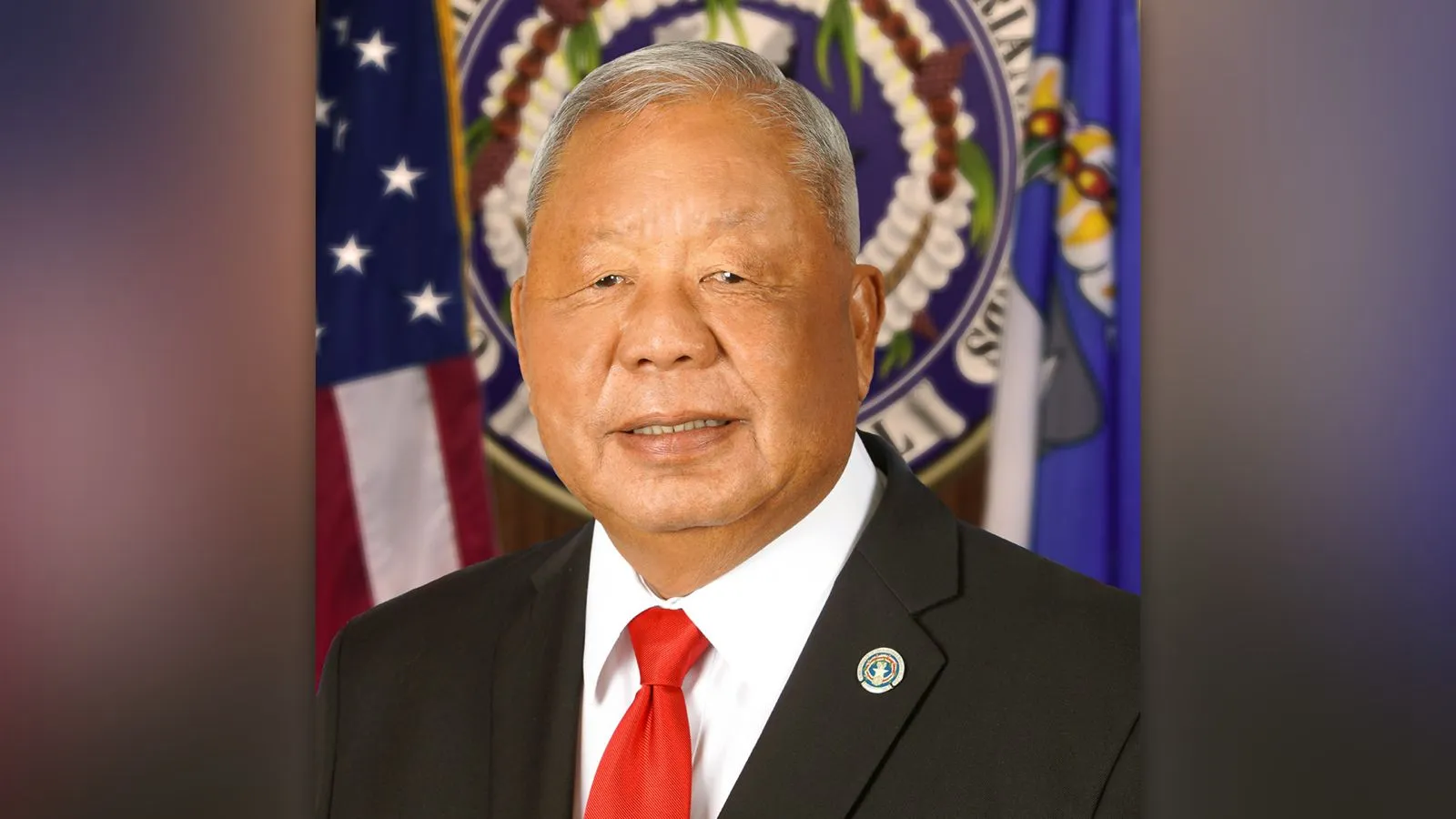




THE Saipan and Northern Islands Legislative Delegation will not confirm the nomination of retired educator Ambrose Bennett to the CNMI Cannabis Commission because of his criminal conviction in Tennessee about 50 years ago.
In a joint letter, the members of the delegation’s Judiciary and Governmental Operations Committee requested Gov. Arnold I. Palacios to withdraw Bennett’s nomination because he “may not be qualified to be a member of the Cannabis Commission.”
The letter was signed by the JGO chairwoman, Senate President Edith Deleon Guerrero, the vice chairwoman, Senate Floor Leader Corina L. Magofna, and members, Reps. Blas Jonathan Attao, Diego Vincent Camacho, Vicente C. Camacho, Marissa R. Flores and Denita K. Yangetmai.
They cited Section 107 (c)(3) of Public Law 20-66, which legalized cannabis in the CNMI, stating “no person shall be appointed who has been convicted of a crime, excepting traffic offenses, in any jurisdiction of the United States, the Commonwealth or any foreign country carrying a maximum sentence of more than six months, or any crime or offense involving moral turpitude unless a full pardon has been granted.”
The delegation members said, “It appears that Mr. Bennett was convicted in the State of Tennessee…of possession with the intent to sell a controlled substance, phencyclidine, Schedule III of the Tennessee Drug Control Act,” and was sentenced to confinement for not less than five and one-half nor more than eight years.”
The Saipan lawmakers said unless Bennett was pardoned for his conviction, it “falls within the definition of a conviction of crime that carries a sentence of more than six months.”
They also noted that the governor’s office appears to be aware of Bennett’s conviction.
The lawmakers cited Bennett’s letter attached to the governor’s appointment letter on May 16, 2023.
In the letter Bennett stated that “given that the Governor knew about my record and still appointed me speaks volumes to the fact that my record has virtually no bearing on my appointment. The Governor realized that my record is virtually ‘weightless and worthless’ compared to the genuine value of my knowledge and abilities for the CNMI.”
The delegation members said Bennett’s admission “confirms his criminal conviction and leaves no doubt in the minds of the JGO committee members.”
Without any evidence that Bennett was pardoned for his prior conviction, he is not qualified to serve as a member of the Cannabis Commission pursuant to the law, the Saipan legislators said.
Because Bennett is disqualified, the lawmakers said, they are requesting Gov. Palacios to withdraw Bennett’s nomination at this time.
Otherwise, they said, “the Committee will have no choice but to reject Bennett’s nomination if this matter moves forward for consideration.”
The governor’s letter nominating Bennett will expire on July 26.
Asked for comment, Bennett said he has no ill feelings toward the Saipan delegation members because he knows it is the law.
He also doesn’t hold it against the governor because he also knows there’s nothing the governor could do about it. It’s not his fault, he added. The governor, Bennett said, did everything he could do to give him an opportunity to serve on the commission.
“I was more of a victim of my environment and peers than I was a criminal,” Bennett said adding that Tennessee “was one of the most racist states in the 1970s.”
“If I were a young white man back then, I wouldn’t have a [criminal] record,” he said.
What needs to be done, Bennett said, is to “fix” the CNMI cannabis law. He said the laws governing the other boards and commissions in the CNMI would have allowed him to be appointed.
“It is interesting to note that only on the CNMI Cannabis Commission that people like me cannot be a member,” he said.

Ambrose Bennett
