







HAGÅTÑA (The Guam Daily Post) — A local Simon Sanchez High School teacher has secured a grant after demonstrating how his teaching methods support diversity, equity and inclusion in the classroom.
A classroom is a melting pot of cultures and a place to mold students’ minds, according to Ronald Canos, a fine arts teacher at Simon Sanchez High School. Canos believes the content has to be meaningful to every child, and to do so he searched for resources to supplement his lessons. He found that the diversity, equity and inclusion teaching grant by the National Society of High School Scholars fit perfectly into what he already does in the classroom.
“I think the award allows me to view resources and other material that we can use to kind of touch upon some of the things that are maybe not as covered as well as it relates to Guam when it comes to things like equity and inclusion, and celebrates everyone’s differences and cultural background,” Canos told The Guam Daily Post. “The award itself is a grant for us to look at some of those issues and see where we can find positive impacts and use the funds to support that. Whether that’s supplemental materials, … or programs we use to celebrate diversity or inclusion, we want to use those funds to work in that direction.”
According to a press release issued recently by NSHSS, the grant recognizes educators who actively promote effective diversity and inclusion initiatives in their schools or greater communities. Canos was one of five top educators who were selected to be awarded a grant of $1,500 each.
“They were looking for … applicants who demonstrated their ways of addressing diversity and inclusion in their classroom. I teach art, so I basically made the application celebrate my students’ works in terms of finding identities for themselves and navigating the challenges of finding who they were through painting and the arts,” Canos said.
As a fine arts teacher, Canos utilizes open discussion, cooperative learning and project-based activities to get students involved and bring the lessons to life.
“I think working primarily in the arts, you can see just how talented students are as individuals. I think it’s important for us to kind of look at teaching and instruction as part of a larger picture of helping students find paths that are best suited for themselves that they choose to go through. In the classroom, differentiating instruction is a key role to that, allowing students to find ways to demonstrate their strengths and demonstrate how they understand and they obtain content knowledge, having them have choices in matters of how they want to perform and showcase their knowledge,” Canos said.
He said he believes making the content meaningful to the students through tapping into their personal experiences and cultural backgrounds is important to lifelong comprehension.
“I think there’s a very important part of that in classrooms, where teachers provide students with the overarching themes, standards (and) subject matter, but leave a lot of flexibility for students to say, ‘Hey, I can do it this way’ or ‘This is the way that best suits me, or aligns with my sensibility and who I am,’” Canos said.
Canos has students from various backgrounds in his classes. Many students are from other islands in Micronesia, the Philippines, Japan, Korea and China and of local CHamoru descent. Embracing each student’s ethnicity, he said, brings equity to the classroom.
“It becomes super important that we build these real-world lessons with students, so their background plays an integral role in bridging the content with the acquisition of the content for students. We could be talking about anything in a textbook all day, but those textbooks are coming from perspectives that some of our local students have very limited insight into. So, really, the teacher’s role is to take that content that’s maybe from a perspective that is not for our island and find a way to bridge that gap through students’ experiences, their cultural knowledge (and) storytelling. When we do that, we make content more meaningful, more applicable and certainly students find a way to connect with it a lot more,” he said.
Now, with the grant award, he intends to build resources for his students so they can explore the arts and discover their identities.
“Whether those are sensibilities of how to connect to family or local culture or even things that they connect (with) on a personal level, whether it’s religion or gender or sexuality. But, more importantly, I think there’s a large area of recognition that I would like to use the grant for, an area where we recognize students for doing positive things in the realm of equity and diversity, student achievements in providing services to the community or becoming inspirational role models for others like them,” he said.
According to the release, NSHSS is an honors and scholarship program co-founded by Claes Nobel and James Lewis. The organization says it offers a lifetime of benefits, pairing the highest-performing students worldwide with high school and college scholarships, events, connections, internships and career opportunities.
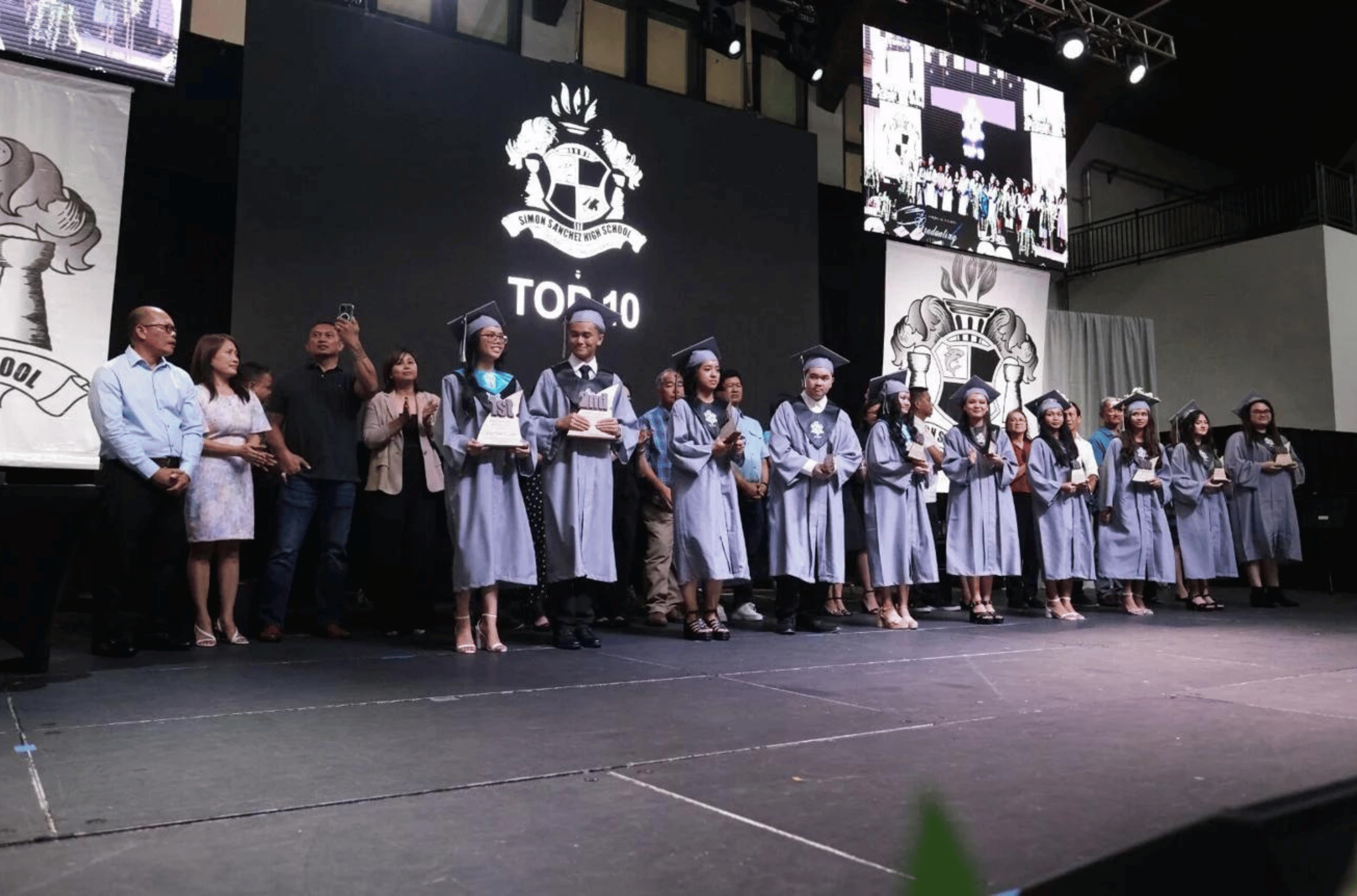
The academic top ten of the Simon Sanchez High School Class of 2023 were presented with their parents during their commencement exercises at the University of Guam Calvo Field House on June 16, 2023.
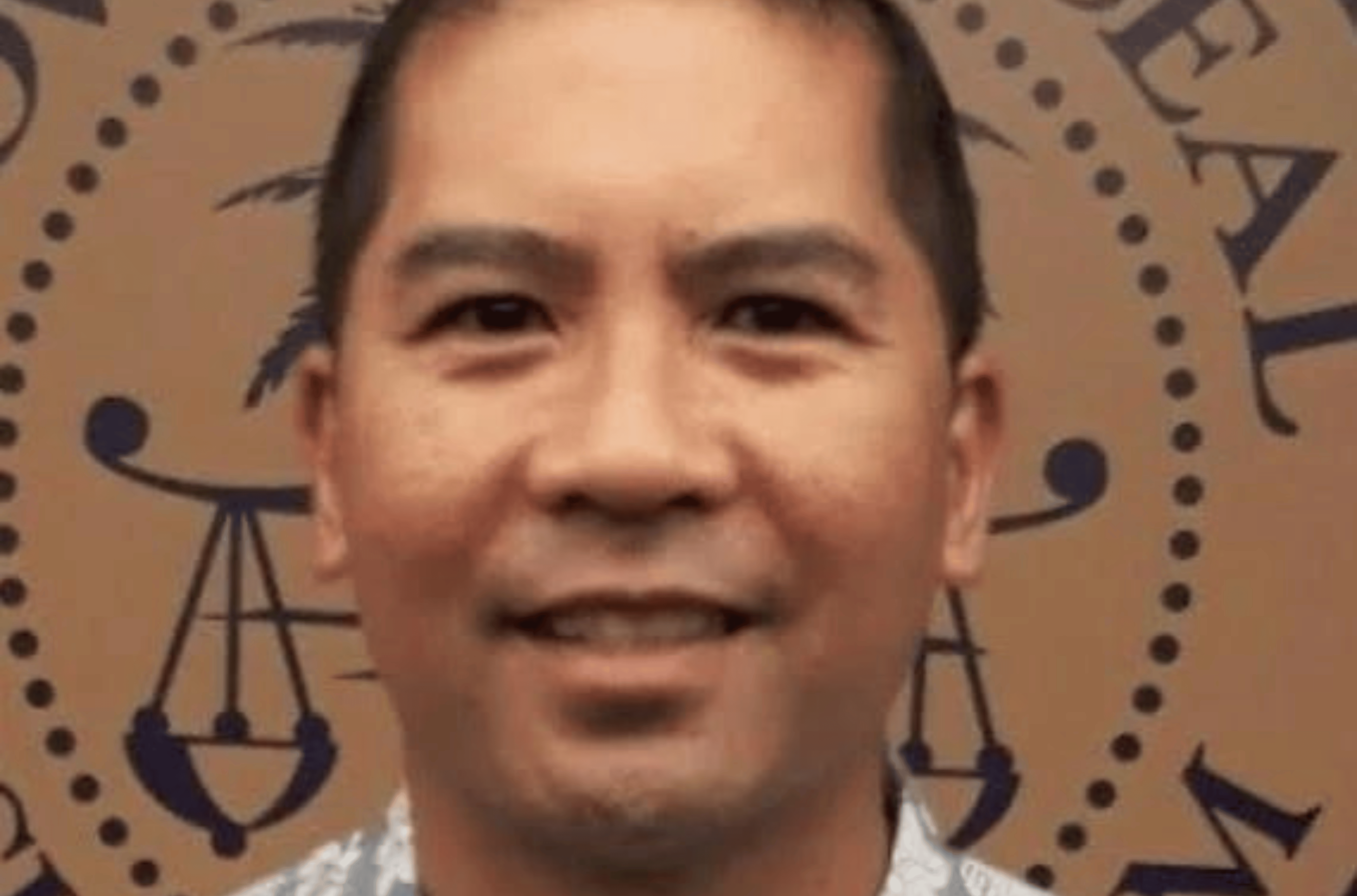
Ronald Canos
