






HAGÅTÑA (The Guam Daily Post) — Twenty-nine beaches on Guam have been deemed polluted by the Guam Environmental Protection Agency, and beachgoers are advised to stay out of the unsafe waters.
“Beaches with water samples analyzed with a statistical threshold value of 130 enterococci/100mL and a geometric mean standard less than 35 enterococci/100mL will be placed on advisory,” said Nic Lee, Guam EPA spokesperson.
The results from 42 samples taken by the agency on Sept. 14 showed bacteria levels that were higher than the accepted standard at the following areas:
• Adelup Beach Park.
• Adelup Point Beach.
• Asan Bay Beach.
• Pago Bay.
• Bangi Beach.
• Nimitz Beach.
• North Hågat Marina, south of Chaligan Creek.
• Togcha Beach – Hågat, bridge and cemetery.
• Hagåtña Bayside Park.
• Hagåtña Channel and Outrigger ramp.
• Padre Palomo Beach Park.
• West Hagåtña Bay, west storm drain.
• Piti Bay.
• Santos Memorial.
• Toguan Bay.
• Humåtak Bay.
• Malesso’ Pier.
• Talo’fo’fo’ Bay.
• Dungca’s Beach.
• East Hagåtña Bay, Alupang Tower, Trencher Beach.
• Gongna Beach, Okra Beach.
• Naton Beach, Fujita.
• Tagachang Bay.
According to a Sept. 15 advisory from Guam EPA, swimming, fishing or playing in these waters could lead to minor illnesses such as sore throat or diarrhea. It could also result in more serious illnesses such as meningitis, encephalitis or severe gastroenteritis.
No reports of illness from beachgoers have been received by Guam EPA as of Monday.
What led to the high number of polluted beaches islandwide?
“Higher enterococcus bacteria indicator concentrations in our beaches are usually caused by stormwater runoff. During heavy periods of rainfall, there are more beach advisories issued to the public because increased runoff occurs during heavy rains,” said Lee.
Heavy rain and stormy weather the island experienced in the past week was not the only contributing factor to polluted waters.
“In addition to stormwater runoff, sources of fecal indicator bacteria like enterococci include wastewater treatment plant effluent and leaking septic systems. There are also natural, nonhuman fecal sources of fecal indicator bacteria like animals, plants, sand, soil and sediments that can be carried into our waters during rainfall,” Lee said.
How long will the waters stay polluted?
According to Lee, “fluctuations in our tides and circulation in our currents along with increases and/or decreases in rainfall can affect the concentrations of enterococci in our beaches. Since our beaches are normally sampled once a week, it will be difficult to determine the amount of time at which a beach’s enterococcus bacteria indicator concentration will change without significantly increasing our sampling frequency to observe the concentration levels.”

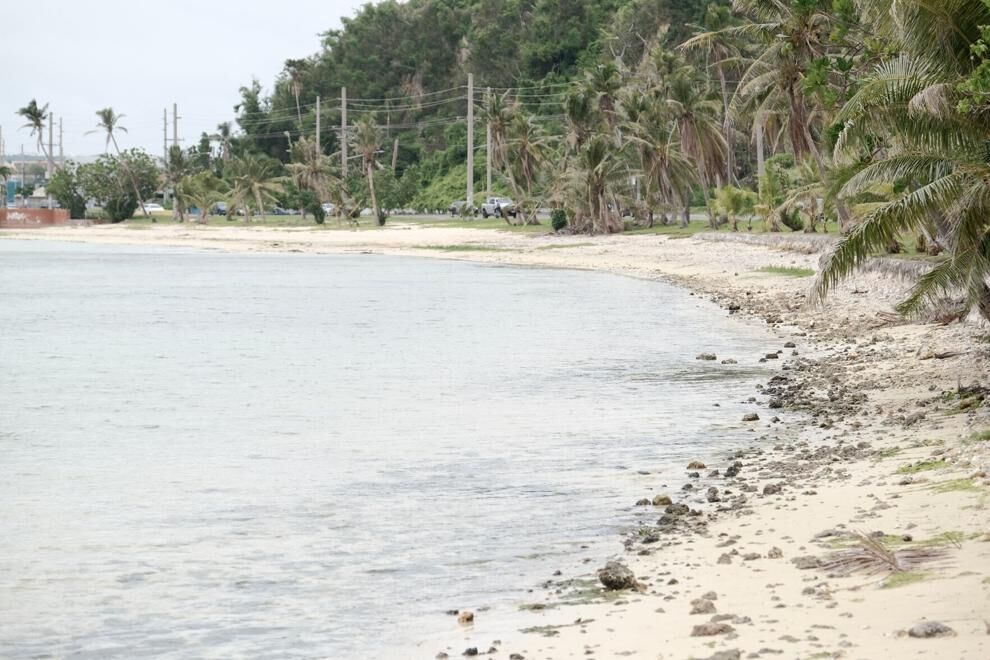
An area of the East Hagåtña shoreline photographed on Wednesday, July 26, 2023.
