






THE Senate Fiscal Affairs Committee on Thursday afternoon adopted a substitute version of House Bill 23-66 or the proposed Fiscal Year 2024 Appropriations Act that includes an eight-hour work cut for the Legislature and the judiciary.
It was Sen. Celina Babauta who proposed on Wednesday to reduce the work hours of the Legislature and the judiciary “to be consistent with the executive branch” and find resources to address the shortfall in the FY 2024 budget.
She told the committee chairman, Senate Vice President Donald Manglona, and fellow committee members, that she has received many calls from executive branch government employees worried about the government’s worsening financial situation. She said they fear that the Legislature may soon consider reducing their working hours to 64 or even 56.
To assure the executive branch employees that it will not come to that, she said lawmakers should “find other solutions” such as reducing the work hours of the Legislature and the judiciary.
In an interview after the committee meeting on Thursday, Manglona said, “Cutting the [work hours of the] judiciary and the Legislature was necessary in order to avoid further reducing the executive branch’s [budget] and to meet the needs of the Tinian personnel not covered by the general fund.”
He said the House of Representatives, for its part, has proposed to allow the governor to suspend one or more holidays.
He said it would be unfair to executive branch employees who are “already on austerity” if “the other two branches were kept whole.”
Manglona said they also made some cuts to the Medicaid reimbursement to be able to fund the budget shortfall and to provide some funding to the government employees’ group health and life insurance or GHLI, and avoid a disruption in coverage.
“We also need to work with the House to address some concerns regarding revenue-generating bills aimed at increasing taxes in order to avoid any delay in passing [them and] to speed up the process in order to provide additional funds for GHLI, Medicaid, the retirees’ 25% benefit, utilities, and government operations,” Manglona said.
Prior to the roll call vote to adopt the Senate substitute budget bill on Thursday, Manglona reiterated that the committee had agreed that the net budget amount available for appropriation is $114.2 million.
This however, leaves a $1.1 million shortfall, he said. To address the shortfall, “we had to take…back from PSS…$292,084 and we further reduced Saipan Mayor Office’s account by $690,904 to allow for…employees to be funded by the American Rescue Plan Act. Additional funds were also taken out of the Medicaid local matching [amounting to] $185,346.”
He said the committee approved $1.7 million to cover 73 employees of the Tinian Mayor’s Office. In order to make that possible, he said the committee approved a 72-hour work per pay-period for the employees of the Legislature, the judiciary, the Public Defender’s Office and the Office of the Attorney General.
Manglona said they also included a provision stating that $531,277 shall be transferred from the Tinian Treasury to the general fund to partially fund the salaries of Tinian employees who were nnot included in the budget bill.
FY 2024 starts on Oct. 1, 2023. Without a new balanced budget enacted into law before that date, there will be a partial government shutdown.
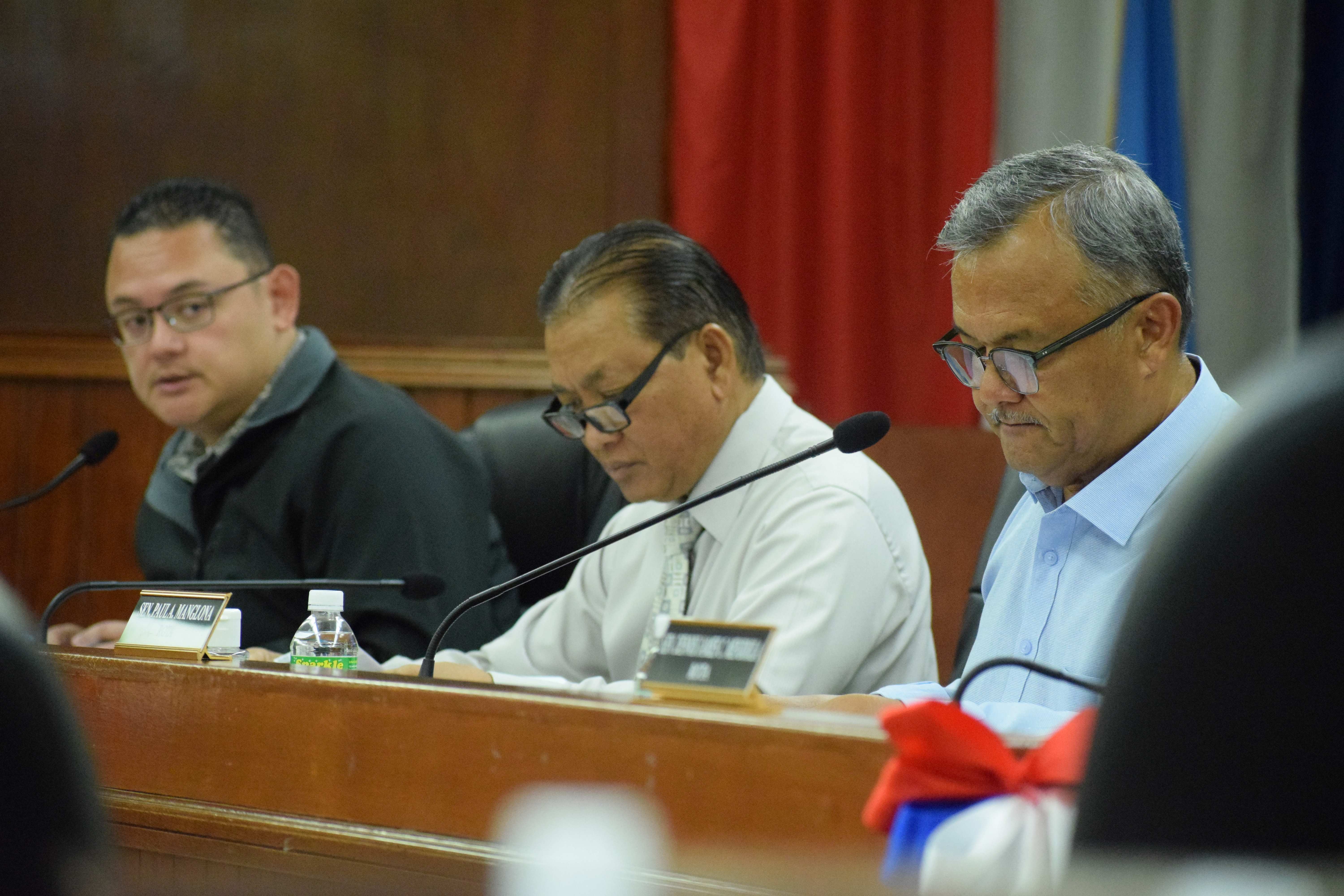
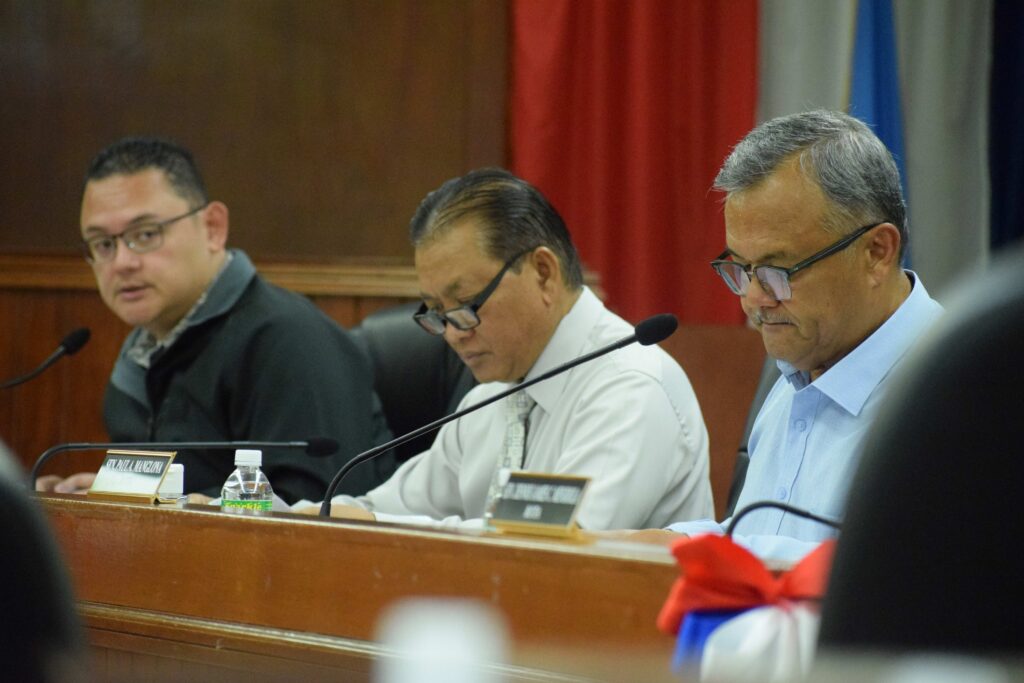
Senate Committee on Fiscal Affairs Chairman Donald Manglona speaks during a Senate session on Thursday. Also in photo are Sens. Frank Q. Cruz and Paul A. Manglona.
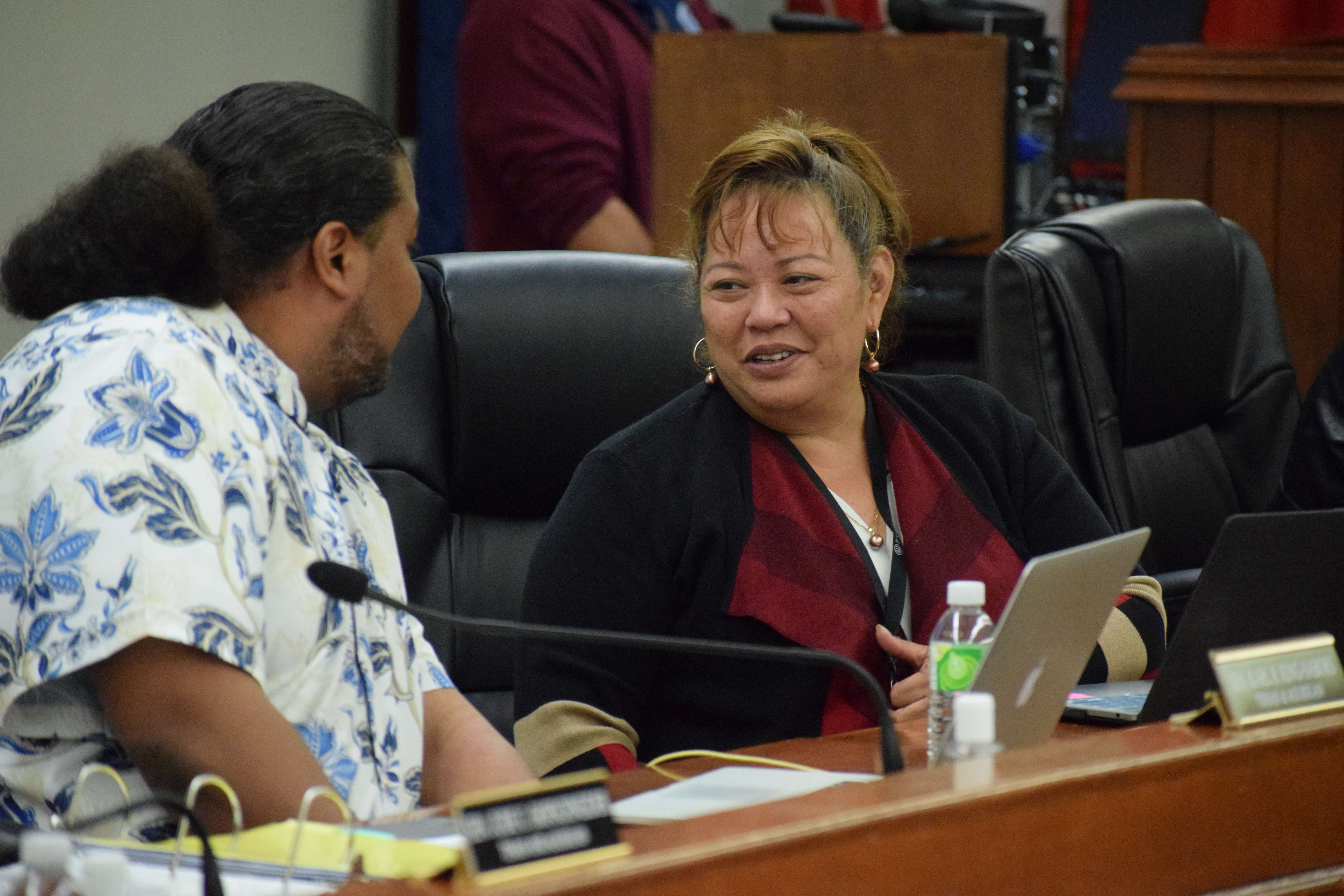
Sen. Celina Babauta, right, talks with Sen. Karl King-Nabors during a break from a Senate session on Thursday.
