




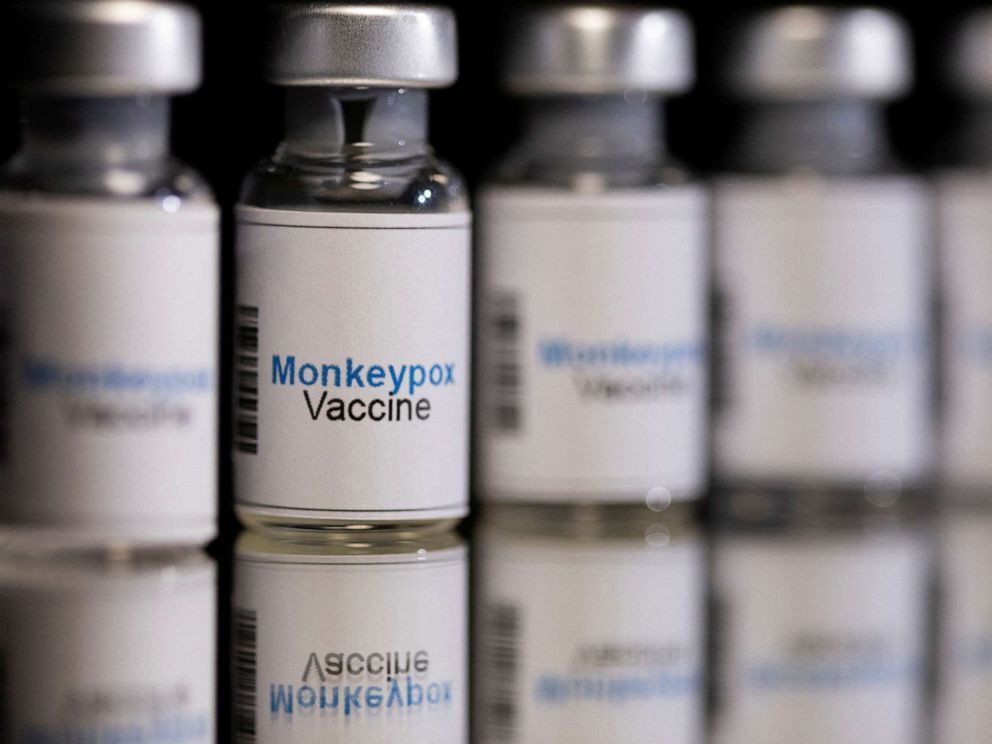
MONKEYPOX vaccines have been ordered and will soon arrive in the CNMI in preparation for potential local cases, Commonwealth Healthcare Corporation Chief Executive Officer Esther L. Muna said.
“There is an allocation for the CNMI for the monkeypox vaccines,” she added. “We have not identified any monkeypox in this jurisdiction, so the allocation will be low.”
Monkeypox is a rare disease caused by infection with the monkeypox virus. The monkeypox virus is part of the same family of viruses as smallpox, has similar symptoms to smallpox but milder, and is rarely fatal. It is not related to chickenpox.
The World Health Organization has declared the multi-country monkeypox outbreak a Public Health Emergency of International Concern.
While the CNMI has no reported cases of monkeypox, the neighboring island of Guam has sent at least three suspected samples to the U.S. Centers for Disease Control and Prevention for testing, all of which were negative for monkeypox.
Vaccines from CDC are available for individuals deemed high-risk by a healthcare provider.
“We have to be careful and make sure that the high-risk are the priority,” Muna said.
She added that CHCC has a system in place to test individuals suspected to be positive for monkeypox.
If an individual suspects that s/he has monkeypox, s/he is encouraged to contact a medical provider ahead of his/her visit for a preliminary evaluation.
Once it is confirmed by a provider, the public health medical director and epidemiologist will then become involved in the case.
“We want CHCC to be the hub of receiving these [monkeypox cases],” Muna said.
Ultimately, the official determination will be made not by medical providers or epidemiologists on island but by CDC, which will receive specimens suspected of monkeypox.
Specimen are sent to the CDC laboratory in Hawaii for testing. Results will be available a week or two after the sample is received by CDC.
In the CNMI, Muna said individuals positive for monkeypox and their close contacts will not be required to quarantine but will be encouraged to isolate so as to contain the spread of the virus.
Monkeypox can be transmitted through close contact, such as with household members, or through sexual intercourse.
Individuals may be symptomatic or asymptomatic, and may not require hospitalization.
Unlike Covid-19, monkeypox cannot be transmitted through asymptomatic individuals.
Pregnant women, however, can spread the virus to their fetus through the placenta.
Symptoms of monkeypox include a rash that can look like pimples or blisters that appear on the face, inside the mouth, and on other parts of the body, like the hands, feet, chest, genitals or anus.
Other symptoms may include fever, chills, headache, muscle ache, backache, and swollen lymph nodes.
The illness typically lasts two to four weeks. Sometimes people get a rash first, followed by other symptoms. Others only experience a rash.
To prevent the spread of monkeypox, as with any infection, individuals are encouraged to thoroughly and consistently wash their hands, practice public health measures, and avoid cross-contamination.
Moreover, they should avoid close, skin-to-skin contact with people who have a rash that looks like monkeypox; and refrain from touching the rash or scabs of a person with monkeypox; kissing, hugging, cuddling, or having sex with someone with monkeypox; sharing eating utensils or cups with a person with monkeypox; and handling or touching the bedding, towels, or clothing of a person with monkeypox.
“We will work with patients and their families to make them understand [the risks],” Muna said. “And we will make sure that they continue with treatment. There is some treatment that’s available. We need to make sure that [patients] are here [at CHCC] getting treatment,” she added.
“As with any other diseases, you want to be able to detect it as quickly as possible. Then you must prevent spread. That’s similar to any infectious disease,” Muna also said.
Right now, Muna said, “we are continuously monitoring. We’re working with private providers. As soon as [a suspected monkeypox case] is identified, we will test to confirm it. We have to confirm it. That’s typical of all the public health measures that we have, even if this were [tuberculosis] or any other infectious disease. We should treat it just like any other infectious disease, and we have a protocol for that,” Muna added.
As of July 28, 2022, the CDC had reported over 4,000 cases of monkeypox in the U.S. and Puerto Rico.
For more information, go to https://www.chcc.health or call (670) 234-8950.

