





E.O. 2009-02, which acting Gov. Timothy P. Villagomez signed on March 1, said CUC does not have the means to immediately ship out the used oil.
Incineration is an option but the process is tedious and could pose environmental hazards, the E.O. stated.
“CUC has determined that its Tank 104 used oil facility is structurally unsound and must be emptied of its used oil in advance of severe weather, particularly a serious typhoon, to avoid any potential harm to the commonwealth’s waters, including the lagoon,” the E.O. stated.
“Further, there are 2,800 sealed barrels of used oil nearby which must also be removed. The removal must comply with federal environmental law. CUC lacks the internal capability to carry out the removal and must contract for these services…. CUC is trying to reduce its 2,800 drums of used oil through incineration. There is no indication that any of the above situation will be resolved in the next month,” it added.
The used oil came from diesel fuel used for the engines of CUC’s power plants.
The E.O. will again allow the administration to keep CUC under its control.
It also exempts CUC from complying with local procurement rules.
According to Villagomez, CUC will negotiate with contractors to remove the used oil from Tank 104 and the used oil barrels.
CUC, he added, “shall take every measure to insure that a typhoon shall not cause any of that oil to pollute the lagoon.”
The U.S. Environmental Protection Agency and the Department of Justice have already brought CUC to court for its failure to comply with federal water and wastewater standards.
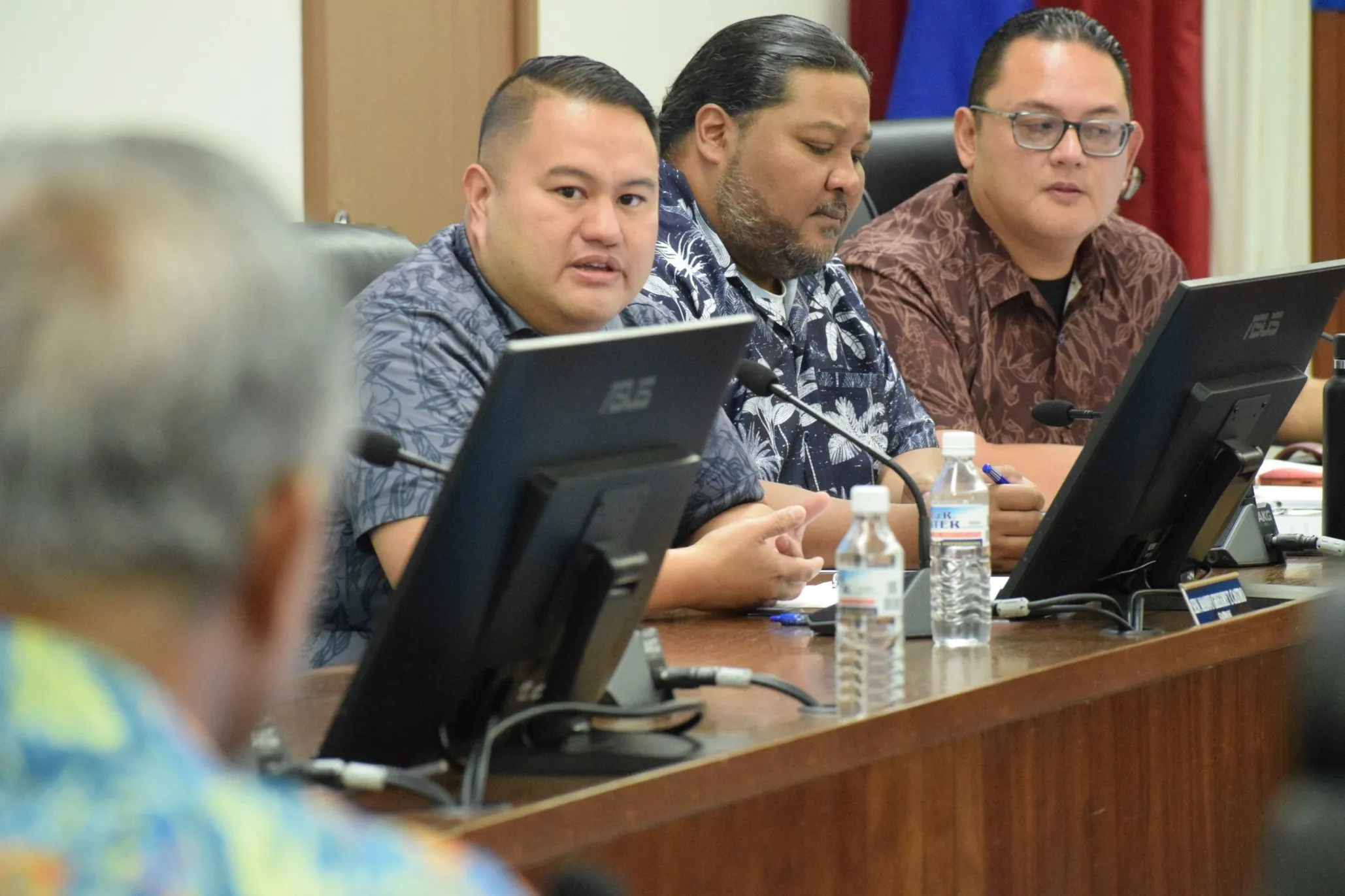
Rep. Tina Sablan has noted that conditions at the utilities agency continue to get worse despite the governor’s repeated extension of a state of emergency declaration for CUC.
Other lawmakers have also expressed frustration about the lack of a plan, and the lack of responsiveness from the governor to their requests for a plan.
