



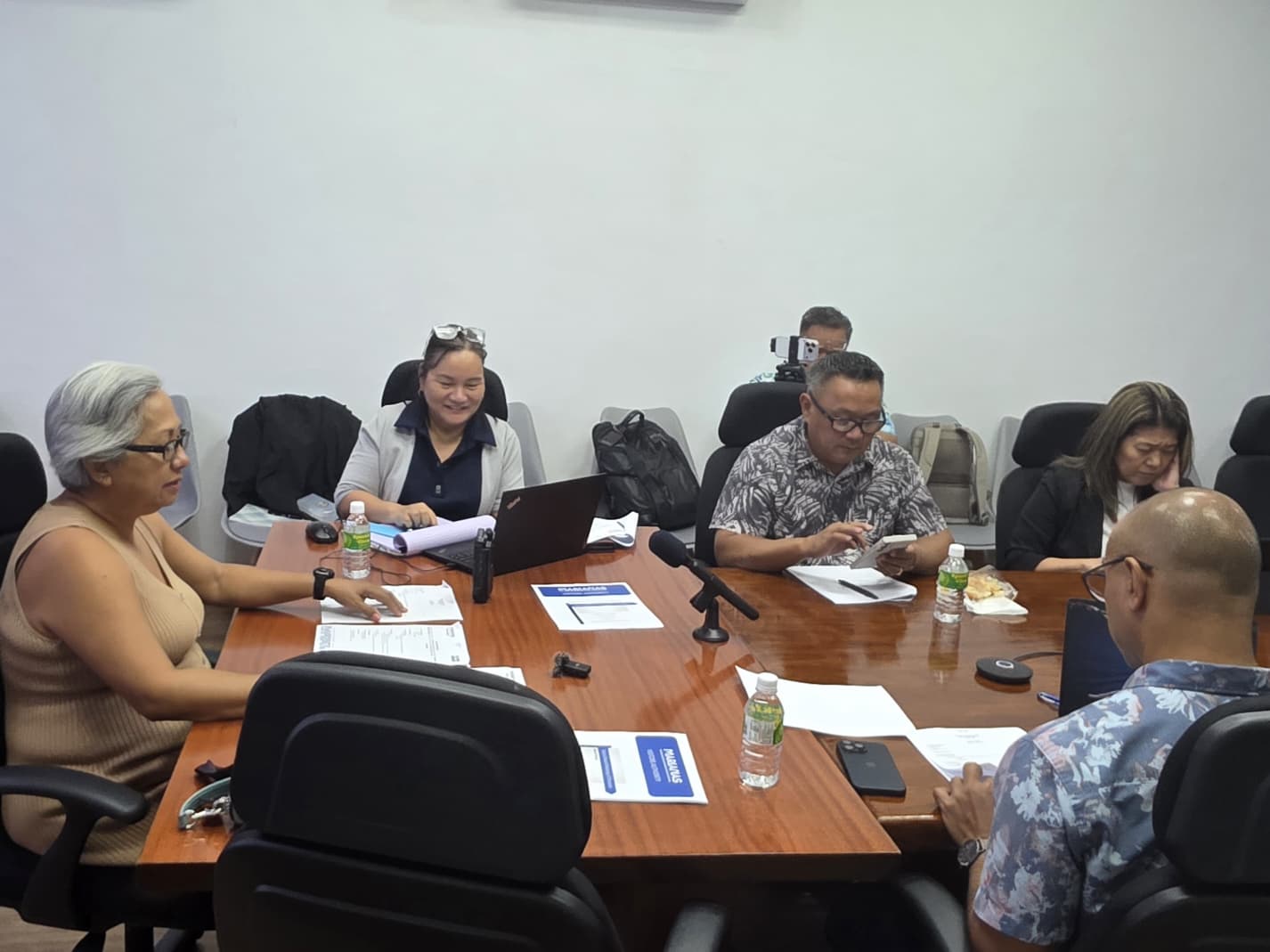




Taotano Tano’s Greg Cruz branded as “immature” Rep. Tina Sablan’s call to stop the ongoing land clearing activity in Marpi.
Sablan, for her part, reminded Cruz that the law has been violated.
Sablan, Ind.-Saipan, said the public was deprived of the chance to hear about the ongoing Brownfiled project in Marpi that now resulted in a receding vegetation in the area.
Noting that the removal of unexploded ordnance at the site is “highly important,” Cruz said the cleanup must continue before “we can all deal with the Department of Public Lands [regarding the] homestead” project in Marpi.
Cruz said the administration has given the assurance that there will no homestead project in Marpi.
Instead of opposing what has already been started in Marpi, lawmakers should concentrate on the “improprieties and gross mismanagement” of DPL, he said.
But Sablan said CNMI laws and regulations must be followed whether or not federal funds are involved.
In the case of the federally funded Marpi Brownfield project, Sablan said it appears that 62 percent of forest and public land was cleared without the required major siting permit from the Coastal Resource Management Office.
This is a violation of law, she added.
Besides not issuing notice of violation or cease and decease order, she said, CRMO also waived the permitting requirements.
She wants to know what authority gave the environmental agency to do this.
Sablan noted the different and opposing interests among Saipan residents.
Some people may agree that the unexploded ordnance cleanup in 62 hectares of forested public land is a compelling priority, but she said others prefer to leave the historic and natural area alone while cleaning up other areas around the CNMI for economic development.
She said there are people who may feel okay about the unexploded ordnance cleanup but not in the way it is being done.
Regarding the end-use of the land, Sablan said the people also have different preferences.
Some want village homesteads while others prefer a native forest and don’t mind the tangantangan.
Some want orchards and farms while other are in favor of more hotels and condominiums.
But the problem, Sablan said, is that the community was not able to discuss these options because the permitting process broke down at the very beginning.
Sablan said not one formal public hearing was held.
Just because the U.S. Environmental Protection Agency allowed the project to move forward does not mean that CNMI laws and regulations are being followed, she added.
“We often do jump the gun and overreact without adequate information here in the CNMI. In this case, however, I believe we have not acted fast enough,” Sablan said noting that several hectares of land have already been cleared without a CRMO permit.
Sablan said the matter should be investigated so similar mistakes are not repeated.
A probe could disclose new insights and information and lead to a more comprehensive review of public land management in the CNMI, she added.
