


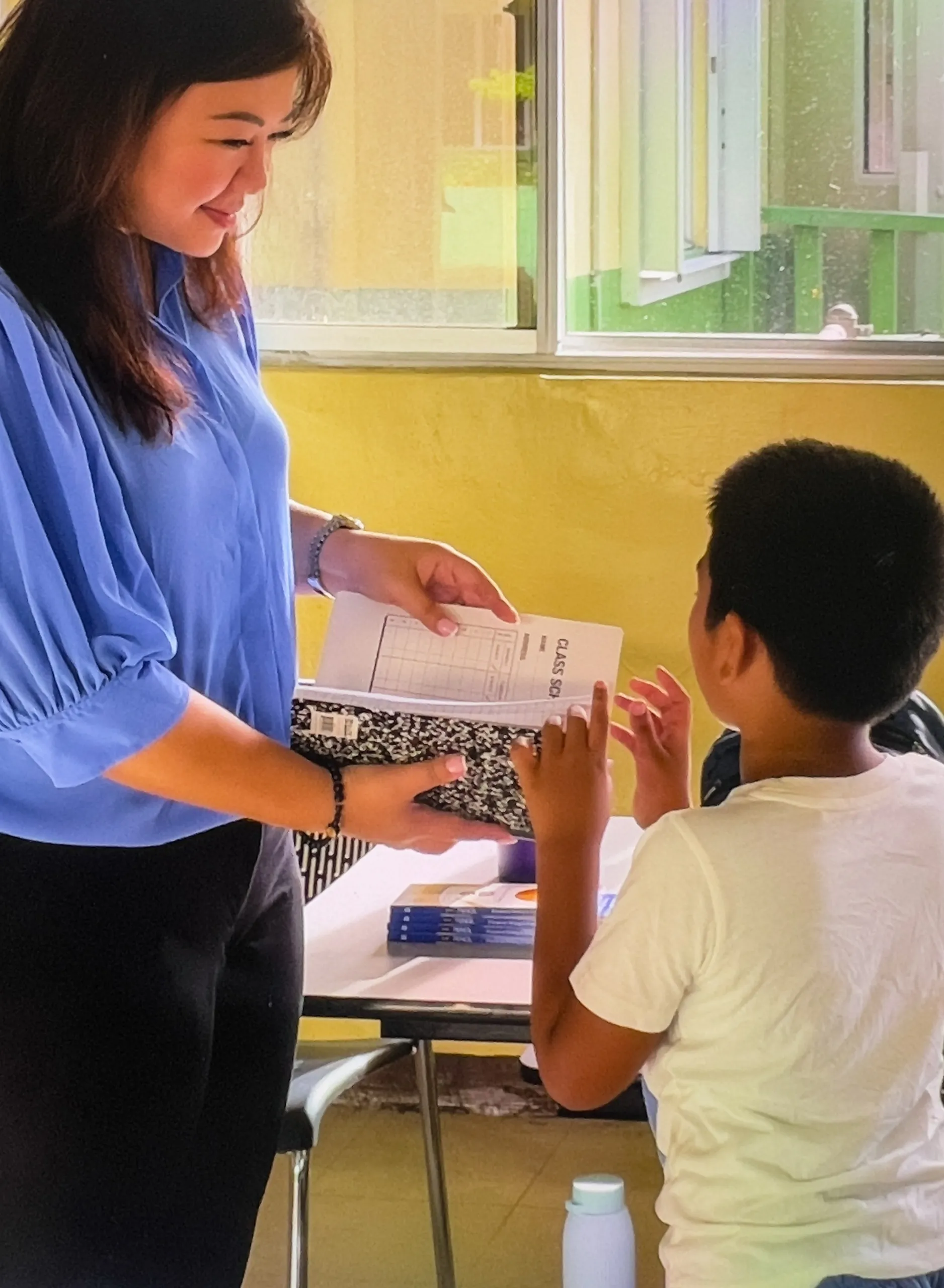


“Anytime our teachers and principals have additional money to benefit students and improve their educational experience, we are making an investment in the future of our islands,” says NMI Congressman Gregorio “Kilili” Camacho Sablan.
“We have to think 30 to 50 years ahead. This Recovery Act money is a once-in-a-lifetime opportunity to invest in our schools.”
Today’s announcement sets out six areas of action the stabilization funds are to be used for. They include improving teacher qualifications, modernizing classrooms, and strengthening the technology infrastructure of public elementary and secondary schools and institutions of higher education.
The Department announced the distribution of stabilization funds for the States in April, but delayed making the announcement for the Northern Marianas, Guam, American Samoa, and the Virgin Islands until today.
“My office has been in constant contact with the Department to make these funds available,” said Sablan.
“But there were legitimate reasons for the delay. For one thing, the Department has to decide whether to provide the full $268 million allowed by the Recovery Act for the outlying areas. After looking at the needs in our islands, the Department did decide to provide all of the $268 million. And, according to the Department, this means that we are getting more dollars per-capita than the States,” Sablan added.
If the entire $44.4 million is used for education, it will mean about $4,000 per student in the Public School System.
The Department also had to decide how to divide the money among the four U.S. territories.
Part of the delay was due to concerns about financial management in the islands. Three of the four insular areas are designated “high risk” by the Department.
The Department of Education pointed out in its letter that all of this money will be subject to unprecedented and particularly stringent accountability and transparency standards.
For that reason, another of the actions for which the stabilization funds are required to be used is to implement a “credible financial management system.”
“PSS is the only entity that is not ‘high risk.’ That’s because of the hard work and leadership of the Board and Commissioner Sablan and the very capable staff,” Kilili said.
“In addition, with Lt. Governor Eloy Inos now in charge of all the Recovery Act money and with his decision to set up a separate accounting system for the tens of millions we are getting for economic stimulus, the CNMI should be in good shape as far as financial accountability goes.”
The PSS Board and Commissioner have already put together a complete proposal based on guidelines the Department gave to States. PSS will have to modify that original proposal. But Department of Education officials say that PSS is in a strong position to get their application completed and approved quickly. That means money could arrive as early as August 1.
Sablan said he is particularly interested in seeing schools modernized and made more energy efficient.
“Energy costs are a substantial drain on the PSS budget. Any investment that reduces energy use will mean more money going into instruction year after year, instead of being sent off island to pay for foreign oil.”
In addition to the State Fiscal Stabilization Funds the CNMI Public School System has already been awarded $3.3 million in Elementary and Secondary Education and other formula grants from the Recovery Act.
