






LONDON (Reuters) — Oil prices rose by more than 2% on Wednesday after Moscow said that peace talks with Ukraine had hit a dead end, fueling supply worries, while weak economic data from China and Japan kept a lid on gains.
Brent crude rose by $2.26, or 2.2%, to $106.90 a barrel by 1126 GMT while U.S. West Texas Intermediate crude futures gained $2.02, or 2%, to $102.62. Both benchmarks had surged by more than 6% on Tuesday.
“The downside for oil prices is limited,” said OANDA senior market analyst Jeffrey Halley, citing the Russian comments on peace talks and President Joe Biden accusing Russia of genocide. These “are reinforcing that the Ukraine-Russia situation will not be de-escalating any time soon.”
Russian President Vladimir Putin on Tuesday blamed Ukraine for derailing peace talks and said Moscow would not let up on what it calls a “special operation” to disarm its neighbor.
Crude futures are also drawing support from Russian oil and gas condensate production falling to below 10 million barrels per day or bpd on Monday, its lowest since July 2020.
The International Energy Agency on Tuesday said it expected Russian oil output losses to average 1.5 million bpd in April, with losses growing to close to 3 million bpd from May.
Western sanctions against Russia and logistical constraints have hampered trade, people familiar with the data said on Tuesday.
OPEC has warned that it would be impossible to replace potential supply losses from Russia and signaled that it would not pump more crude.
Reports this week of partial easing of some of China’s tight Covid-19 lockdown measures also underpinned oil prices.
Price gains, however, were kept in check by weak data from China and Japan.
China’s crude oil imports slipped 14% from a year earlier, extending a two-month slide, as strict coronavirus restrictions hit demand in the world’s top crude importer.
Japan reported its biggest monthly fall in core machinery orders in nearly two years, dragged down by a steep drop in demand from IT and other service companies. read more
The Organization of the Petroleum Exporting Countries on Tuesday cut its forecast for 2022 global oil demand growth, citing the impact of Russia’s invasion of Ukraine, rising inflation as crude prices soar and the resurgence of the Omicron coronavirus variant in China.
OPEC now expects global demand to grow by 3.67 million bpd in 2022, down 480,000 bpd from its previous forecast.
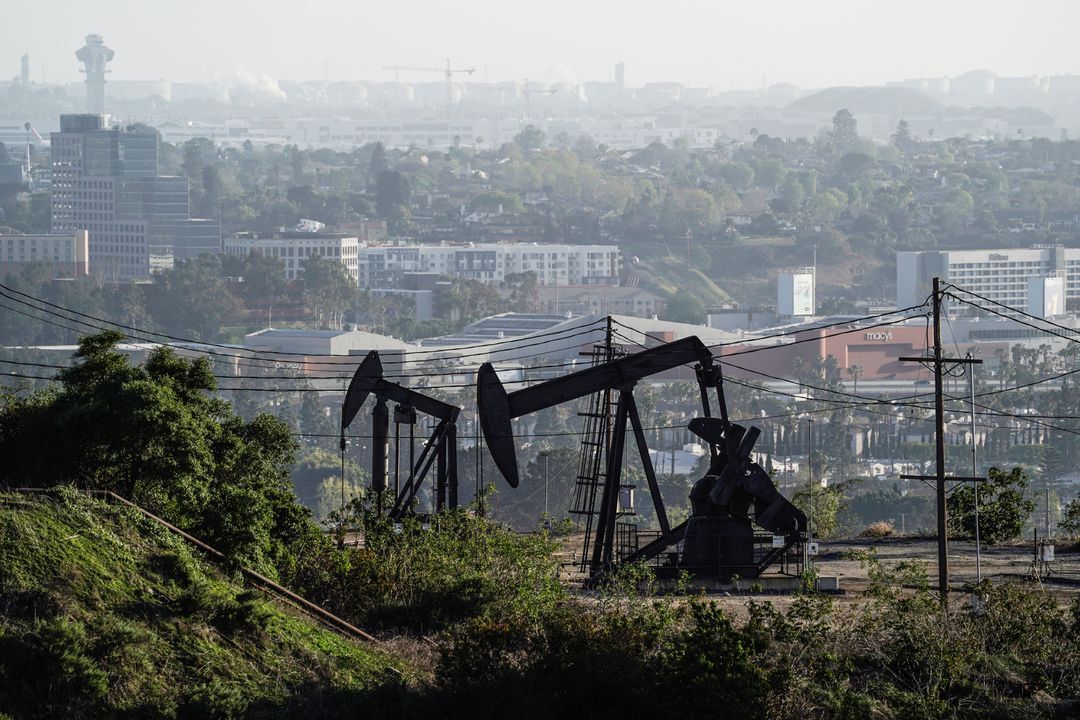
Active pumpjacks from oil wells are pictured at the Inglewood Oil Field, the largest urban oil field in the United States, from the Baldwin Hills Scenic Overlook in Culver City, California, March 10, 2022.
