







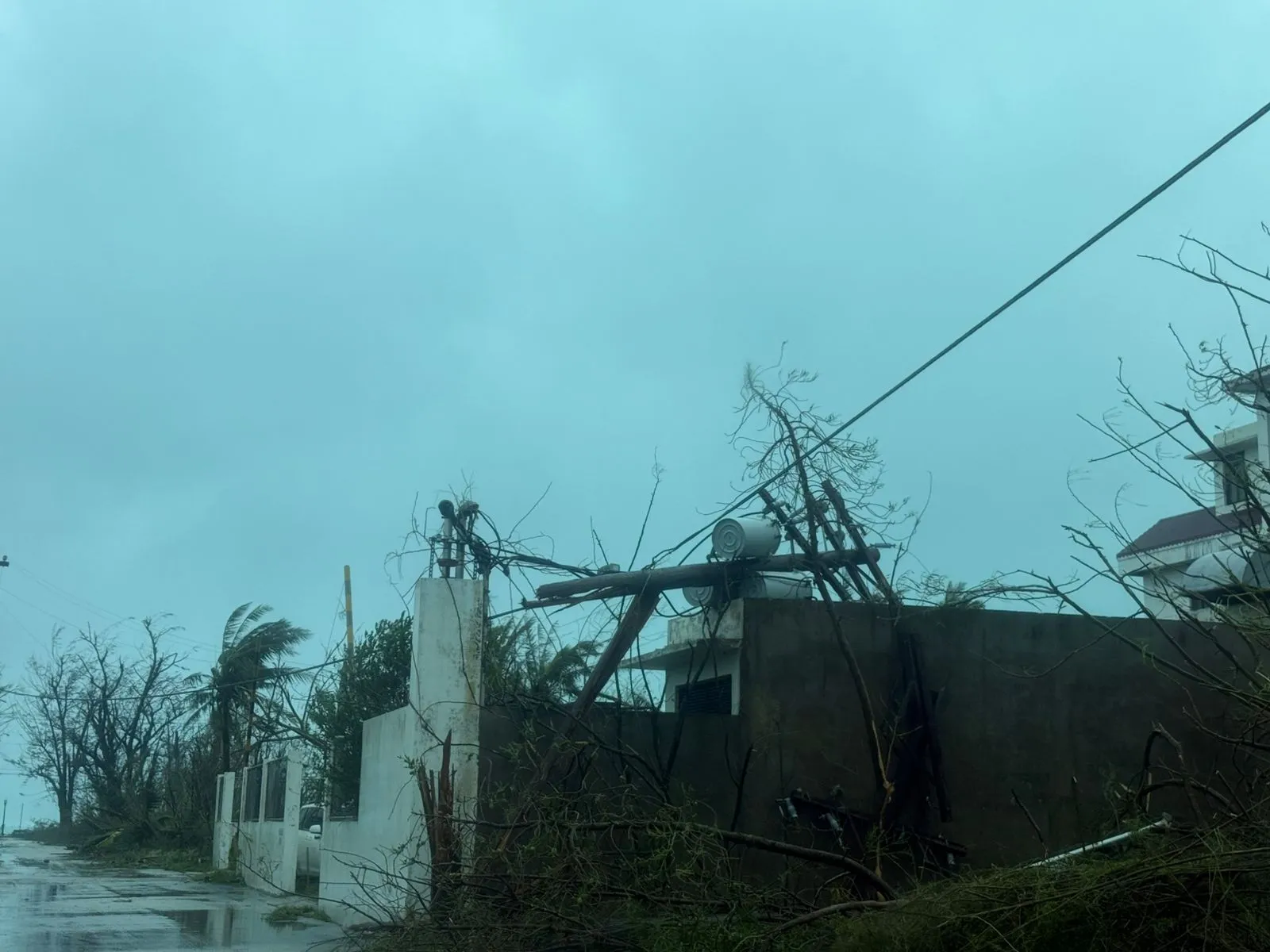
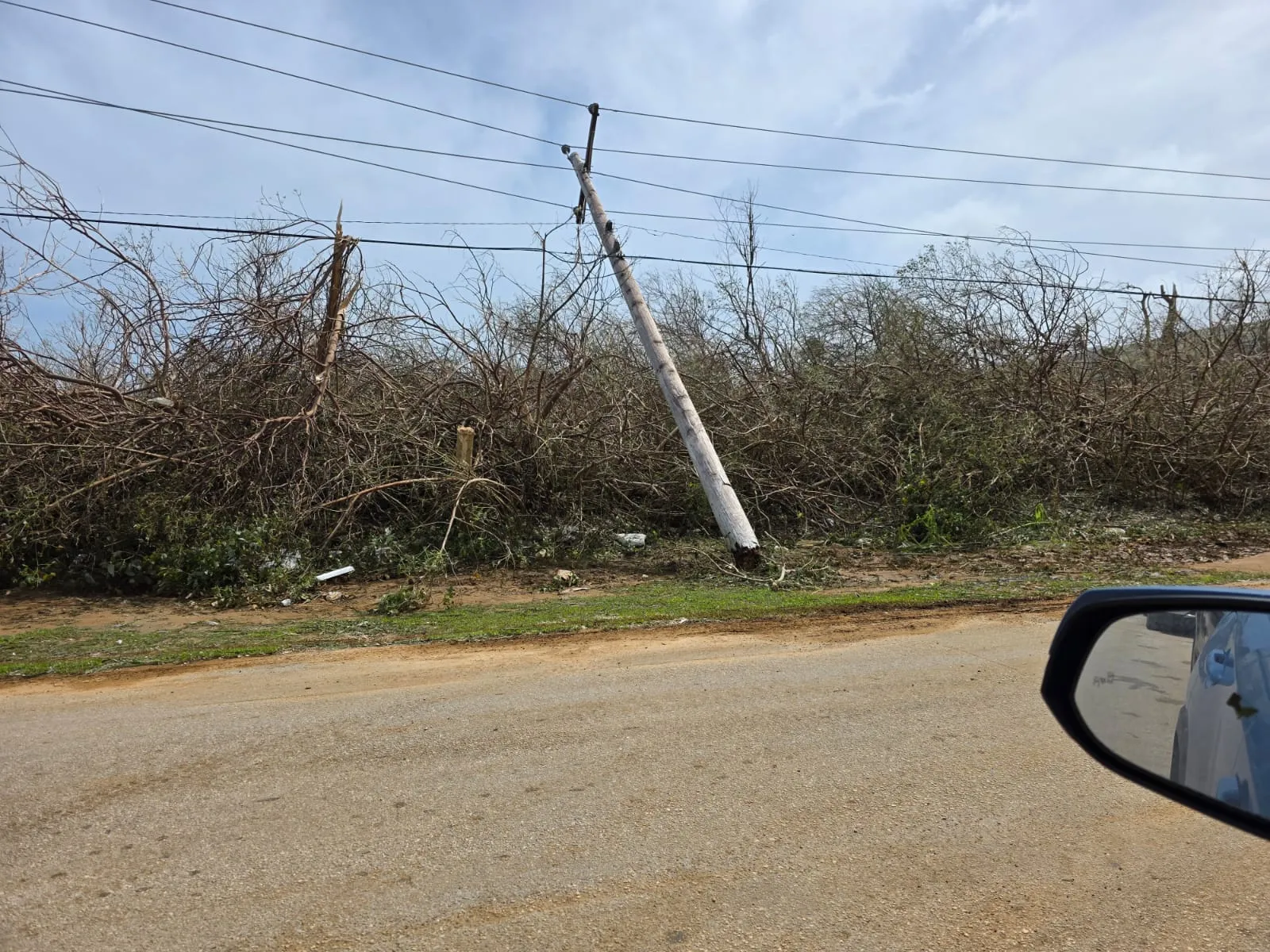
FOUR days after Sinlaku turned the island’s trees into monstrous toothpicks, I was driving northbound on Middle Road around noon when I saw a long, agonizing line of vehicles — stretching from the Coca-Cola building in Chalan Laulau to the gas station in Gualo Rai. There were likely similar lines at the water company in Lower Base and at whatever laundromats were open that day.
Now, a business establishment reopening right after a super typhoon meant additional expenses — mainly fuel-related — to run generators and, in some cases, overtime pay. But perhaps this was the least of many consumers’ concerns. Everyone, or almost everyone, was irritated, disappointed, frustrated, if not outright angry at their post-Sinlaku situation. And who wouldn’t be?
This made me realize how challenging life has been, so far, for my ninth-grade daughter and her generation. They have already survived three — three! — super typhoons, a worldwide pandemic, a struggling local economy, and global uncertainty — and they’re not even 16 yet.
However, it is also their generation that will — or should — benefit from the astounding feats of AI, advanced computing, and other transformative technologies being relentlessly developed by some of the finest minds (mostly in America) today. Unless we manage to blow up the world in the meantime, life should become better and more convenient for younger generations.
But who wants to hear that when you’re sweating in your room and staring at your smartphone with only 5% battery left?
As veteran financial journalist, author, radio host, and podcaster Chuck Jaffe has said, more people prefer hearing or reading gloom-and-doom assessments and forecasts. These, he notes, attract more readers, airtime, and revenue than measured or optimistic ones. Alarming or bleak forecasts are simply more profitable for pundits and writers.
Why? Because most of us, in a way, are Malthusians.
Thomas Robert Malthus (1766-1834), an English economist and demographer, believed that catastrophe was humanity’s fate because we were too many and the resources we relied on for survival were too few and already being depleted. Malthus’s more popular 20th-century disciple, American biologist Paul R. Ehrlich (1932-2026), predicted that “the end will come [around the mid-1980s] — and by the end, I mean an utter breakdown of the capacity of the planet to support humanity.”
Today, overpopulation is no longer the primary concern; in many places, the issue is the opposite. As for climate change — often blamed for, among other things, stronger typhoons — even Bill Gates, a longtime advocate, now says it is not an existential threat to humanity. (Here’s an AP report from 1989: “A senior UN environmental official…says entire nations could be wiped off the face of the Earth by rising sea levels if the global warming trend is not reversed by the year 2000.”) Gates recommends shifting away from pure doomsday alarmism toward a greater focus on human welfare and adaptation.
As author Marian L. Tupy would put it, the Malthusian mind sees only “more mouths and stomachs, but not more hands and minds. It assumes that each additional person means one more claimant on a fixed stock of food and other goods. What it does not see is the human capacity to cooperate, trade, discover, invent, and adapt. Human beings are not trapped in the same ecological logic as bacteria in a dish or buffalo on a plain. We exchange with one another. We build institutions. We create tools. We improve production methods. We substitute one material for another. We grow more from the same soil — sometimes much more. In other words, we create new knowledge. Atoms without knowledge are mostly useless. New knowledge organizes atoms into fertilizer, irrigation systems, container shipping, refrigeration, or high-yield seeds.”
Or perhaps one day, a scientific method to weaken typhoons before they make landfall. Why not?
In his latest essay posted online by the libertarian Cato Institute, Tupy noted that “the last 45 years have been a rout for the pessimists.”
Earth, he added, “was 536.4 percent more abundant in 2025 than in 1980. … Fifty commodities, including fuels such as crude oil, coal, and natural gas; food such as chicken, beef, and lamb; and metals such as aluminum, copper, and gold (yes, even gold!), were more abundant in 2025 than they were in 1980. The global abundance of resources increased at a compound annual rate of 4.2 percent, doubling about every 17 years. In … 42 countries — accounting for 85.9 percent of global gross domestic product and 66.3 percent of the world’s population — none saw lower resource abundance in 2025 than in 1980. That is not what a species trapped in Malthus’ arithmetic is supposed to produce.”
History keeps proving the pessimists wrong.
Send feedback to [email protected]
Zaldy Dandan is the recipient of the NMI Society of Professional Journalists’ Best in Editorial Writing Award and the NMI Humanities Award for Outstanding Contributions to Journalism. His four books are available on amazon.com/.
