





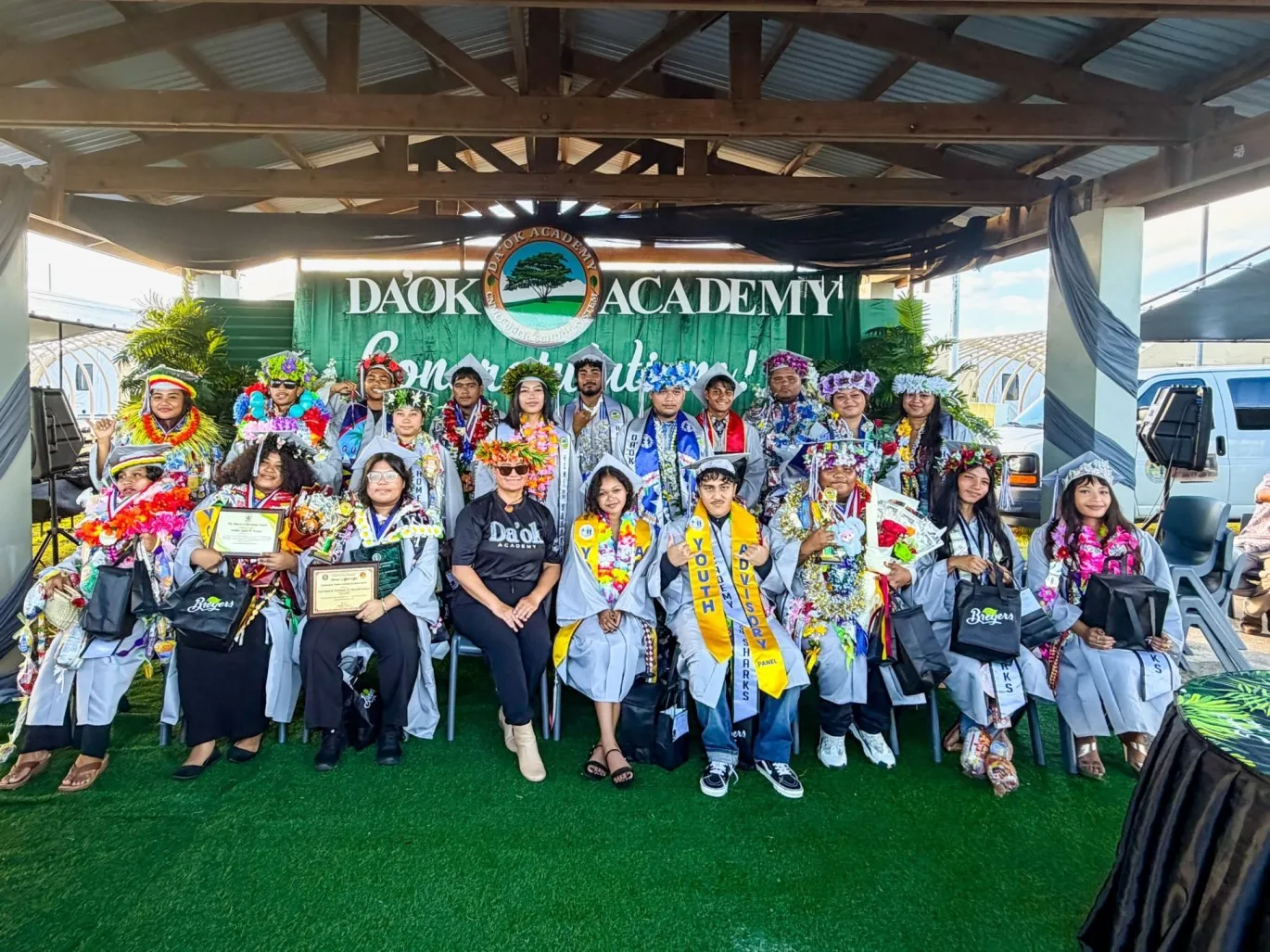


Another woman who also watched the same television program commented that it makes her very sad when she watches and listens to young people disregard and make fun of advice from older people on how they should speak and behave. “It really burns me up when these impudent youngsters say this is the 21first century and they can say and do whatever they want. I would like to squeeze the life out of them when they say that”, the angry woman said.
As islanders and as Palauans, we all must be part and members of our communitiesAs islanders we have always known that we cannot live alone and that we need to live with others for our own security and for the continuity of our group as a people. Our ancestors understood that fact and they developed customary laws that would ensure that our survival as a people would last for many centuries.In the old days we did not have “writings” to preserve our precious records, so our ancestors turned to making devises which not only preserved for posterity what they held precious but also made what they wanted to save very interesting and easy to remember. They composed legends and recorded them in songs called Esols. They also depicted the legends in woodcarvings (story boards) to keep for posterity Palau’s cultural legacies. These esols, which are still sung today and the stories on the storyboards that decorate the walls of many Palauan abais, stretch back for many generations.One such legend is the story of Briber ma Emaredong, which is represented in a cave in the Oikull estuary (Taoch-ra-Oikull). That cave, which is supposed to have been the home of Briber and Emaredong, is divided into equal parts by a thin a strip of rock. Legend has it that each man lived in one section of the cave and did not bother to find out who lived on the other side. Briber was an expert in making syrup (Ilaot) from coconut fronds and Emaredong was an expert fisherman. Each man did not bother to find out what the other did for a living.Every evening each man could smell what the other was cooking, and each would wish to have what his neighbor was cooking. Finally, not standing the tantalizing odors anymore, the two men took a look at what was cooking on the other side. Each was very surprised to find out that his neighbor was an expert in making what he had been wishing to eat for a long time. From that day forward the two men became good friends and pledged to share their good fortunes together. The moral of the story is: No man is an island floating by itself; every one belongs to an archipelago!
