




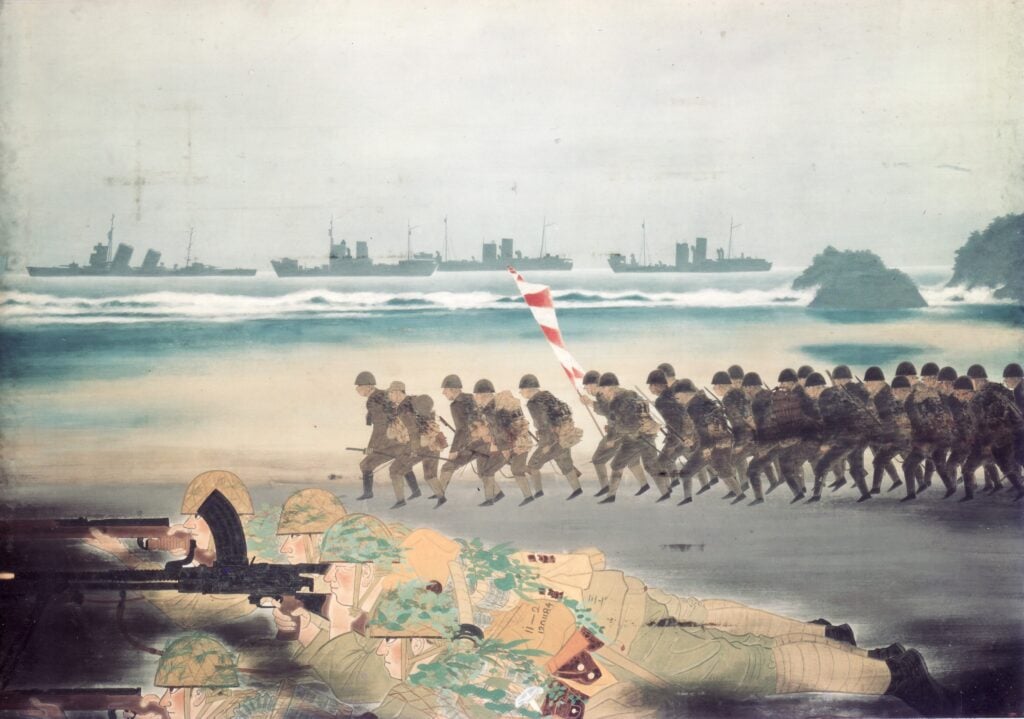
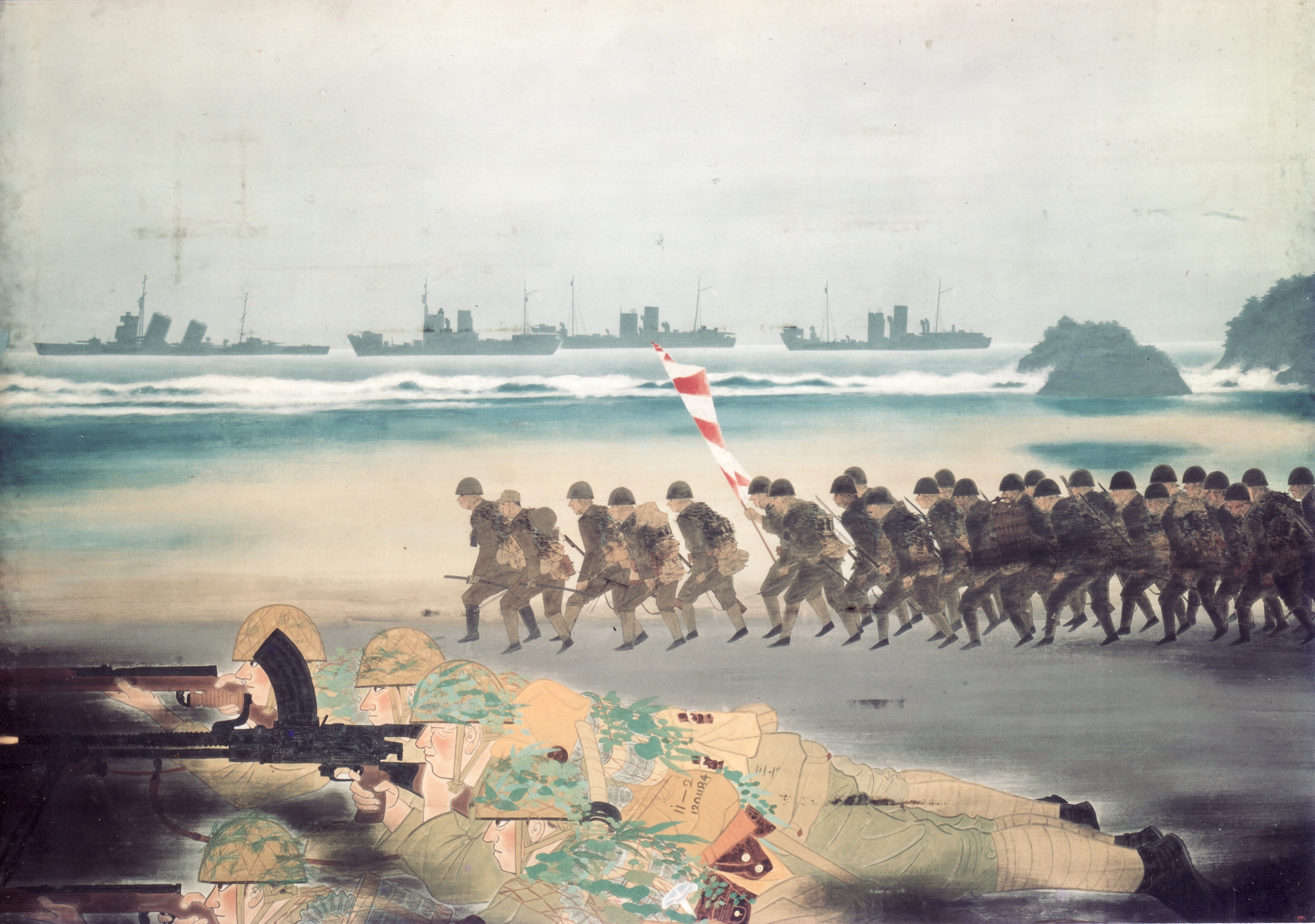
The Japanese invasion of Guam began on Dec. 8, 1941.
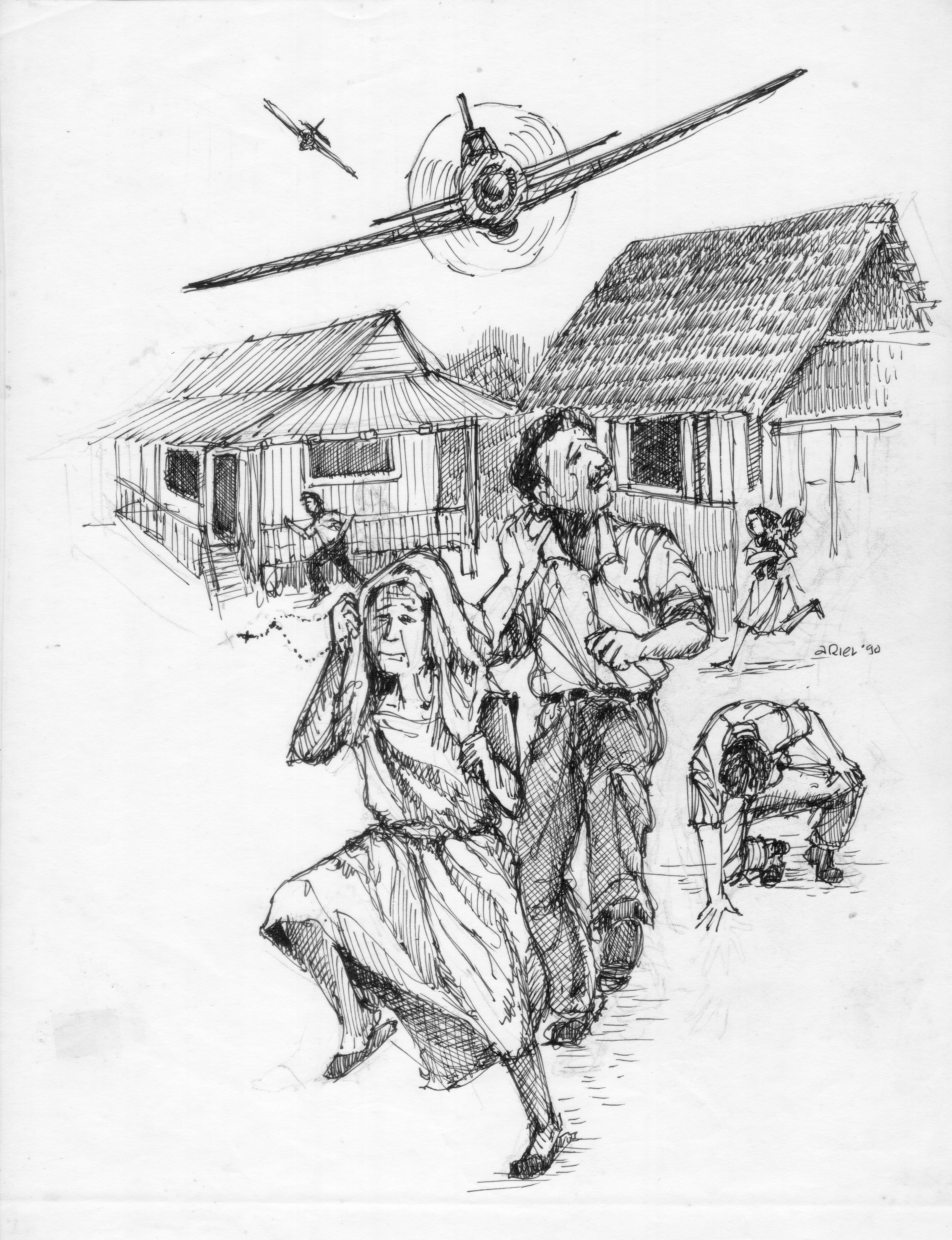
Japanese Zeros from Saipan attack a village in Guam.
EARLY in the morning of Dec. 8, 1941, long before daylight, a group of husky Carolinian men loaded bombs onto Imperial Japanese naval aircraft at Saipan’s Aslito Airfield, as they had done for the last several mornings. As with every other day, Japanese pilots took off for what the Carolinian bomb loading team thought would be another bombing practice. It was not.
At 5:45 a.m., Naval Governor of Guam, George J. McMillin, received a message from Adm. Thomas Hart informing him that Japan had “commenced hostilities” by attacking Pearl Harbor.
At 6 a.m., Hawaii time, a signal was sent from the Imperial Japanese Navy carrier Akagi that the fleet had successfully arrived at Pearl Harbor — undetected: “Tora, Tora, Tora!” The Imperial Japan Navy had managed to secretly carry out the best organized and executed naval operation in Pacific history. They proceeded to destroy the American Pacific Fleet, at anchor, killing over 2,000 Americans.
It was only the beginning of a much larger operation.
“[S]ince the principle has been to accept a risk, whether we win the horse or lose the saddle,” wrote Japanese Admiral Matome Ugaki in his diary, the order was given for Imperial Japanese Navy units to proceed with the other pre-planned attacks on targets in the western Pacific identified in Admiral Isoroku Yamamoto’s secret plan; Wake Island, the U.S. territory of the Philippines, as well as the British and Dutch colonies in Southeast Asia that processed the oil Japan needed for its military machine.
On Guam, local Japanese cut the phone lines between the villages of Agaña and Sumay, forcing Naval Governor McMillan to use runners to maintain communications between the two most populated villages on the island. McMillan ordered the evacuation of Agaña, Sumay and the other main villages on Guam to get the people out of the way before the anticipated Japanese invasion. The Pan American Airways office at Sumay radioed Wake Island, telling them to recall the Pan Am Clipper that had left for Guam shortly before.
The Japanese planes that had left Saipan that morning began bombing and strafing Guam at 8:27 a.m., attacking Agaña, Sumay, the Pan American Airways station and the USS Penguin. Chamorros on their way to the cathedral for Mass on the anniversary of Our Lady of Camarin were killed by the strafing Japanese. Those already inside the cathedral were told to leave and find shelter outside of Agaña. Pandemonium set in as parents attempted to gather their children and get out of the town that housed nearly half the island’s population. By noon, Agaña was a ghost town.
A primary strategic target for the Japanese planes attacking Guam were the two radio stations: Radio Agaña with its 300-foot tower and Radio Libugon, located about two miles southeast of Agaña, with four three-hundred-foot radio direction finding antennas that were tracking Japanese radio traffic.
At 12:30 p.m. Dec. 8, 1941, Eastern Standard Time, the United States Congress declared war on the Empire of Japan.
At 2:30 a.m. on Dec. 10, 5,500 men of the Imperial Japanese Army’s South Seas Detachment under command of Major General Tomitaro Horii began the armed invasion of Guam. The first of the four hundred-man-strong elite Japanese invasion force landed at Agat Beach some two miles south of Sumay and began working their way north, thinking, somehow, that that they would be facing 1,500 Marines. Meanwhile, the main body of 5,000 Japanese invasion forces landed at Dungca’s Beach on Tumon Bay and began marching south toward Agaña. A few minutes later, they ran into an open jitney carrying a family of 17 fleeing Agaña. Thirteen of them were killed or wounded by Japanese machinegun fire, followed by a bayonet attack.
In front of the Governor’s Palace, 12 Marines from the Insular Patrol, a few Marines from Sumay, some administrative personnel, and about 80 men from the Guam Insular Guard, equipped with only three machineguns, a few pistols, and less than fifty old Springfield .303 bolt-action rifles, prepared to face the on-coming Japanese forces. They managed to stop the Japanese onslaught, but only briefly.
Some 50 Chamorro civilians had been killed elsewhere that morning. The Japanese lost an estimated 200 men. A Japanese officer shouted for the defenders to lay down their weapons. The captured Americans were ordered to strip butt naked and sit on the ground. Fearing death, the Americans thought to themselves, “Our soul belonged to God, but the Emperor owned our ass.”
The Naval Governor of Guam, Captain George McMillin, surrendered Guam to the Japanese.
The Pacific War had begun, and Guam was the first American territory lost to the Japanese Empire.
The Japanese won the first round, but would lose the game when America returned to the islands in 1944.
Interestingly, Dec, 8 is also celebrated as Constitution Day in the Commonwealth of the Northern Mariana Islands, in memory of the day the CNMI Constitution was accepted by the United States as a prerequisite for completing the Covenant agreement with the United States, including the technical agreement related to the military leased lands on Tinian.
For more information, see:
• Mansell, Roger. (2012) Captured: The Forgotten Men of Guam. Annapolis: Naval Institute Press.
• Rogers, Robert F. Destiny’s Landfall: A History of Guam. Honolulu, Ha: University of Hawaii Press, 1995.
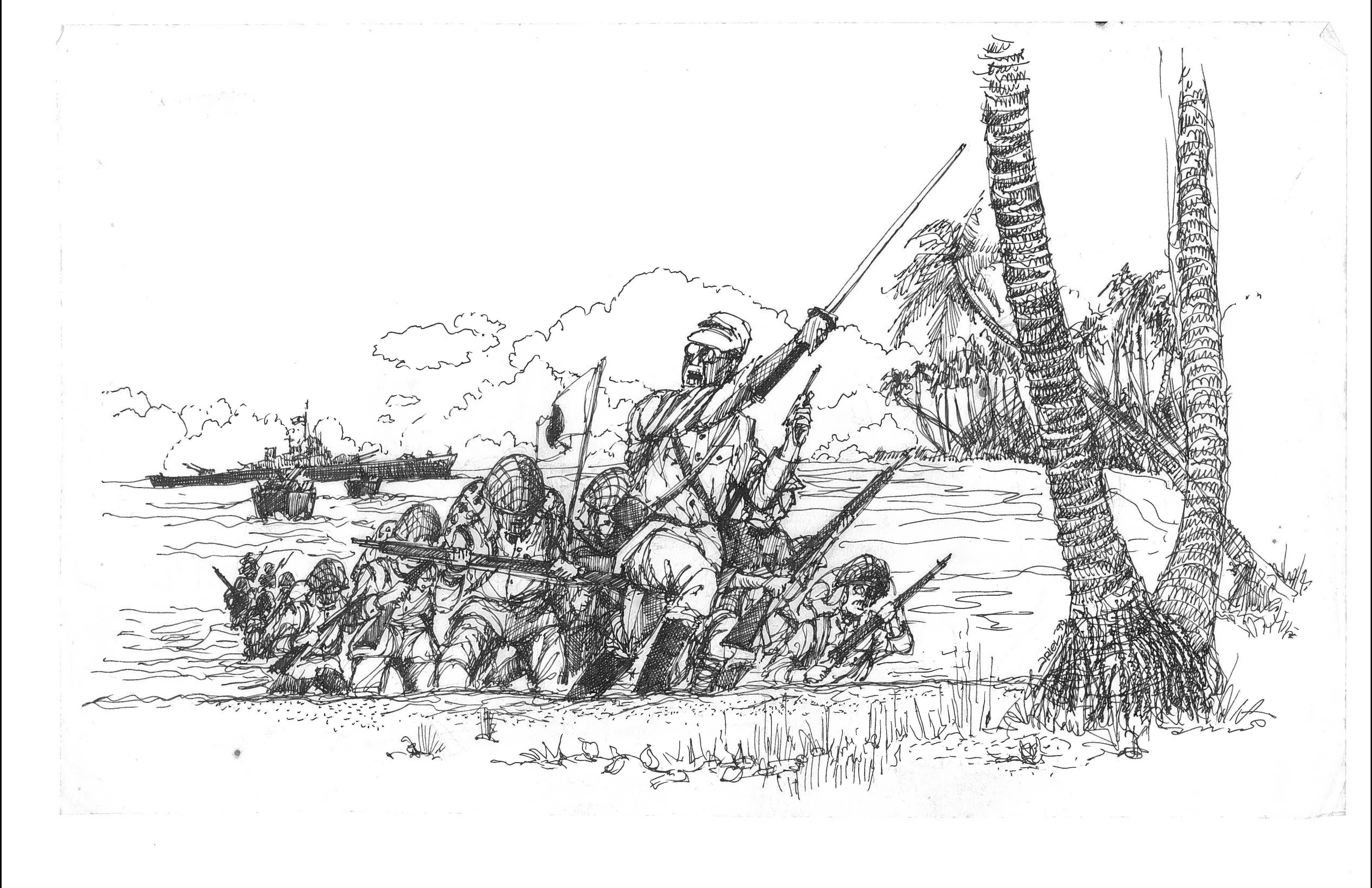
The first of the elite Japanese invasion force landed at Agat Beach.
