




By Bryan Manabat
[email protected]
Variety News Staff
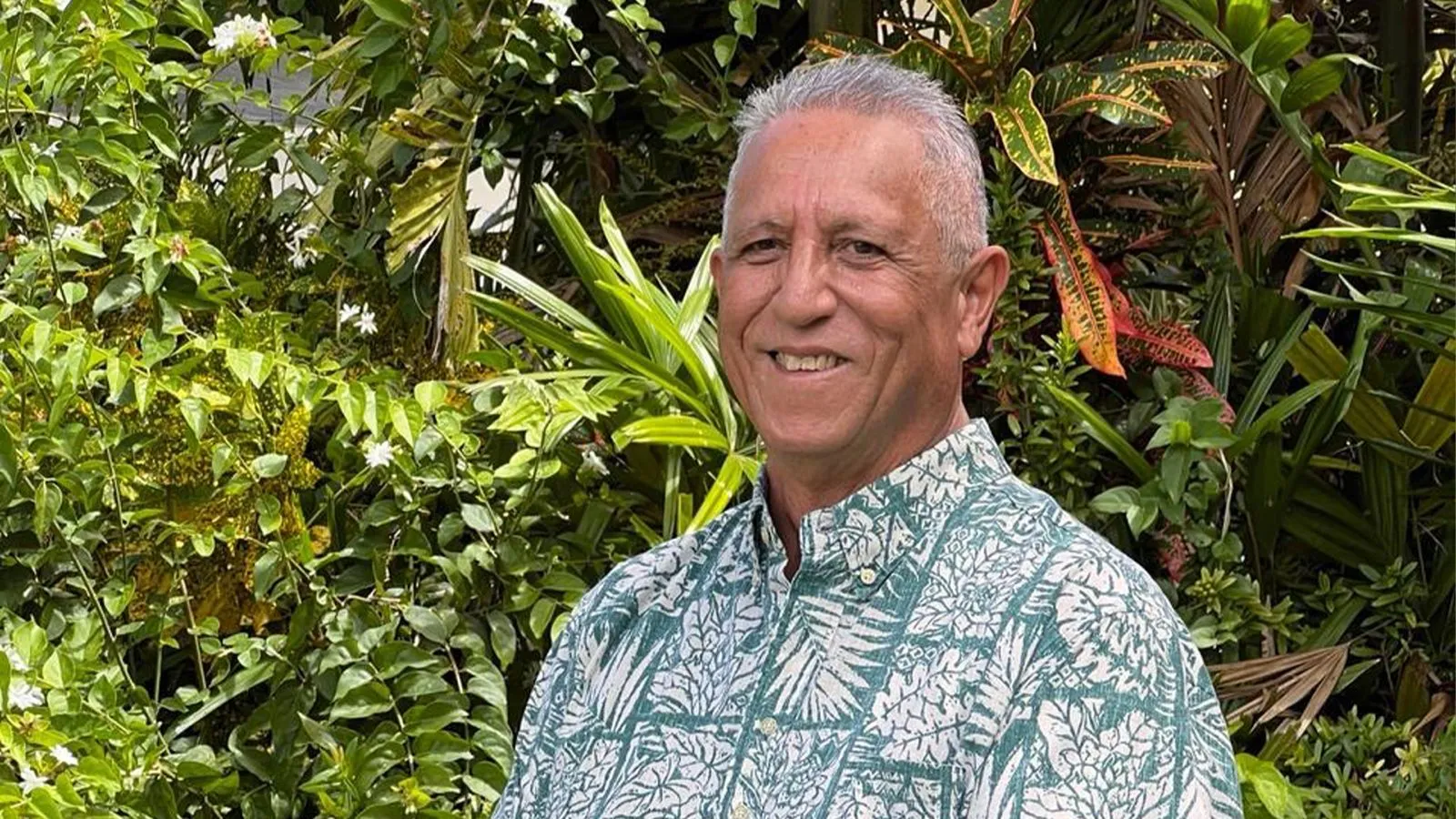
WEEKS after the federal Temporary Roofing Mission and STRONG Tents program ended on June 22, Saipan residents continue to report leaks, gaps, and other workmanship issues in temporary roof coverings installed after Typhoon Sinlaku, prompting renewed appeals to the Federal Emergency Management Agency for corrective action from Saipan Mayor Ramon “RB” Camacho.
STRONG stands for Saipan and Tinian Resilience and Operational Needs Group.
Camacho said his office continues to receive complaints almost daily, particularly during the recent period of heavy rain.
“I’ve received complaints about leaks because it has been raining for the past few days,” Camacho said. “Some residents contacted me right after the installations were completed, so I visited them myself. I saw the issues firsthand.”
Comparing Yutu and Sinlaku roof installations
Camacho said the quality of the temporary roof coverings installed after Sinlaku appeared noticeably different from those installed after Super Typhoon Yutu.
“First, I compared the roof coverings installed after Typhoon Yutu with those installed after Typhoon Sinlaku,” he said. “I drove around after the typhoon and didn’t see a single Yutu roof covering destroyed by Sinlaku. But these new ones had gaps.”
Camacho said he raised the issue directly with FEMA supervisors.
“I appealed to the FEMA official assigned to the mayor’s office because it wasn’t acceptable,” he said. “Action was taken to start covering those gaps.”
Despite the program’s closure, Camacho said complaints have continued.
On Tuesday, he responded to a call from an elderly woman in Chalan Kiya.
“She said, ‘Mayor, can you please come to my house?’” Camacho recalled. “If you go inside the house, you can see the sky. There are a lot of holes from the construction.”
Camacho said he brought FEMA’s on-site representative to inspect the home and contacted the U.S. Army Corps of Engineers. The contractor later returned to make repairs.
“There were a lot of missed nails,” he said. “The nails did not go through the wood properly, and that causes leaks during rain.”
By Wednesday morning alone, Camacho said he had received four new complaints involving leaks and workmanship concerns.
‘We only receive applications’
Camacho emphasized that the mayor’s office does not decide who receives temporary roofing assistance or STRONG tents.
“We only receive applications for the roofing and tent program,” he said. “We forward those applications to FEMA’s operations office at the Crowne Plaza. FEMA sends the inspectors and crews. The mayor’s office is not involved in the approval process.”
He said the mayor’s office became the public’s primary point of contact because it handled residency certifications, tent applications, and roofing applications immediately after the typhoon.
“To be honest, I’m the only one appealing these issues to FEMA,” he said. “The mayor’s office initiated all these applications, so people know to come to us.”
STRONG tents now under CNMI government
Camacho said he was informed that the remaining STRONG tents, which were used for temporary non-congregate sheltering, have been turned over to the CNMI government.
“The tent program is no longer with the local government but with the CNMI government,” he said. “I’m not sure how they plan to handle it or whether they will continue the program. The remaining tents were turned over to the government.”
He said he was initially told the tents would be assigned to the mayor’s office, but FEMA later informed him otherwise.
“I don’t know how many tents are still available,” he said.
Camacho said he also urged FEMA to allow residents to receive both temporary roofing assistance and a STRONG tent when circumstances warranted.
“What FEMA was doing was that if a roof covering was approved first, the applicant would be disqualified from receiving a tent,” he said. “I told FEMA, ‘No, please give them the tent.’ You can’t just move back into a house immediately. The home is exposed, and it needs to be cleaned and sanitized first.”
He said FEMA made some adjustments to the policy, although he does not know how many households ultimately received both forms of assistance.
With the roofing program officially closed, Camacho said FEMA’s representative assigned to his office has elevated the complaints to higher levels within the agency.
“The FEMA official is forwarding these complaints up the chain of command,” he said. “They told me they are waiting for a response from their superiors.”
For now, Camacho said he will continue responding to residents’ concerns.
“When people call, we go,” he said. “We’re still appealing because the leaks are happening now, during the rainy season.”
Bryan Manabat was a liberal arts student of Northern Marianas College where he also studied criminal justice. He is the recipient of the NMI Humanities Award as an Outstanding Teacher (Non-Classroom) in 2013, and has worked for the CNMI Motheread/Fatheread Literacy Program as lead facilitator.
