








HELSINKI (Reuters) — Finland’s capital Helsinki has spent billions of euros on public transport and bicycle lanes — and plans more — despite mixed reactions from residents.
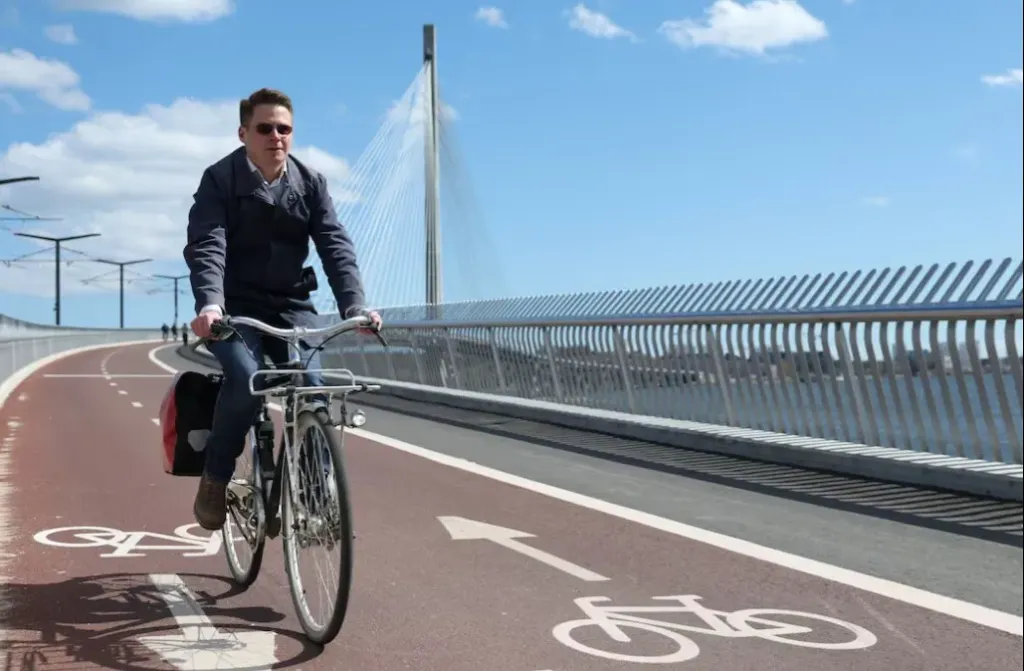
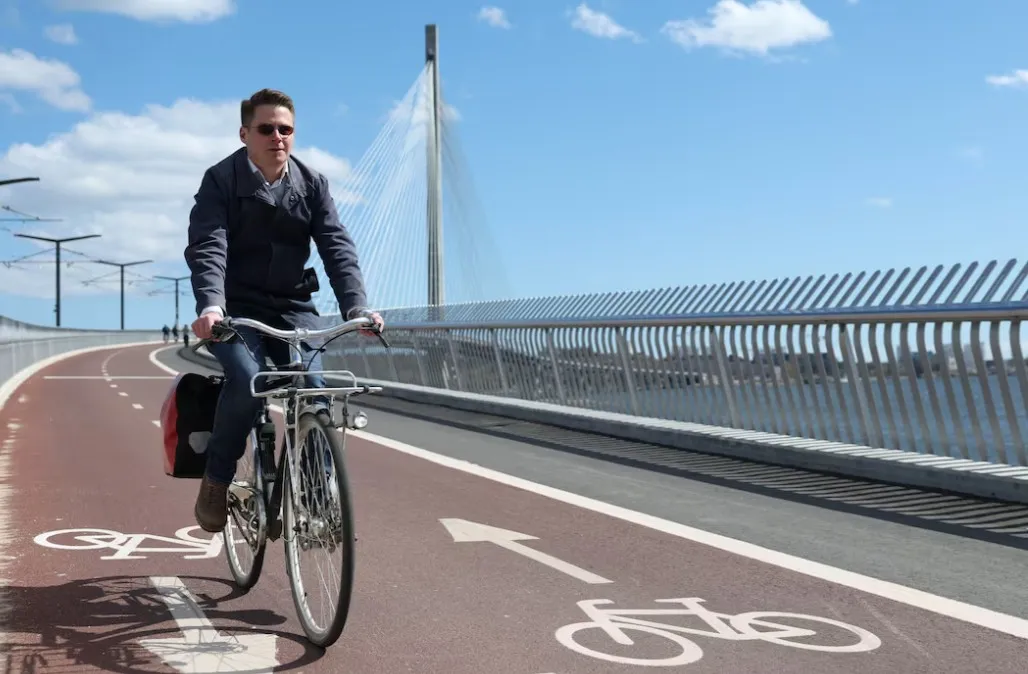
In April, about 50,000 people turned out for the opening of a scenic 1.2-km (0.75 mile) bridge — Finland’s longest — linking the inner city to nearby islands and reserved for pedestrians, cyclists and trams.
But others have been unimpressed by the lack of car lanes and the 326 million euros ($383 million) price tag, which also covered two adjacent bridges and tramway investments, on top of billions already spent over the past decade on transport and cycling infrastructure.
“Like with all urban development projects, you always have people opposing it and people in favor of it…The biggest argument for opposing this bridge was the big price tag on it,” Helsinki’s bicycle traffic team leader Oskari Kaupinmaki told Reuters.
Helsinki has around 1,300 km of cycle paths, including 100 km of “bicycle superhighway network”, which the city plans to expand by another 80 kilometers by 2029, Kaupinmaki said.
So far, however, the investments have not boosted cycling in the Nordic capital on the Baltic coast, where winters are harsh and winds often biting. Cycling’s share of transport has stayed flat at roughly 9%–11% since 2010, Kaupinmaki said.
“The reason for that is that we haven’t completed the network yet,” he said.
Other projects include a major tram network expansion and a plan approved last week to close one of the central streets in front of the main railway station to cars, prioritizing pedestrians, cyclists and public transport.
City councilor Marcus Rantala, a leading opponent of the bridge, said he had “criticized the project’s price tag and the realism of the budget,” which kept growing over the years, but conceded he was pleased with the “impressive” result.
So was Johanna Jarvinen, a musician and a cyclist, who lives on an island that the new bridges now connect to the inner city.
“In the summer, when it’s less windy, it’ll be like 10 minutes off my commute, so (that’s) very nice,” she told Reuters.
