





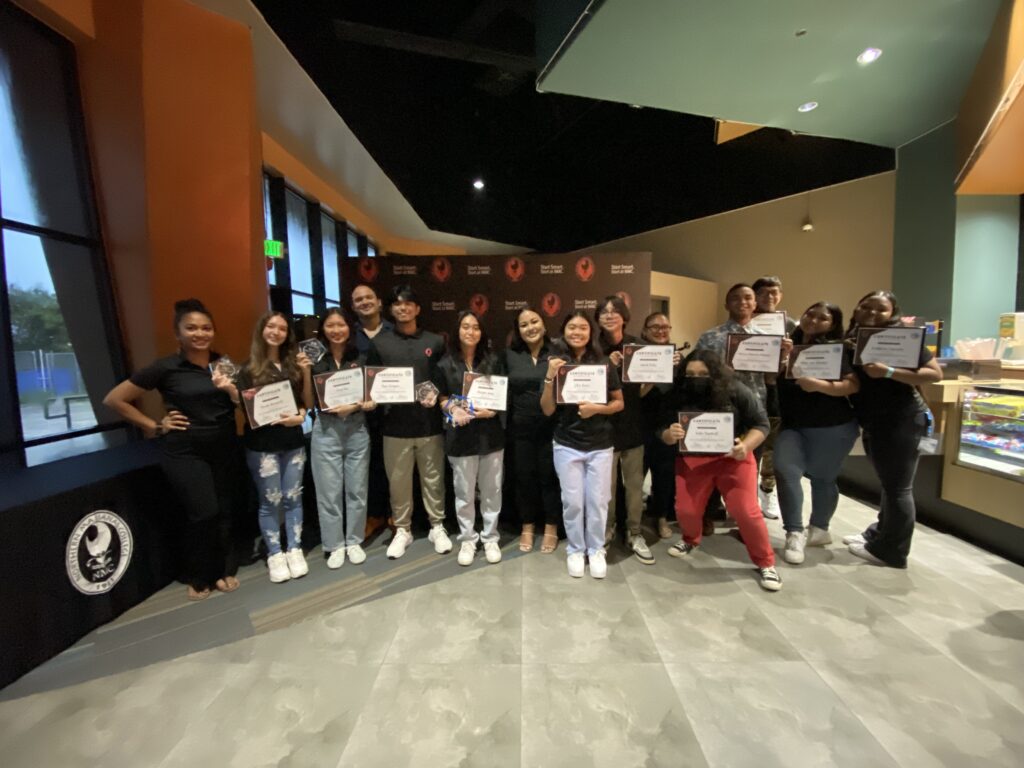
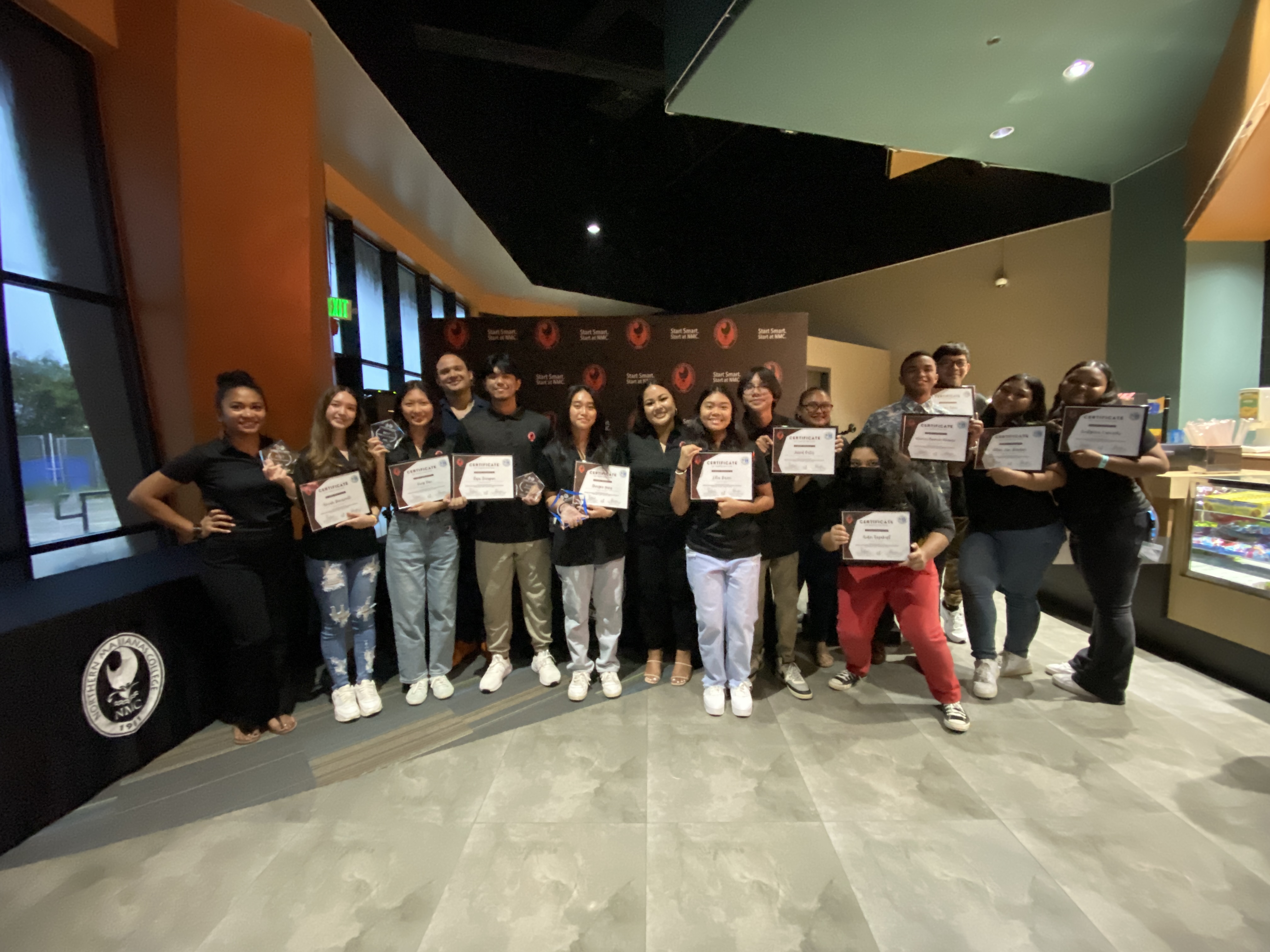
The members of the first cohort of the Cinema in Saipan: Filmmaking in the Marianas program include Koey Pan, Raja Sevugan, Lilia Brien, Ulusmar Ogumoro-Uludong, Klein Jan Berdan, Sheryne Yang, Wayne Takai, Aidin Tagabuel, Amiah Benavente, Jared Ortiz, and Soulynna Camacho.
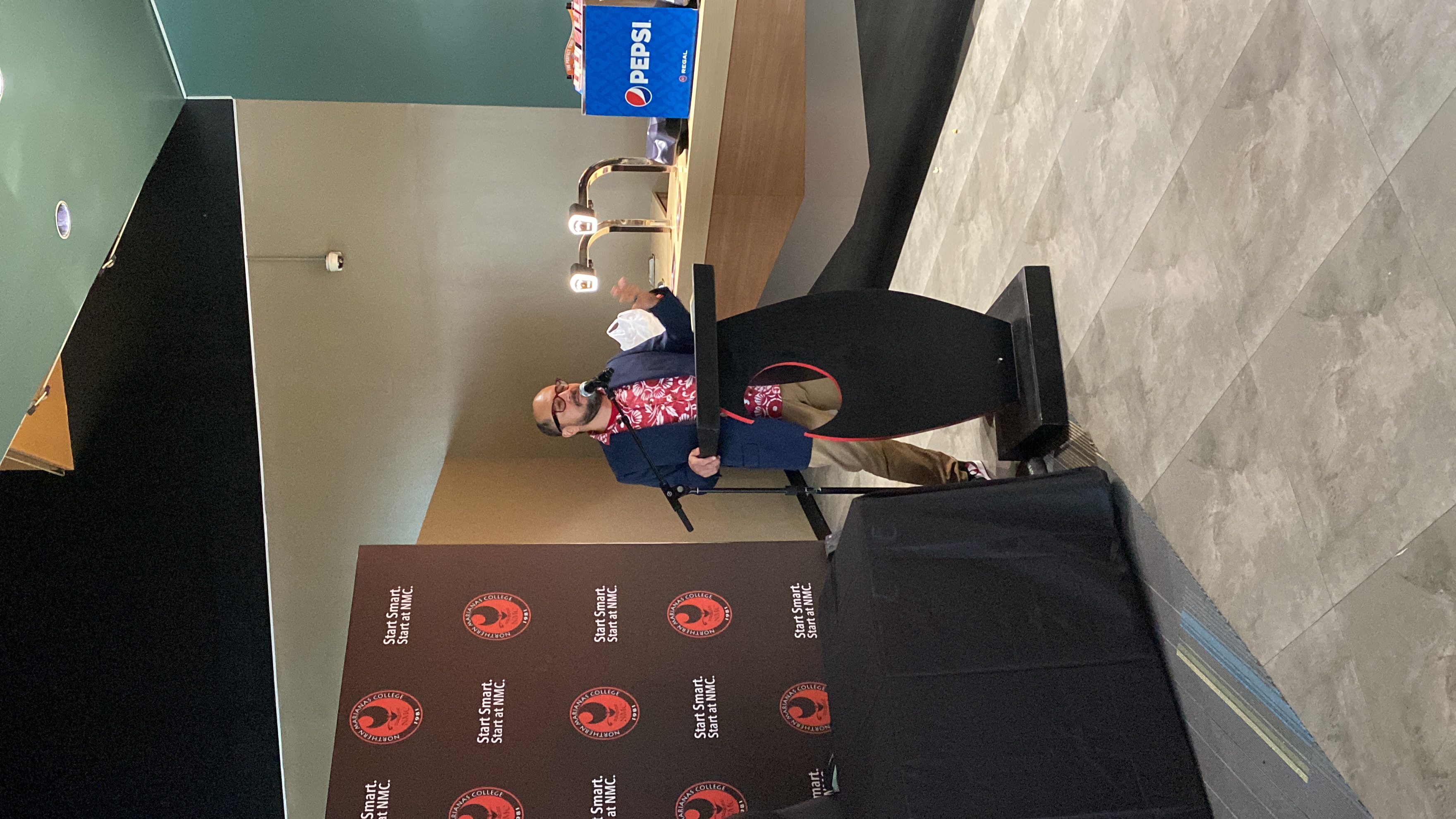
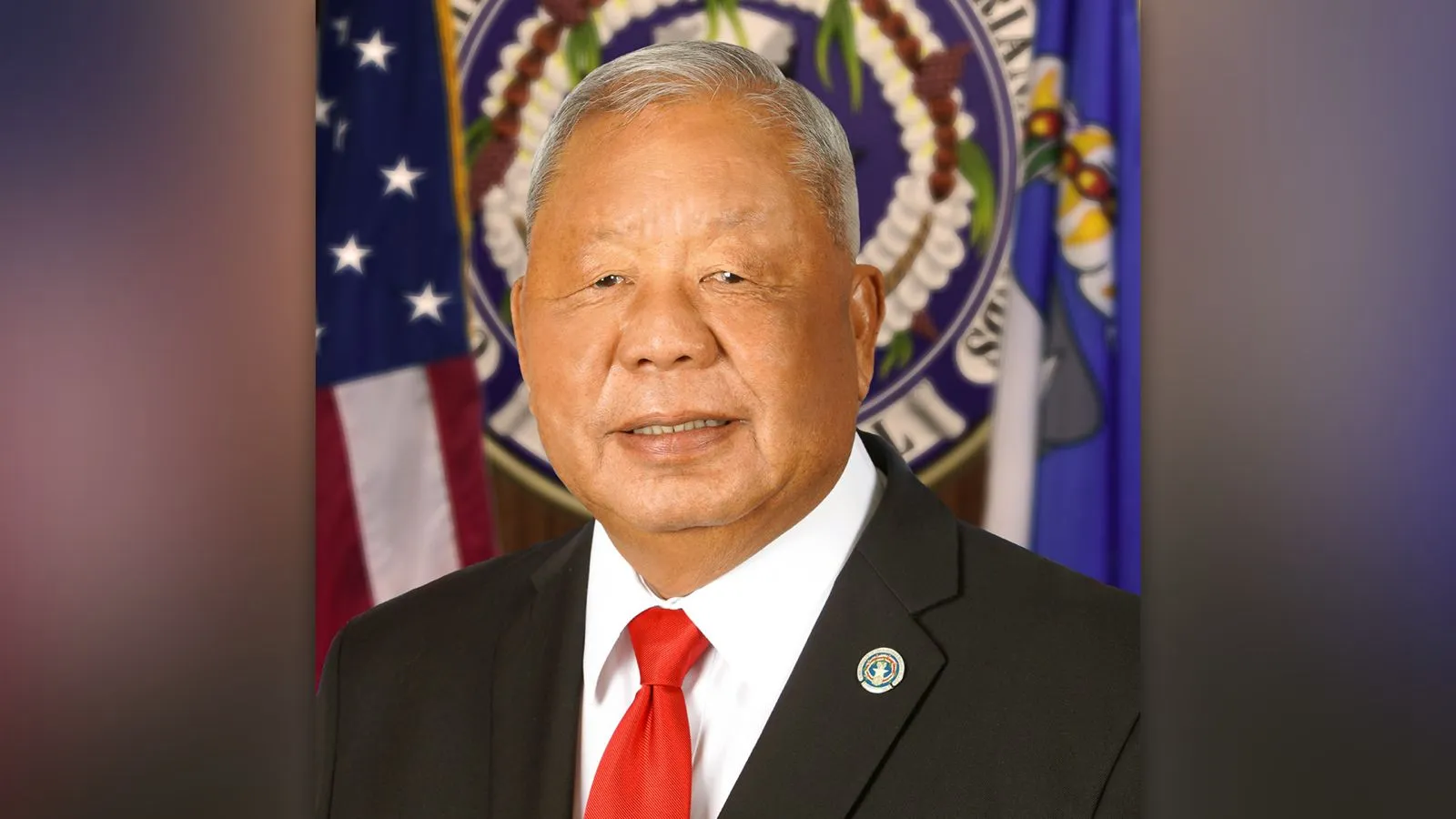
Dr. Galvin Deleon Guerrero, NMC president, speaks at last year’s Cinema in Saipan event. His new film, ISLA: Isla’n Esperånsa debuts later this month.
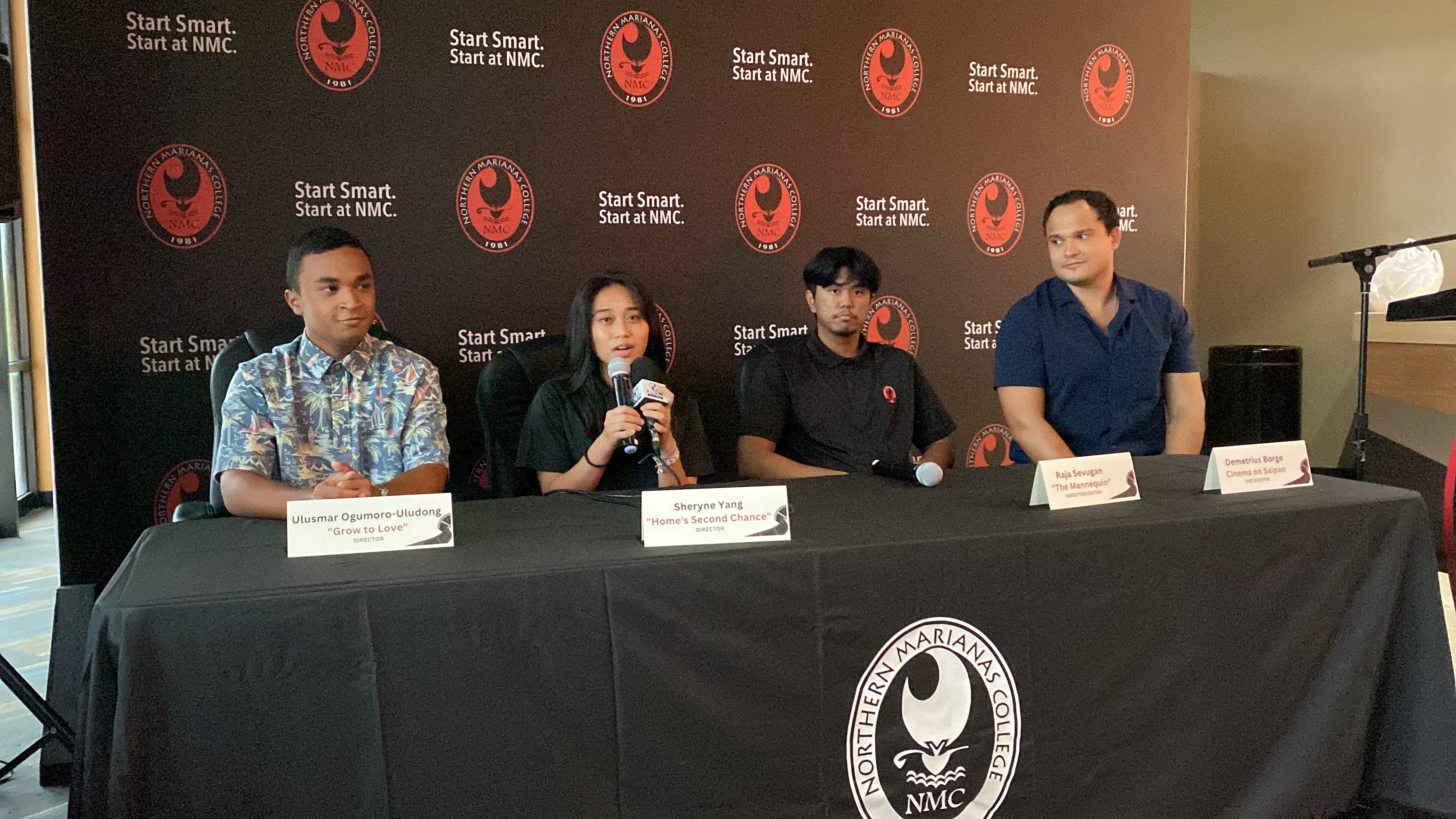
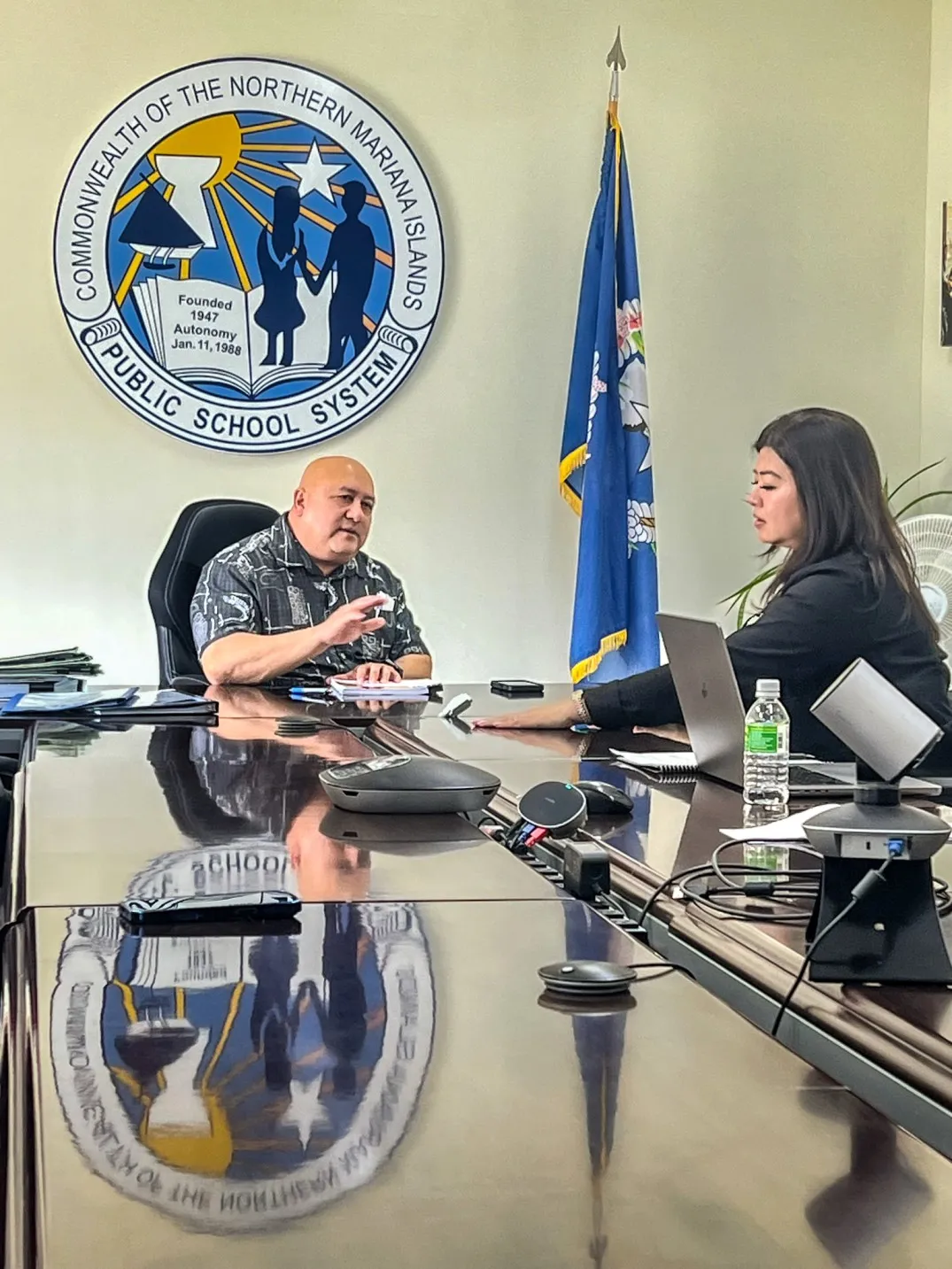
The film directors and their instructor at a press conference, post-film screening. From left, Ulusmar Ogumoro-Uludong, Sheryne Yang, Raja Savugan and Demetrius Borge.
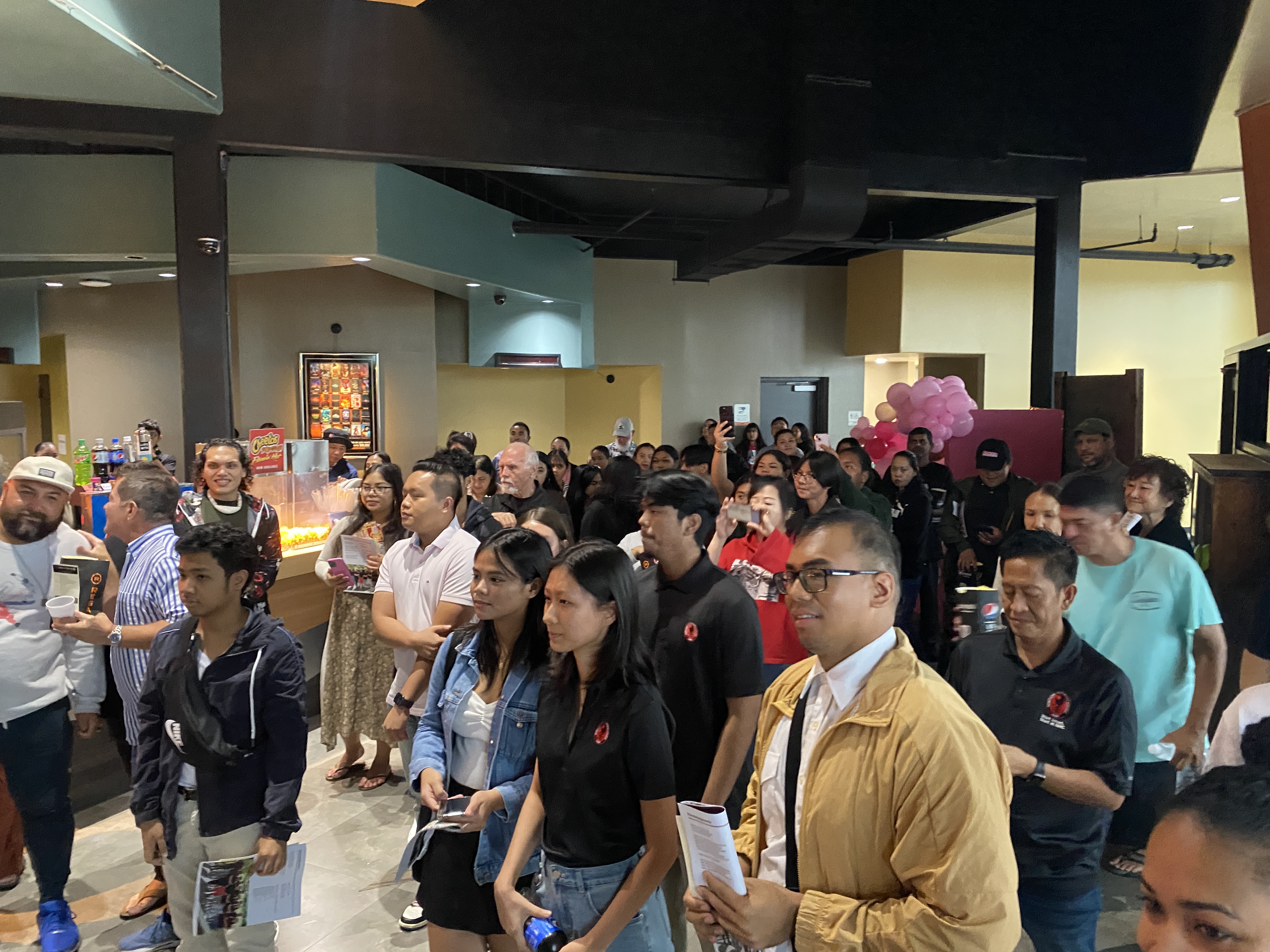
Dozens of film supporters attended the film screening that marked the conclusion of the Cinema in Saipan: Filmmaking in the Marianas program.
“THE Mannequin,” directed by Raja Sevugan, took home the Best Storytelling, Best Cinematography, and Best Editing awards Friday, following the screening of three student-made short films at the Regal Cinema Megaplex in San Jose.
Sheryne Yang “Home’s Second Chance” received “The Proa Award.”
“Grow to Love” directed by Ulusmar Ogumoro-Uludong was also screened on Friday.
The premiere marked the culmination of the Cinema on Saipan: Filmmaking in the Marianas program, a joint project between Northern Marianas College and the Public School System. It is designed to introduce PSS high school students to the art and craft of filmmaking.
Students spent three weeks learning the principles of filmmaking and storytelling; screenplay writing; hands-on film production training in cinematography; sound recording; and more.
Sevugan said “The Mannequin” is a horror film that “takes place in an abandoned mall where three friends go looking for a missing person to claim the missing person’s reward.”
Yang called her film “a short visual poem of how we all should take care of the place we call home.”
Soulynna Camacho, the producer of “Grow to Love,” said the film is about the “love-hate relationship between three siblings.”
At the end of the screening, NMC gave awards in the following categories: Best Storytelling, which recognizes engaging storytelling, character development, plot structure, and emotional impact; Best Cinematography, which recognizes composition, lighting, camera movement, and overall aesthetics; Best Editing, which recognizes film continuity, pacing, visual coherence, and storytelling enhancement; and the Proa Award, which recognizes the best overall film in terms of storytelling, visual editing, and overall impact.
NMC President Galvin Deleon Guerrero, a self-described “filmmaker trapped in an educator’s body,” commended the student participants for nourishing their storytelling abilities.
“Stories have the ability to help us understand the ‘Other,’” Deleon Guerrero said. “In this world that’s currently filled with alienation…it’s important that we develop empathy. When you watch stories, we connect with the ‘Other,’ and when we do all of this together in a theater, we connect as a community. That is what we need.”
Storytelling “brings us together as people,” Deleon Guerrero added.
Demetrius Borge, the course instructor, said the “Cinema in Saipan” program was an introductory course through which students took “small and manageable” steps that would enable them to write a script, shoot the film, and edit footage.
Borge said the students were introduced to the technical side of operating a film camera. They also learned how to create a shot list and a production schedule, he added.
Toward the end of the program students wrote the screenplays and shot the films in two days.
Borge called the project a success and said NMC was supportive of the course.
“Now that we’ve got the first iteration out of the way and we’re kind of able to beta test it, [the next step would be] expanding access to software, having more laptops for students to work with, having cinema lenses, high-end lights, and things like that to take it to the next level,” Borge said.
For his part, Deleon Guerrero is open to more film projects.
“I can assure you NMC, along with PSS, is going to continue cultivating this industry because our people — their voices — matter and our people have stories to tell,” Deleon Guerrero said.
