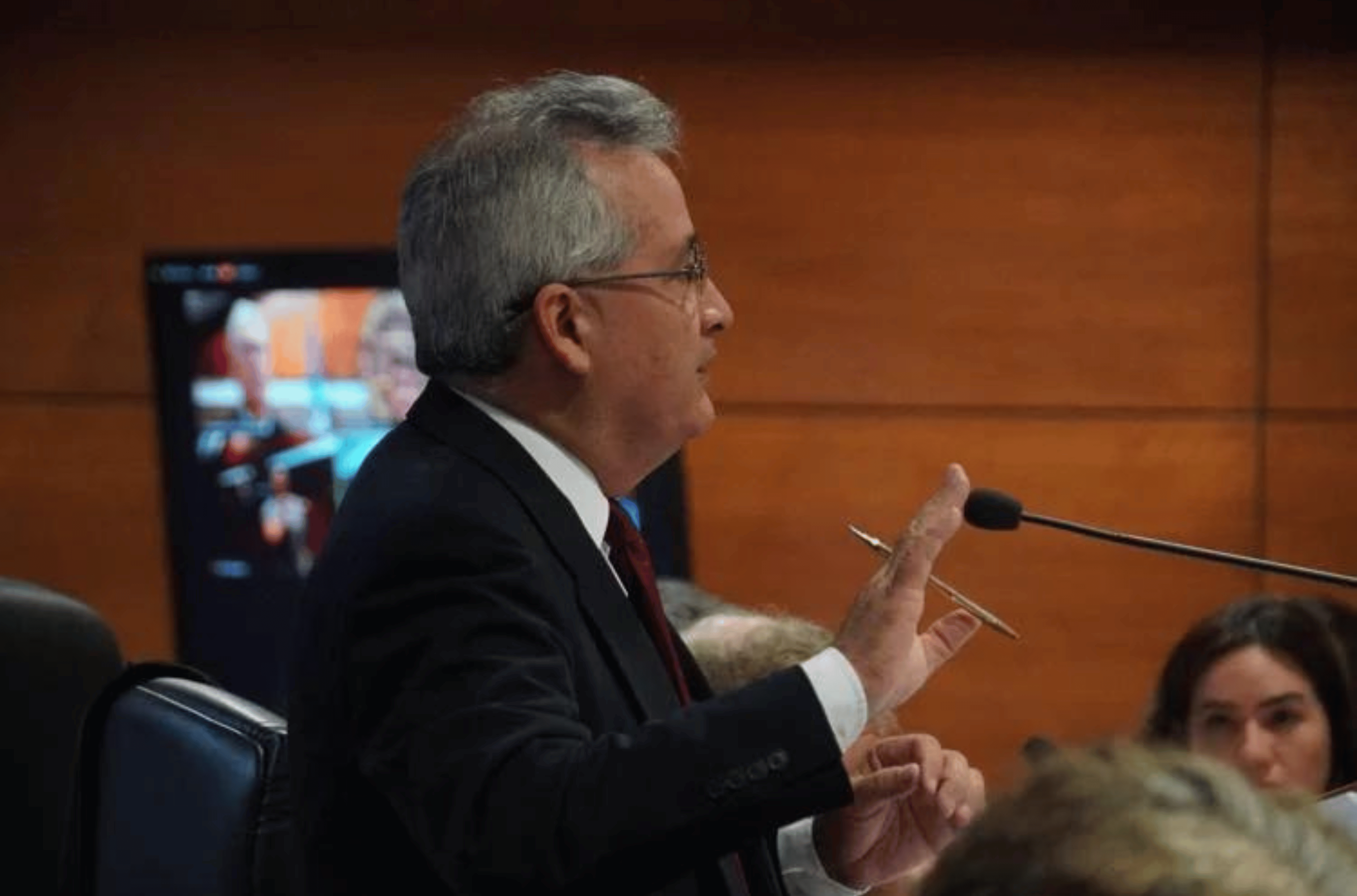




HAGÅTÑA (The Guam Daily Post) — Faced with the Supreme Court of Guam determination that the abortion ban on island is without effect, Attorney General Douglas Moylan, who was fighting in federal court to be able to enforce the ban, is now planning to take the case to the Supreme Court of the United States, according to documents filed in the 9th U.S. Circuit Court of Appeals.
Moylan filed to dissolve a permanent injunction on the ban near the beginning of the year at the District Court of Guam. However, he was denied for failing to address certain arguments raised by plaintiffs in that case.
The attorney general appealed the decision to the 9th Circuit, but before the appellate court could decide the matter, the Guam Supreme Court issued its own decision on the abortion ban.
Gov. Lou Leon Guerrero, an abortion rights advocate, had petitioned the local high court to determine the validity and enforceability of the abortion ban. In late October, the Guam Supreme Court decided the ban was repealed by implication through subsequent local laws allowing for abortion and that the ban “no longer possesses any force or effect in Guam.”
Essentially that means there is no ban to enforce on island, which put into question how the 9th Circuit appeal would move forward – a case with which the underlying issue was enforcement.
The American Civil Liberties Union, representing plaintiff-appellees, wrote to the 9th Circuit on Nov. 6 stating that the Guam Supreme Court decision is unappealable and that the AG’s motion to dissolve the injunction was moot because of it.
Lawyers for Consovoy McCarthy PLLC, the conservative law firm hired to represent the Office of the Attorney General at the 9th Circuit, motioned to hold the appeal in abeyance and to suspend the briefing schedule on the case.
The lawyers stated that the ACLU was incorrect and that the AG was in the process of preparing a petition for a writ of certiorari to the U.S. Supreme Court to review the Guam Supreme Court’s decision.
“Whatever else might be said right now about the Guam Supreme Court’s decision, it remains subject to potential review by the United States Supreme Court. The attorney general is preparing and intends to file a petition for a writ of certiorari with the U.S. Supreme Court seeking review of that decision. And the Supreme Court’s disposition of that petition will necessarily affect how this appeal should proceed,” lawyers for Consovoy McCarthy stated.
If the U.S. Supreme Court grants review and reverses the Guam decision, then the AG’s appeal remains “live and ripe” for the 9th Circuit to review “in ordinary course,” the lawyers added.
But if the U.S. Supreme Court denies review or grants the petition but ends up affirming the decision from the local high court, then the 9th Circuit will need to decide whether the Guam Supreme Court decision moots the AG’s appeal and what a finding of mootness means for the permanent injunction that was placed on the abortion ban, according to the Consovoy McCarthy lawyers.
The 9th Circuit chose to vacate a previously established briefing schedule and to stay proceedings until Feb. 12, 2024.
The Guam Daily Post asked Moylan if the AG’s office has already filed a petition with the U.S. Supreme Court but did not receive a response as of press time.
Public Law 20-134, Guam’s abortion ban, was enacted in 1990. It would have prohibited abortions at all stages of pregnancy, with limited exceptions related to medical intervention and ectopic pregnancies. Victims of rape and incest, for example, are not exempt under the ban unless they meet those limited exceptions. Moreover, the ban makes it a crime to solicit a person to submit to an abortion, which raised free speech concerns.
The ban was quickly challenged and held unconstitutional due to case law at the time establishing a right to abortion in the United States. P.L. 20-134 was placed under a permanent injunction, barring its enforcement. But the law was never explicitly repealed.
Last year, the U.S. Supreme Court overturned prior case law on abortion, ruling in Dobbs v. Jackson Women’s Health Organization that the Constitution does not guarantee a right to abortion. This gave states and other jurisdictions greater latitude to regulate the practice – including the implementation of outright bans.
It was this ruling that was the impetus for Moylan’s decision to seek to dissolve the injunction on Guam’s abortion ban.