







HAGÅTÑA (The Guam Daily Post) — Sen. William Parkinson has introduced a bill which would extend the time limit for a person arrested to appear before a judge from 48 hours to 72 hours.
Earlier this week, Attorney General Douglas Moylan wrote a letter to the Judiciary of Guam administrator of the courts, Danielle Rosete, requesting magistrate’s hearings be held twice a day instead of once.
According to Guam law, magistrate hearings are the first court hearings for defendants charged and must be held within 48 hours of a person being arrested.
Moylan said in his letter that magistrate hearings held in the mornings and afternoons, as opposed to just in the afternoons, were needed to address a “dire situation” because the time it takes to review police reports makes it difficult to “effectively process all detainees within 24 hours.” Moylan also argued if arrestees are not charged, they will be released, which “does not allow for the protection of crime victims.”
Additionally, Moylan referred to a letter he sent to Speaker Therese Terlaje which included the draft of a bill which would extend the 48-hour deadline to 72 hours.
On Wednesday, Sen. William Parkinson introduced a draft of Bill 235-37 and said it was needed not only to protect the community, but also because there is no magistrate hearing held in the mornings.
Judiciary
In response to Moylan’s letter, the Judiciary of Guam confirmed it received the letter and acknowledged representatives had met with the Office of the Attorney General on Sept. 28, 2023, to discuss the matter.
The Judiciary added “they will continue to work with the attorney general and all other government entities involved in magistrate hearings to find an effective way forward.”
Following the introduction of Bill 235, Judiciary spokesperson Sarah Elmore-Hernandez told the Post “the Judiciary is evaluating the legislation and will provide comment via testimony if and when the measure proceeds to public hearing.”
Although the Judiciary had not issued a position to support or oppose the measure to extend magistrate deadlines, archives from the Guam Legislature show in 2008, when the magistrate deadline was 24 hours and a bill was introduced to extend it to 48 hours, the Judiciary testified it had “no issue” with the extension, but explained it may raise “potential constitutional violations.”
Additionally, the Judiciary referred to a U.S. Supreme Court ruling, County of Riverside v. McLaughlin, which interpreted “the Fourth Amendment requirement of demonstrating probable cause for warrantless arrests is to be limited to 48 hours” and not any later.
Defense
The executive director of the Public Defender Service Corp., Stephen Hattori, when asked for his thoughts regarding Bill 235, said he understood the good intention, but felt the abuse of power was possible.
“If you are pulled over, fail the attitude test and are arrested on less than sufficient evidence, under the … bill they could be held for three full days in an overcrowded prison potentially losing their job and ability to afford housing,” Hattori said.
“If it’s a serious enough crime, there is no excuse for not charging it within 48 hours,” Hattori added, while also explaining the Judiciary has been accommodating by holding magistrate hearings on weekends and holidays.
Alternatives to “throwing people in jail” were suggested by Hattori.
“I think police can be given authorization to issue stay-away orders valid for a month and, if they violate, it can be a criminal offense,” Hattori said.
DOC
The Post also inquired with Department of Corrections Director Fred Bordallo on how Bill 235 could affect operations at the prison.
Bordallo, who said he was working to draft testimony in the event of a public hearing, told the Post having detainees held longer will “logically” involve costs associated with housing them.
“When a pretrial detainee is held longer in our facilities, we are given the task of ensuring their security, … ensuring that they are fed, … and of course that’s a cost, always going to be a cost,” Bordallo said. “Security is always going to be a challenge when there is an extension of their incarceration.”

Fred Bordallo
William Parkinson
Douglas Moylan
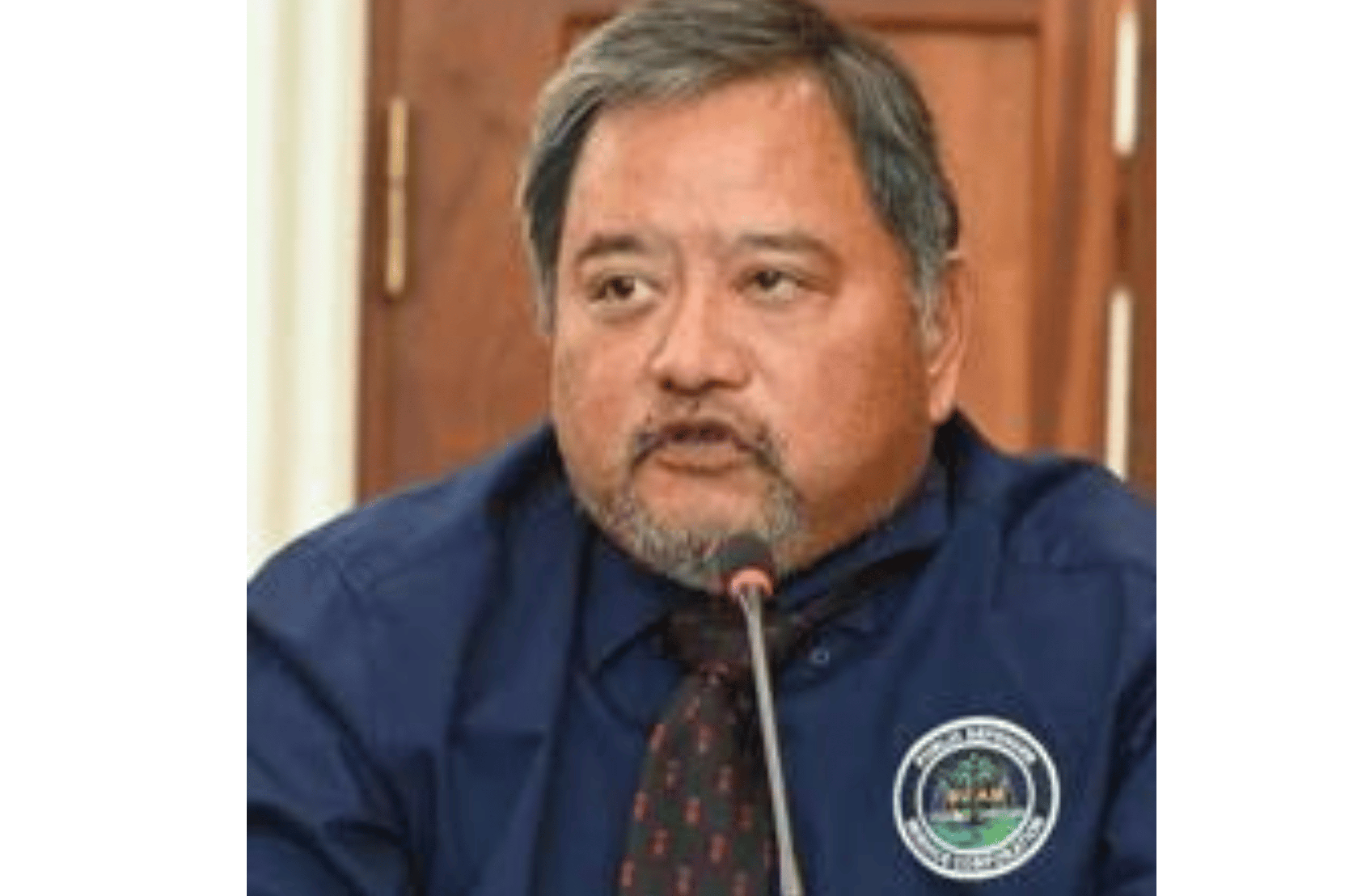
Stephen Hattori
