







THE medical referral program, now known as the Health Network Program or HNP, needs at least $8.19 million a year to sustain escorted referrals, according to a budget projection presented by the Commonwealth Healthcare Corp. to the media during a press conference at CHCC on Thursday.
If the referrals are unescorted, the program will cost about $6 million a year, CHCC added.
These amounts include airfare, accommodations and subsistence allowance for an average stay of 15 days.
CHCC said the CNMI government has allocated only $1 million for the program.
According to CHCC Chief Executive Officer Esther Muna, past due invoices amounting to $300,000 are owed to their vendors.
“[Lawmakers] need to appropriate [the funds],” she said. “For many years now, this program is running on deficit.”
Muna said because of the funding crisis, the program is currently exercising caution with its expenditures.
“We have no other funding source to offset the deficit. The deficit remains a deficit,” said Perlita Santos, CHCC’s chief financial officer.
She said it may be difficult to sustain a good relationship with their overseas vendors because of delayed payments.
“We do not want landlords [providing accommodations to medical referral patients] to say that they are done with us, and kick out our patients,” she said. “But there will come a time when they will say, ‘This is too much!’”
In the meantime, she said they asking their vendors to be patient.
She noted that whenever they require offshore services, vendors and their partners review their credit history.
Muna said they have already reduced expenditures by ending contracts with some accommodation providers.
For example, Muna said in Los Angeles, there were about 25 rooms for accommodations, now there are only five.
On Guam, there used to be three hotels for CNMI patients, but now there is only one hotel providing accommodations to the patients.
“As per the regulations,” Muna said, “the patient has to be referred to the closest state, and Hawaii is the closest.”
But the providers in Hawaii no longer want to deal with the CNMI because of the “slow payments” made in the past.
Muna said CHCC was hoping to receive two years of adequate funding to turn the program around and bring sustainability to it.
But she said CHCC is working closely with Gov. Arnold I. Palacios and lawmakers to make the program accessible, equitable and sustainable.
Despite budget limitations, she said every eligible patient was able to travel for referral treatment.
“We find ways to send them [to an off-island hospital],” she added.
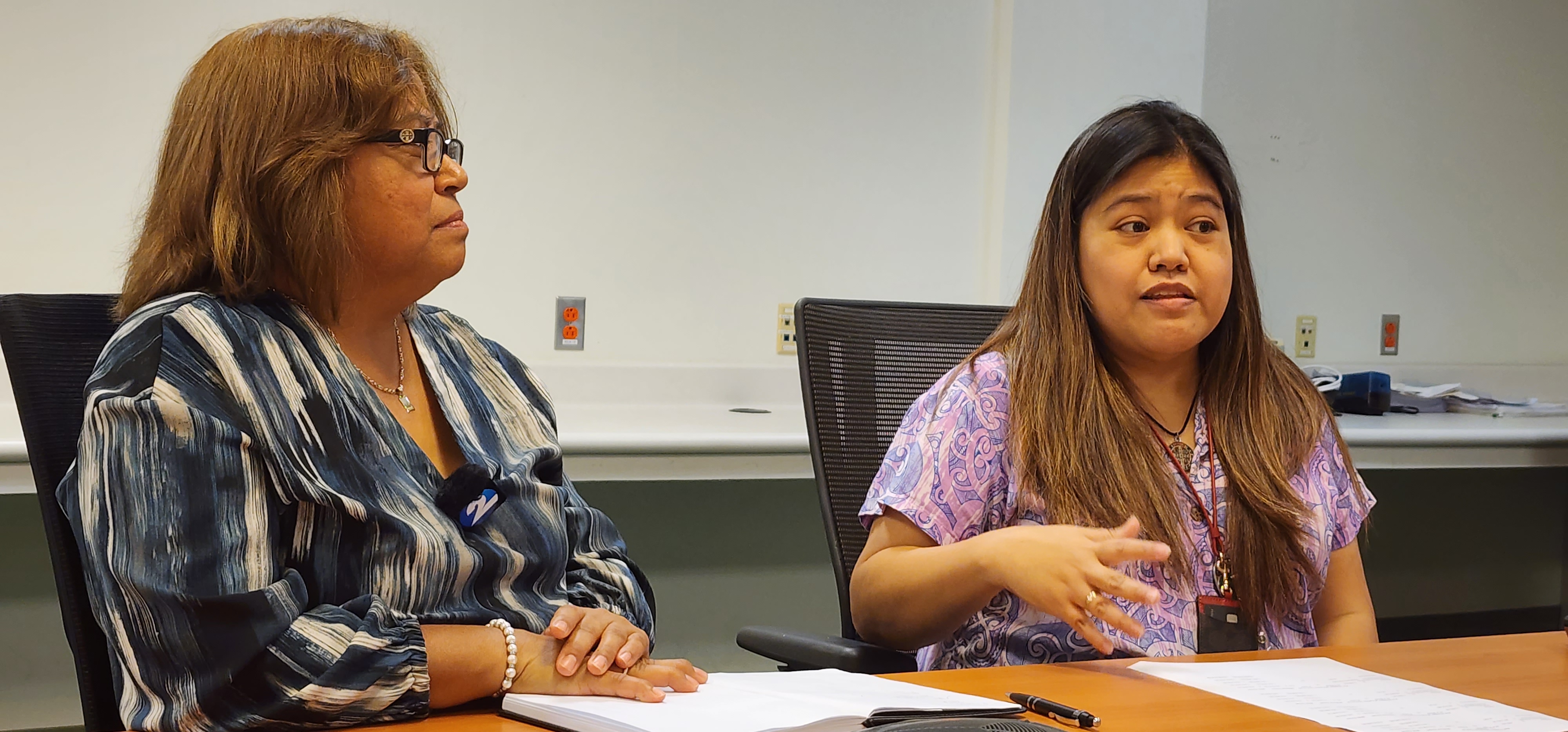
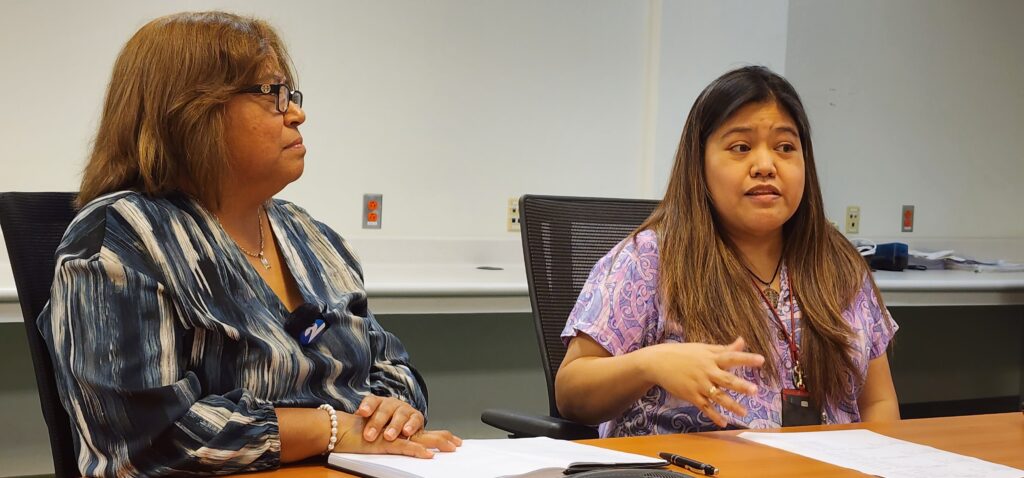
Commonwealth Healthcare Corp. Chief Executive Officer Esther Muna, left, looks on as Chief Financial Officer Perlita Santos talks about the financial challenges facing the medical referral program which is now known as the Health Network Program.
