





EVERY great debate has an origin story, and the pineapple-on-pizza controversy is no different.
It all started in 1962 in Chatham, Ontario, Canada. Sam Panopoulos, a Greek immigrant and restaurant owner, was known for his adventurous spirit and playful sense of humor. One day, in a moment of culinary curiosity, he opened a can of pineapple and placed the golden rings on top of a traditional tomato and mozzarella pizza. And thus Hawaiian pizza was born.
Contrary to what its name suggests, the dish has no ties to Hawaii—except for the brand of canned pineapples Panopoulos used. While some immediately fell in love with the unexpected blend of sweet and savory, others saw it as an abomination, an insult to Italian cuisine, and a crime against pizza itself. Thus began a battle that would span decades and continents.
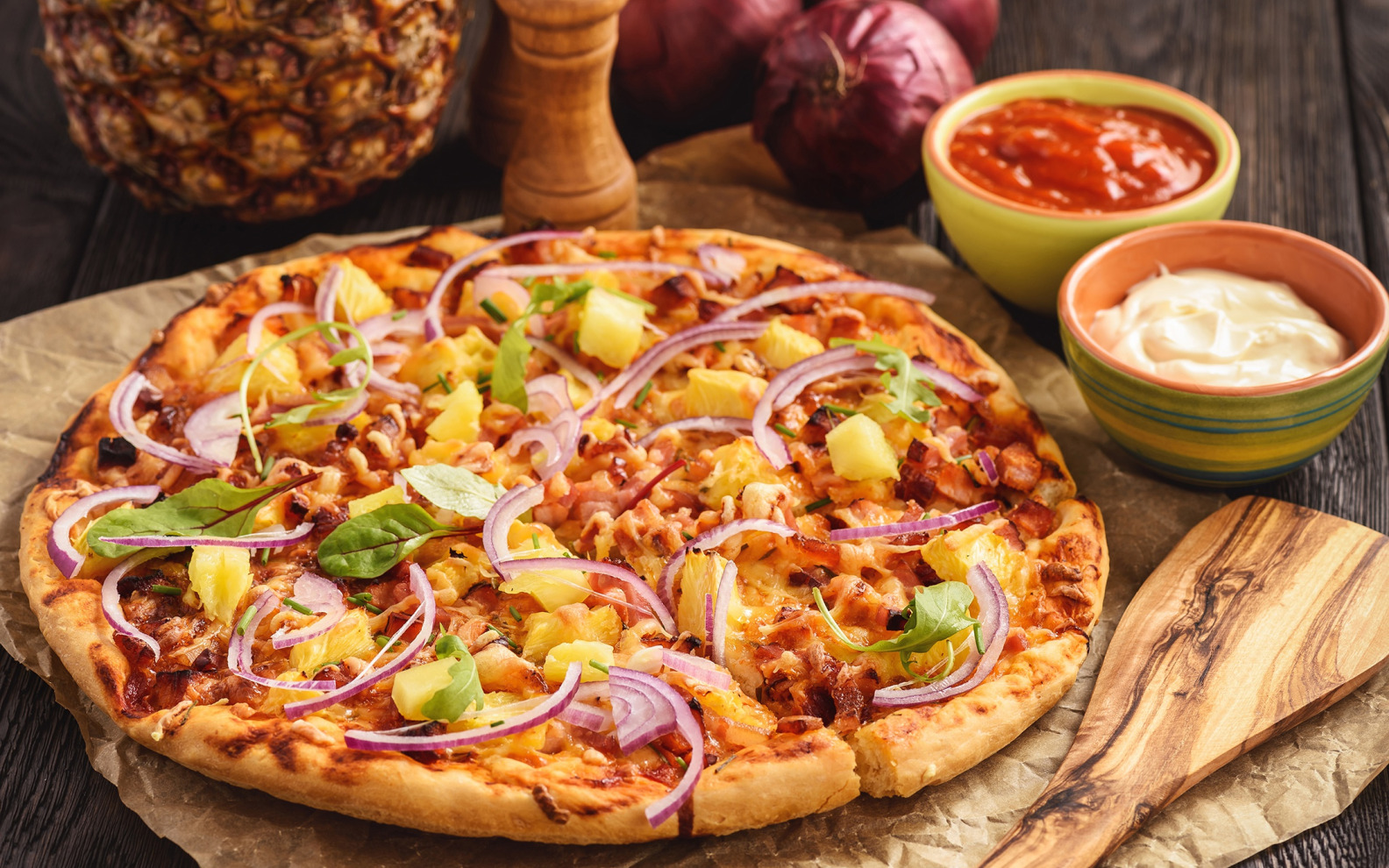
Pineapple on pizza.
The great pineapple divide
Pizza is sacred to many, and the thought of tampering with its classic ingredients creates ripples across the globe. Some people champion the contrast of sweet pineapple and salty ham, calling it a perfect harmony of flavors. Others find the very concept offensive.
Even dating apps have jumped in on the fun, with the question “Do you like pineapple on pizza?” becoming both an icebreaker and a dealbreaker for potential matches. It’s not just an opinion; it’s a personality trait. And in an age where food preferences can spark as much debate as politics, the pineapple pizza war rages on.
Italy: Where the ‘disrespect’ hits deep
Italy, the birthplace of pizza, has long been at odds with the idea of pineapple on their beloved dish. Some Italian chefs see it as a disgrace, while traditionalists argue it disrupts the sacred balance of flavors. In 2017, rumors swirled that Italy had officially banned pineapple pizza—a claim that was, thankfully, untrue. However, many Italian pizzerias still refuse to serve it, standing firm in their belief that the fruit has no place on pizza.
Iceland: When a president almost banned it
In 2017, Iceland’s then-president, Guðni Th. Jóhannesson, casually mentioned during a school visit he was “fundamentally opposed” to pineapple on pizza. But he didn’t just stop there; he went on to say that if he had the power, he would outright ban the topping.
The comment quickly escalated into an international incident, sparking outrage and support from around the world. Ultimately, Jóhannesson walked back his statement, admitting he got carried away. But his words lived on, fueling the great pineapple debate.
The UK: Where pineapple comes at a price
Across the pond in Norwich, England, one pizzeria took its stance to a new level. Lupa Pizza, in an act of pure pineapple defiance, decided that if customers really wanted the controversial topping, they’d have to pay a hefty price—literally. The pizzeria added a £100 “taste tax” for anyone daring enough to order pineapple on their pie.
Co-owner Francis Woolf didn’t mince words: “I absolutely loathe pineapple on pizza,” he said. While it was mostly a tongue-in-cheek stunt, the message was clear: Some people will do anything to keep pineapple far away from their pizza.
Famous faces taking sides
This isn’t just a debate among food lovers; celebrities have weighed in too. Paris Hilton is a proud defender of the pineapple on pizza, while celebrity chef Gordon Ramsay once passionately declared, “Pineapple does not belong on pizza!” (though he later, somewhat grudgingly, admitted that it might not be the worst thing in the world). Even The Rock—yes, Dwayne Johnson—has thrown his support behind the sweet and savory combo, calling it “delicious.”
The CNMI slice: A local take on the debate
Here in the CNMI, the debate is just as real. Local pizzerias serve both traditional and Hawaiian-style pies, and while some embrace the tropical twist, others would rather leave the fruit for desserts and smoothies. But if there’s one thing we can all agree on, it’s that pizza is best enjoyed with good company, no matter what’s on top.
So, whether you’re a pineapple-on-pizza enthusiast or a diehard purist, just remember—there’s always the option to opt out. After all, pizza is about bringing people together, even if our toppings may sometimes pull us apart. Cheers to that!