




(PSS) — In expressing its gratitude to Tinian residents, the Early Intervention Program of the Public School System has reaffirmed its dedication to carry on its free early detection services to infants, toddlers, and their families, which the program has been providing in the last 20 years.
“Early Intervention has always collaborated with Tinian Public Health through the Immunization Program for the last 20 years,” Early Intervention Program Director Robin Palacios said in her recent meeting with her Tinian partners.
“We thank you for being our outreach on the island of Tinian to get our kids in. When kids get referred, they are evaluated, and eventually are provided with all necessary support services to ensure they are able to receive uninterrupted learning opportunities from the Public School System,” she added.
The Early Intervention Program provides free early detection services for infants and toddlers with development delays. Its services are mandated by the federal Individuals with Disabilities Education Act or IDEA, which, in 1986, was amended to include a program for infants and toddlers and their families. The program is known as Part C of IDEA.
Joining Palacios in a meeting with Tinian partners on Oct. 16 was Commissioner of Education Dr. Lawrence F. Camacho. This was followed by an outreach to parents and other family members.
The Early Intervention Program has been providing monthly services to infants and toddlers by assisting developmental needs at no cost to families. These include infants and toddlers with Down syndrome, deafness, autism, and other developmental disabilities.
“We thank you for opening your doors to us to serve our children through our EI Program,” Commissioner of Education Camacho said as he expressed his appreciation to Tinian Public Health.
Ecosystem of support
Commissioner Camacho and Director Palacios met with Tinian’s acting Resident Health Director Gizelle Ablan, Tessa Diaz of the Tinian immunization program, and Tinian nurse Rejean Nuyda. Joining them in the meeting were EI Program specialists Peter Mendiola and Nace Soalabai.
Camacho described the partnership between PSS and other government agencies and programs as an “ecosystem of support.”
“The EI program is very important for everybody in our community, not just for PSS,” he said. “It is about preparing our child for the new life that she or he is going to have. Our Early Intervention Program services are there during the critical early learning years of every child and at an age level that our schools are ready to welcome them as learners,” Camacho told the program’s Tinian partners.
“It is hard for us [at PSS] to make it possible without your support. Beyond that, I am also grateful to all of our health centers that focus on our children by supporting and partnering with our EI Program, to help them with their healthcare and development care needs,” Camacho added.
“What we have been doing for the past 20 years is part of the ecosystem of support: our government partners who assist us in taking care of our children’s health and well-being for them to be able to come to our schools to learn,” Camacho added.
Outreach, parent session
Camacho, Palacios and the EI Program specialists also visited homes to ensure that parents, including new parents, are aware that there are programs provided for free for early detection and for the development care of infants and toddlers.
This was followed by a parent input session on Oct. 17. Participants were provided with information regarding the Eight Evidence-Based Practices or EBPs to help young children increase their language and literacy skills. The EBPs are strategies implemented for children who receive early intervention services.
The Tinian outreach signed up 28 participants, including parents, childcare providers, and community members. The event was facilitated by early intervention providers, along with technical assistance from Guam CEDDERS. The team also met with officials of the Tinian Division of Youth Services, Team Koka, the library, and Tinian Health Center.
‘Thank you’
Ablan, the acting Tinian resident health director, thanked PSS’ Early Intervention Program “for being a strong partner in our outreach work.”
She asked Commissioner Camacho about the possibility of expanding their partnership by allowing the Tinian Public Health Program to conduct outreach for middle and high school students.
“One of the gaps we are trying to fill is the aspect of the [family life and life skills] program. We have our own program, and our target population is from the middle to high school level,” Ablan said.
Camacho said PSS will support Tinian Health Center’s program.
“I welcome you to our campus to help promote your program which supports our students’ education,” he said.
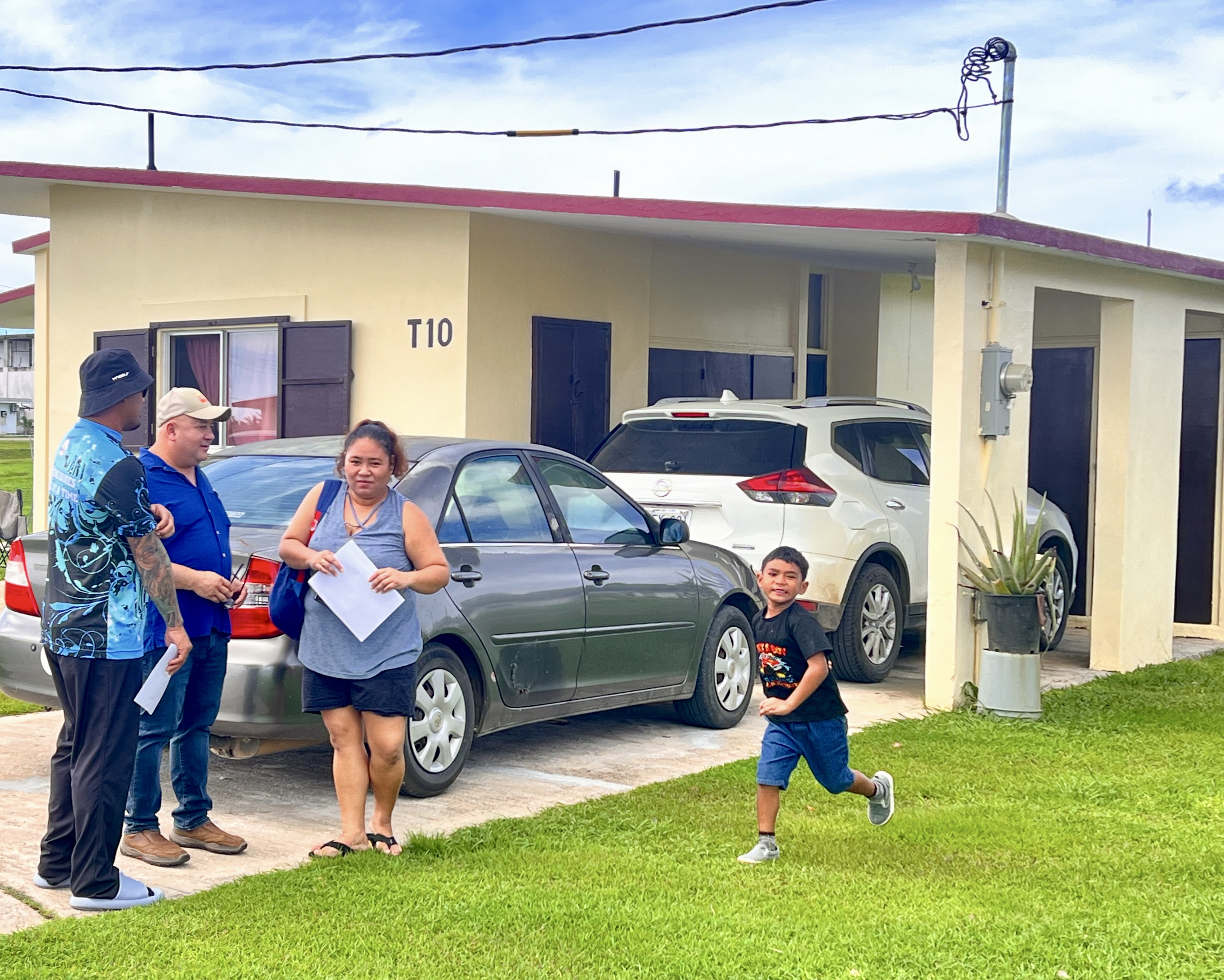
Vanna Aldan, mother of six-year-old Zayn, a first-grade student at Tinian Elementary School, is visited by Commissioner of Education Dr. Lawrence F. Camacho and Early Intervention Program special instruction teacher Peter Mendiola on Tinian, Oct. 16, 2024. Aldan acknowledges how the PSS Early Intervention Program has helped ensure her son receives all the necessary early childhood development support from the Public School System.

Acting Tinian Public Health Resident Director Gizelle Ablan, right, back to the camera, listens to Commissioner of Education Dr. Lawrence F. Camacho during a meeting. Also in photo are PSS Early Intervention Program Director Robin Palacios, Tinian Public Health-Immunization Program’s Tessa Diaz, and EI Program specialists Peter Mendiola and Nace Soalabai.
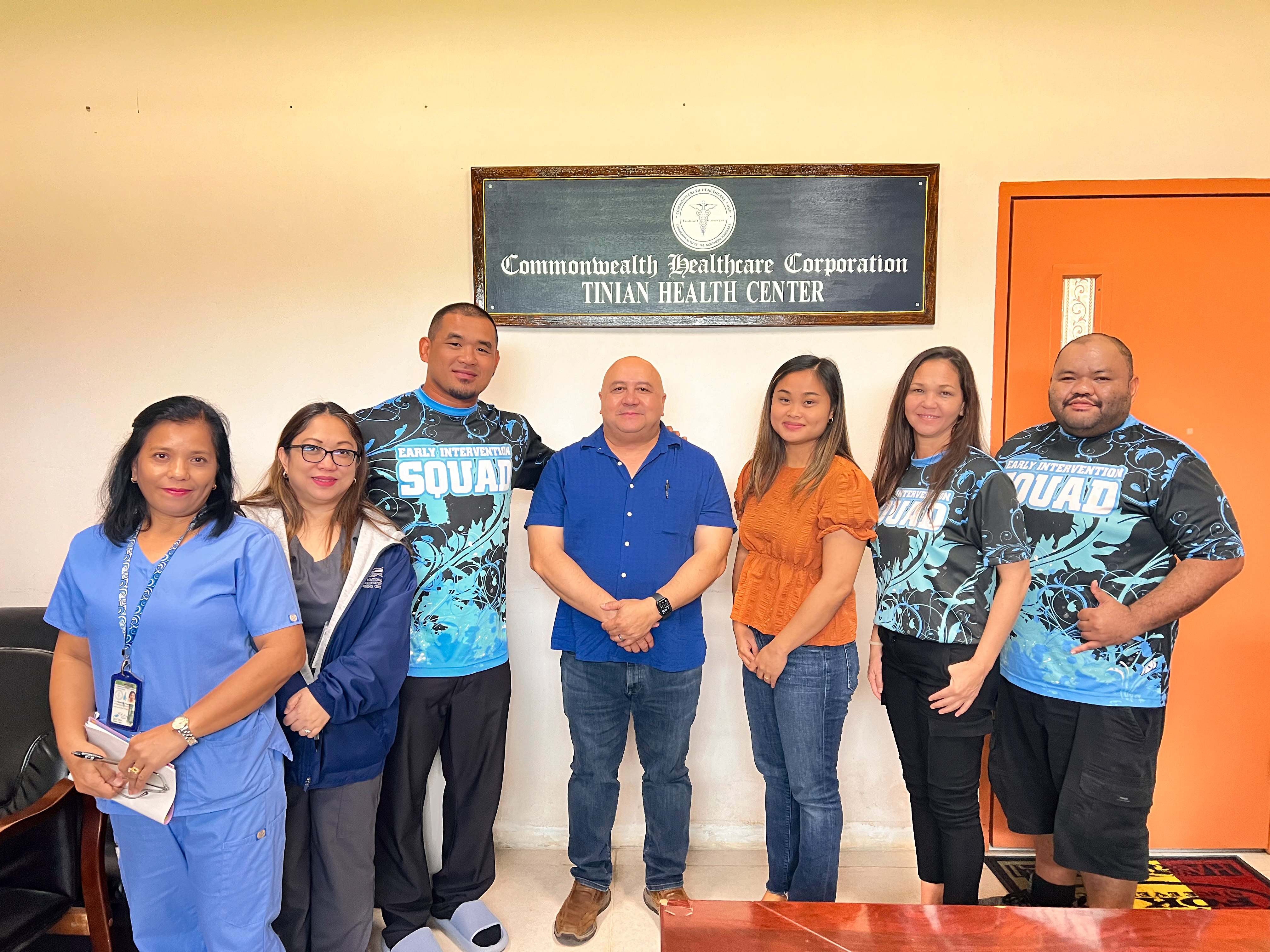
Commissioner of Education Dr. Lawrence F. Camacho with Early Intervention Program Director Robin Palacios, Early Intervention Program specialists Peter Mendiola and Nace Soalabai, Acting Tinian Public Health Resident Director Gizelle Ablan, Tinian Public Health-Immunization Program’s Tessa Diaz, and Tinian Health Center nurse Rejean Nuyda.
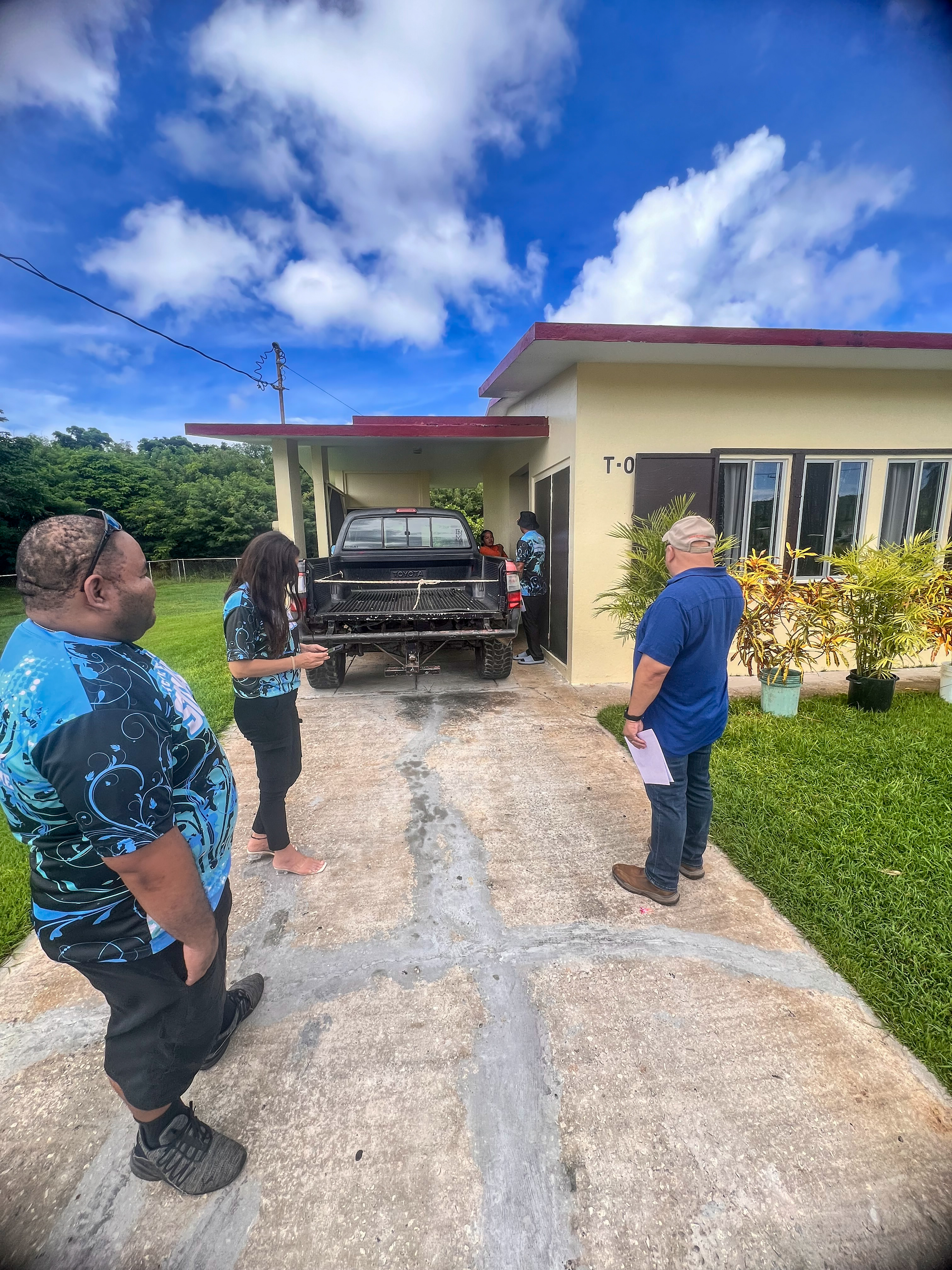
During their house-to-house visits on Tinian, Early Intervention Program Director Robin Palacios shows Commissioner of Education Dr. Lawrence F. Camacho how her team members Nace Soalabai and Peter Mendiola reinforce their awareness campaign to ensure that families avail themselves of the free services provided by the PSS EI Program.
