




THE Commonwealth Ports Authority on Monday received an unofficial copy of the transition report which recommends, among other things, the termination of CPA’s contract with Rota Terminal & Transfer for stevedoring services on Rota West Harbor.
Chaired by Teresita B. Camacho, the CPA transition subcommittee recommended to the administration of Gov. Arnold I. Palacios that it “open” the contract for stevedoring services at the Rota seaport to public bidding which should include a new contractual agreement, sufficient stevedore limitations/caps of charges, fees, levies and other obligations.
In a telephone interview, RTT Office Manager Viola Atalig declined to comment on the transition report, but added that RTT’s crane is “up and running.”
The issues with RTT’s equipment, she said, were addressed soon after they received the demand letter from CPA Executive Director Christopher Tenorio early in February.
Atalig said RTT has efficiently provided stevedoring services to M/V Mariana on Feb. 26 and 27, off-loading the cargoes from Saipan without any incident.
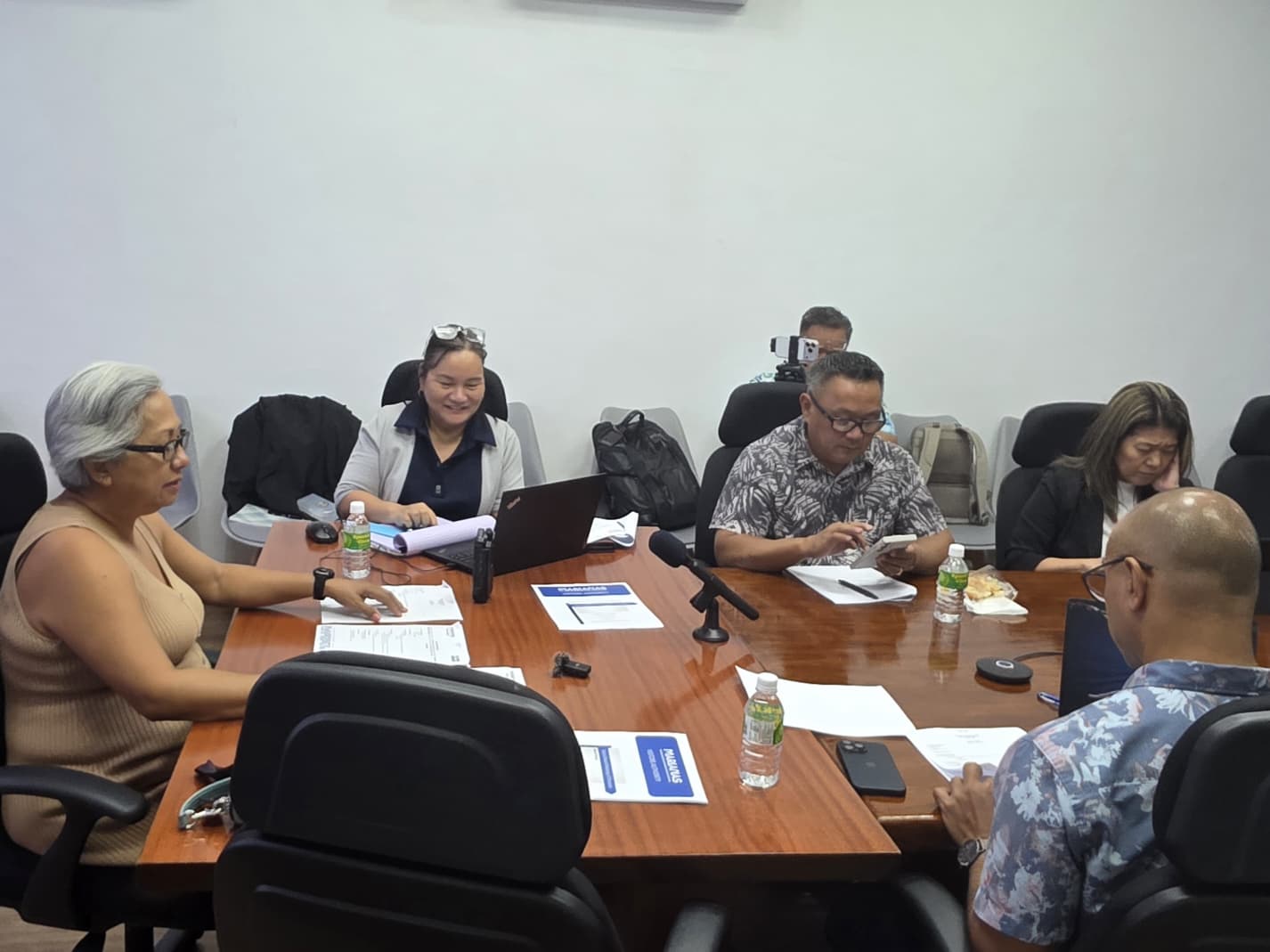
For her part, CPA Chair Kimberlyn King-Hinds said, since they just received the unofficial copy of the transition report, the board will have to meet and discuss it first before it can issue a statement.
According to the transition report, the Rota seaport “constitutes an overwhelmingly long-standing problem which must be remedied immediately.”
It mentioned “reliable sources” who “repeatedly confirmed the absurdly high cost of transporting or offloading of container vans from Saipan and Tinian to Rota.”
The “root” of this problem is CPA’s decision to authorize RTT to be the sole, exclusive company that provides stevedoring services at the seaport, the report stated.
“This monopoly was, for reasons unknown, extended for 25 years with no public bidding or issuance of requests for proposal. Yet the stevedoring operations on Rota have been plagued with a perpetual litany of irregularities and alleged wrongdoings [as well as] interruptions, dysfunction and seeming malfeasance and more for decades,” the report added.
It stated that the issues involving RTT include “the lack of operational crane on multiple occasions, delayed lease payments, disrupted cargo weight measures, inadequate or no weight scale certifications, dilapidated equipment and excessive manpower usage, line handling fees, overtime fees, storage fees and more.”
“Most egregious have been the exorbitant terminal/stevedore fees with no CPA regulation, oversight and intervention,” the report stated.
During the transition team’s meeting with the CPA board, the board members and the legal counsel stated that CPA had neither the ability nor duty to regulate stevedore fees/costs.
“This is simply wrong,” the report added. “CPA has incredibly easy means — and likely the duty — to regulate terminal/stevedore fees…. [In] the case of RTT, CPA has granted an exclusive use/operation agreement pursuant to a contract, and CPA could incorporate into that contract both RTT terminal/stevedore fee/cost limits/caps, and provisions forbidding RTT from increasing pre-agreed upon fees without first obtaining CPA’s written agreement and authorization. Or CPA might perhaps unilaterally draft regulatory provisions to limit gouge-level fees,” the report stated.
It recommends that CPA should “refrain from extending RTT’s exclusive contract, open Rota seaport stevedoring services to public bidders and incorporate explicit limitations on fees into the contract.”