



HIROSHIMA, Japan (Reuters) — Leaders of the world’s richest democracies agreed on Friday to stiffen sanctions against Russia, while a draft communique to be issued after their talks in the Japanese city of Hiroshima stressed the need to reduce reliance on trade with China.
The Group of Seven (G7) leaders, who will be joined this weekend by Ukraine’s President Volodymyr Zelenskiy, vowed to restrict any exports to Russia that could help it in its 15-month war against Ukraine.
“This includes exports of industrial machinery, tools, and other technology that Russia uses to rebuild its war machine,” they said in a joint statement released on Friday, adding they would pursue moves to restrict Russian revenues from trade in metals and diamonds.
On China, which the G7 powers see increasingly as a threat to economic security, they were to agree that its status as the world’s second-largest economy meant there was no alternative to seeking cooperation, an early draft of the final communique seen by Reuters said.
“Our policy approaches are not designed to harm China, we do not seek to thwart China’s economic progress and development,” the draft, which is still subject to change, said.
The draft nonetheless went on to urge measures to “reduce excessive dependencies” in critical supply chains and counter “malign practices” in technology transfer and data disclosure.
It also reaffirmed the need for peace and stability in the Taiwan Strait and also urged China to press Russia to stop its military aggression of Ukraine.
The members of the G7 – the United States, Japan, Germany, Britain, France, Canada and Italy – will use the 3-day meeting to debate strategy on a Ukraine conflict that shows no sign of easing.
Japanese Prime Minister Fumio Kishida, who represents Hiroshima in Japan’s lower house of parliament, said he chose the city for the summit to focus attention on arms control.
Hiroshima, and another Japanese city, Nagasaki, were destroyed by U.S. nuclear attacks 78 years ago that ended World War Two.
CIRCUMVENTING
Having emerged as the world’s richest nations after World War Two, the G7 democracies have become increasingly challenged by an ascendant China and unpredictable Russia.
Amid evidence that existing Russian sanctions were being weakened by circumvention, they said the group was “engaging” with countries through which any restricted G7 goods, services or technology could transit through to Russia.
“We note and encourage commitments made by these countries to ensure our measures are not circumvented and have the intended effect,” they said, without naming any territories.
Breakdowns of German trade data show that its exports to countries bordering Russia have risen sharply, fueling concerns that about the re-exportation of goods from those neighboring states.
The G7 countries reaffirmed their condemnation of Russia’s aggression and promised further support for Ukraine, in terms of military help and financial aid for its war-shattered economy this year and next.
Zelenskiy will attend on Sunday, two officials involved in the G7 summit said, declining to be identified because of the sensitivity of the issue.
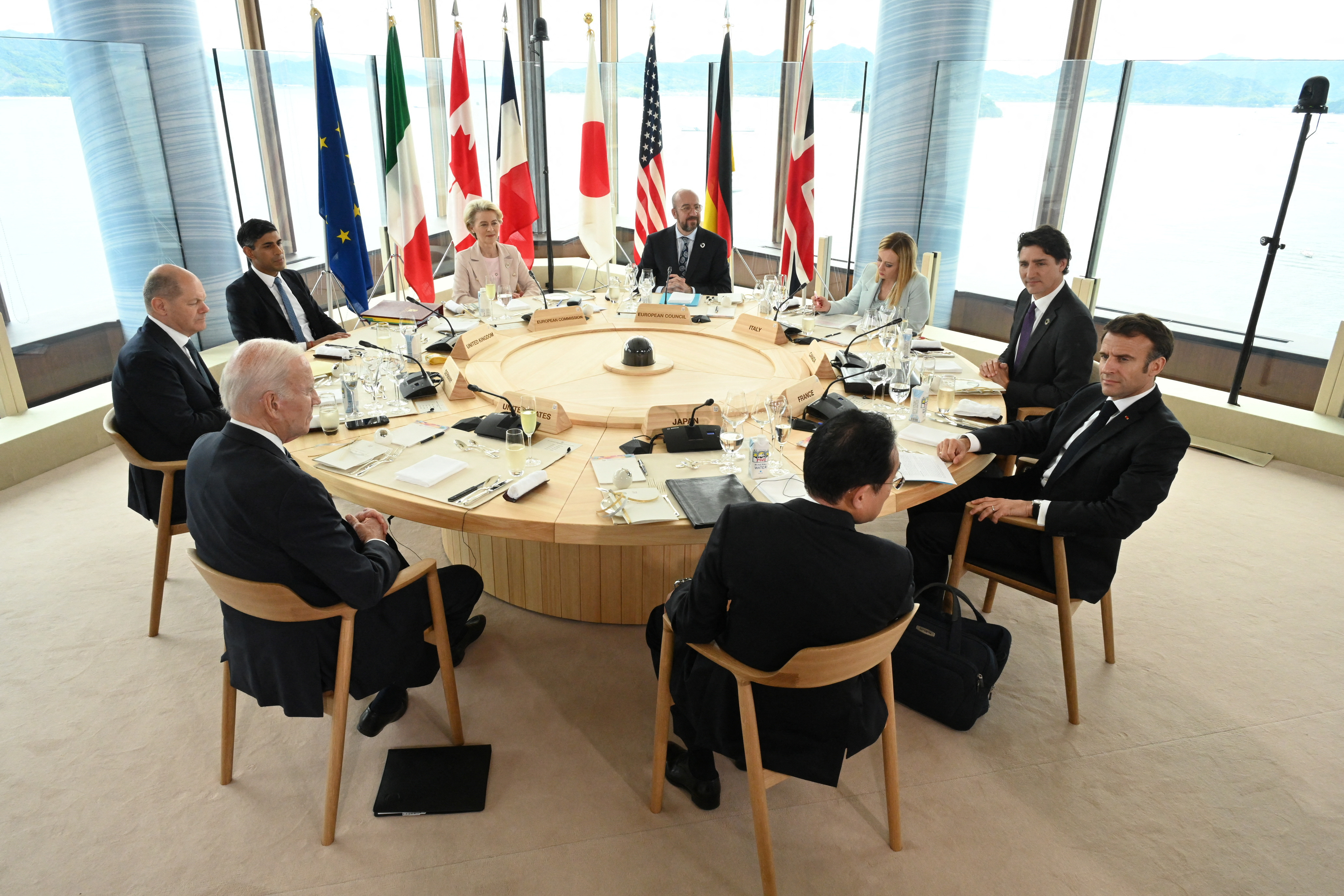
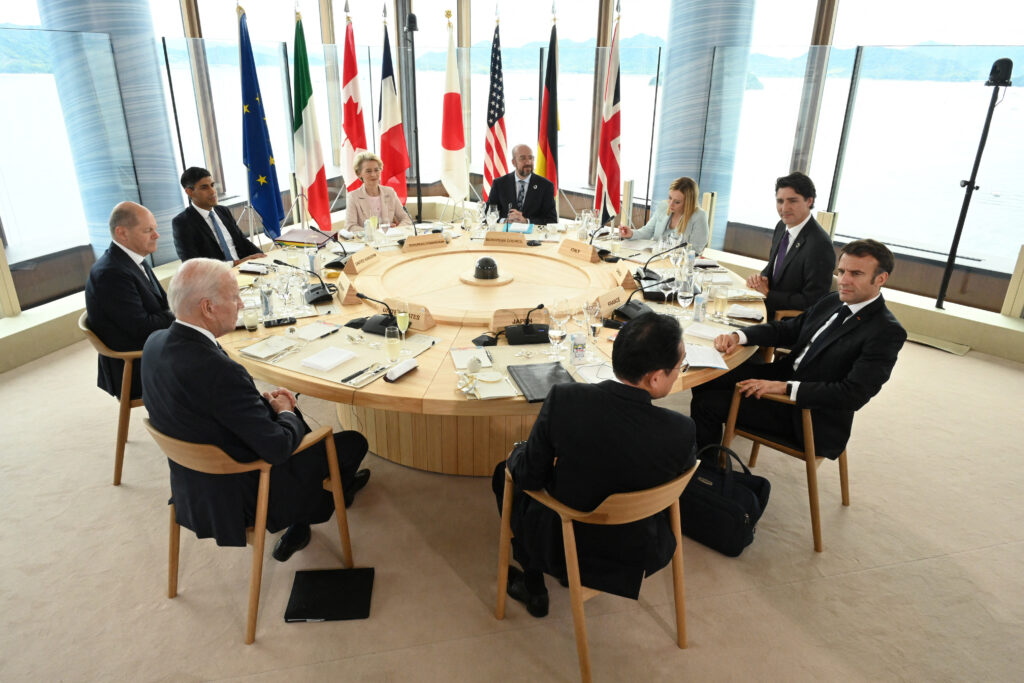
U.S. President Joe Biden, Germany’s Chancellor Olaf Scholz, Britain’s Prime Minister Rishi Sunak, European Commission President Ursula von der Leyen, President of the European Council Charles Michel, Italy’s Prime Minister Giorgia Meloni, Canada’s Prime Minister Justin Trudeau, France’s President Emmanuel Macron and Japan’s Prime Minister Fumio Kishida attend a working lunch meeting at G7 leaders’ summit in Hiroshima
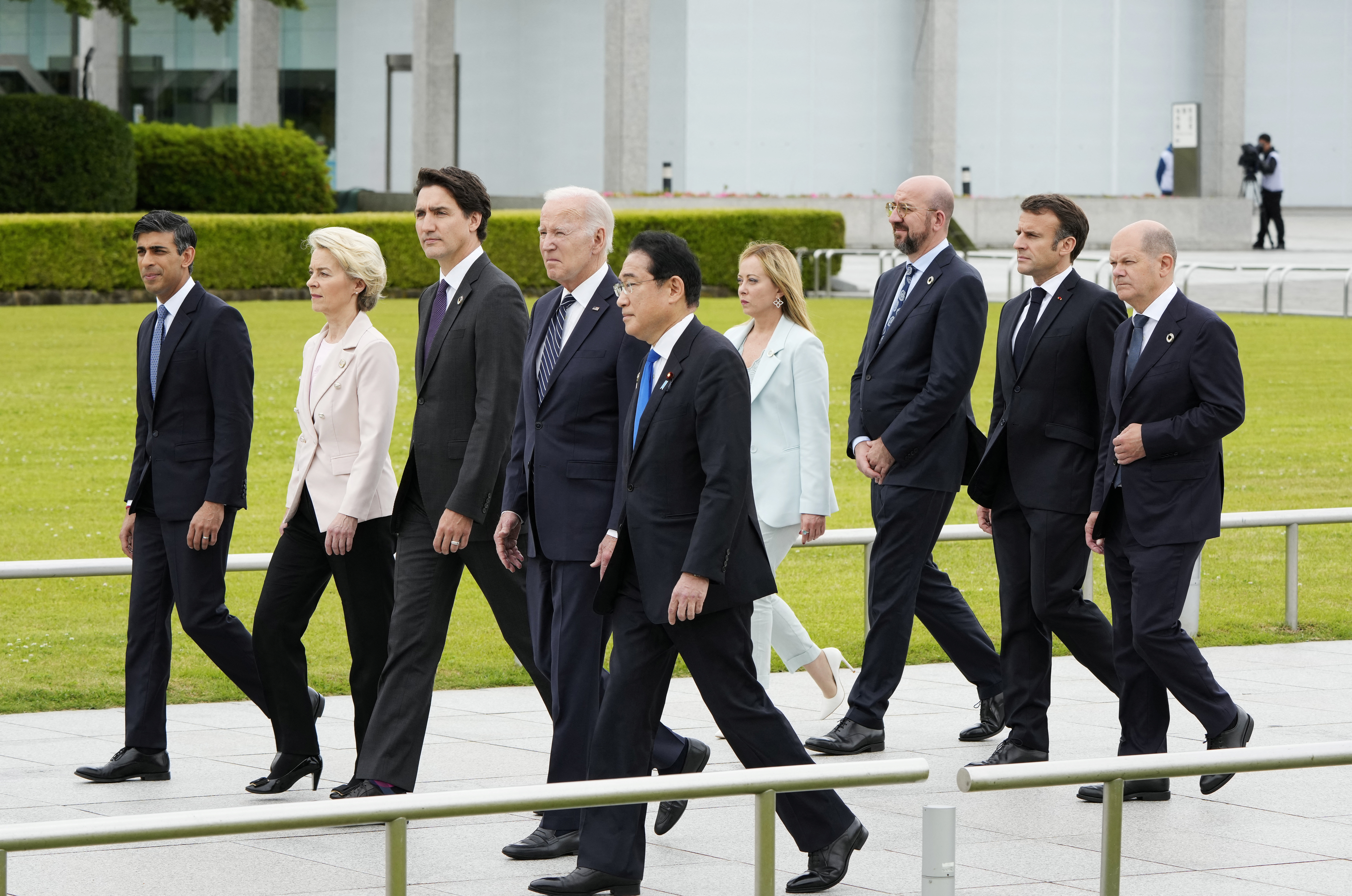
British Prime Minister Rishi Sunak, European Commission President Ursula von der Leyen, Canadian Prime Minister Justin Trudeau, US President Joe Biden, Japan’s Prime Minister Fumio Kishida, Italian Prime Minister Giorgia Meloni, European Council President Charles Michel, French President Emmanuel Macron, German Chancellor Olaf Scholz, walk to a flower wreath laying ceremony at the Cenotaph for Atomic Bomb Victims in the Peace Memorial Park as part of the G7 Hiroshima Summit in Hiroshima, Japan, 19 May 2023. The G7 Hiroshima Summit will be held from 19 to 21 May 2023. FRANCK ROBICHON/Pool via REUTERS
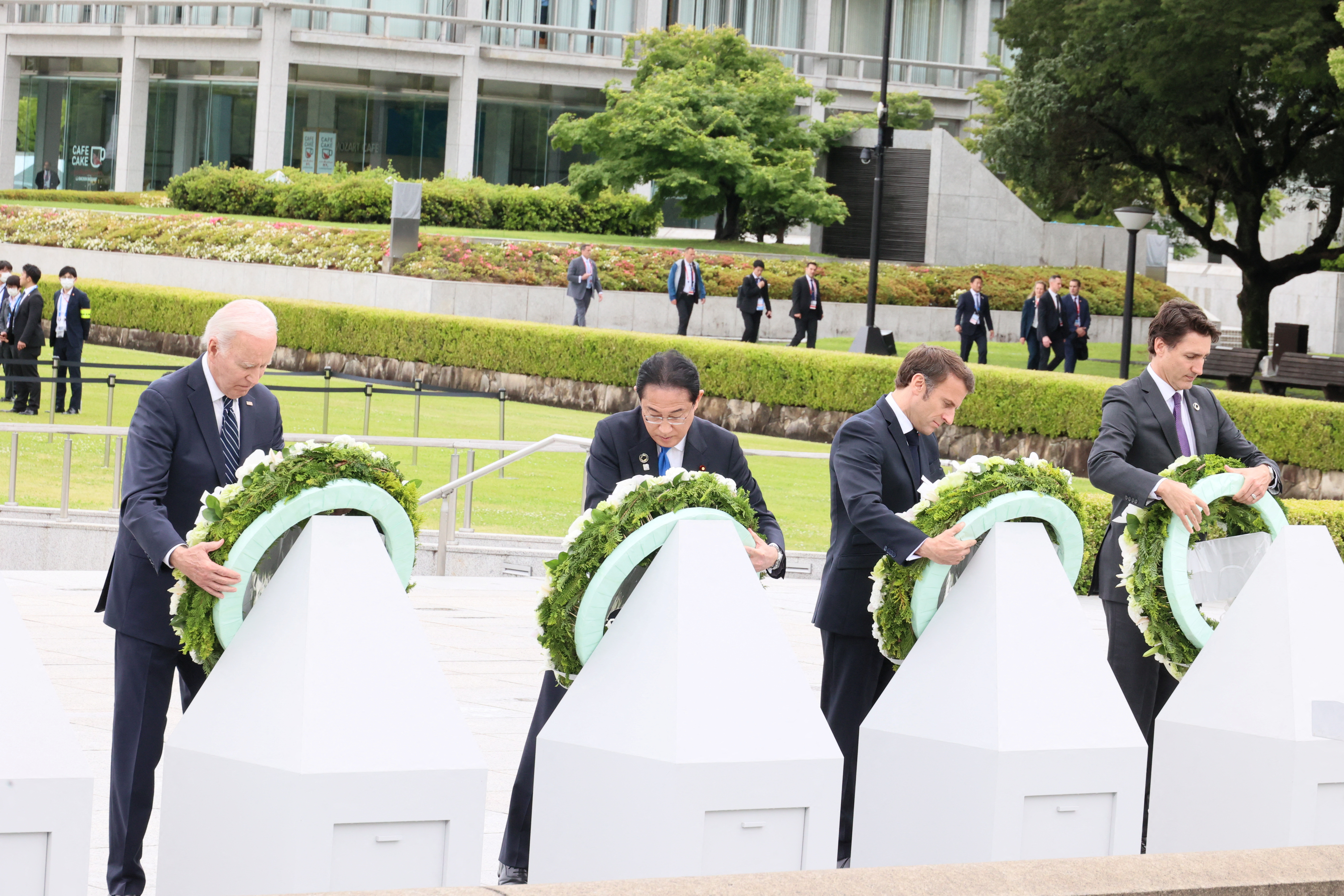
French President Emmanuel Macron, Japan’s Prime Minister Fumio Kishida, U.S. President Joe Biden, Canadian Prime Minister Justin take part in a flower wreath laying ceremony with other G7 leaders at the Cenotaph for Atomic Bomb Victims in the Peace Memorial Park as a part of G7 leaders’ summit in Hiroshima, western Japan May 19, 2023, in this handout photo released by Ministry of Foreign Affairs of Japan. Ministry of Foreign Affairs of Japan/HANDOUT via REUTERS
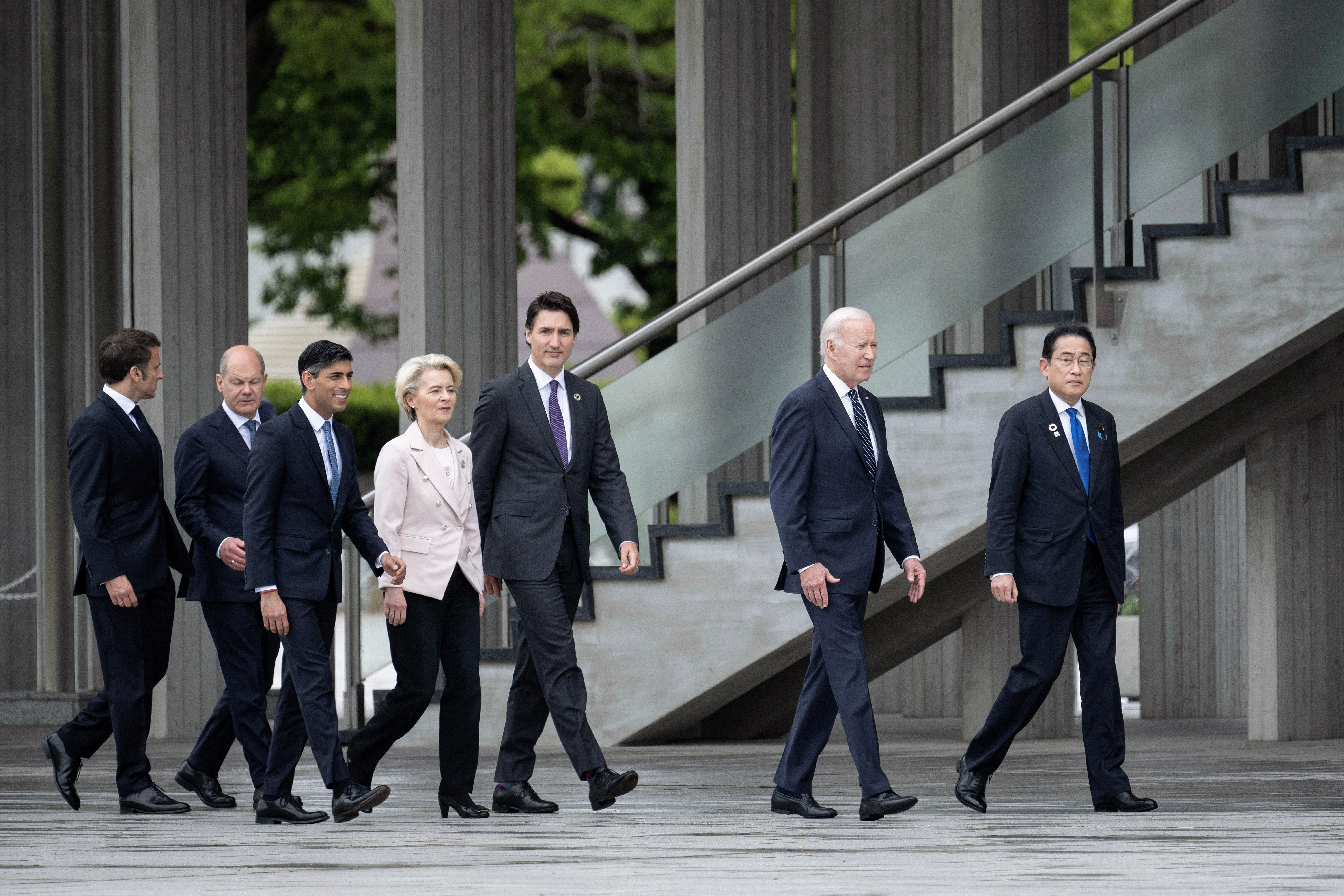
France’s President Emmanuel Macron, Germany’s Chancellor Olaf Scholz, Britain’s Prime Minister Rishi Sunak, European Commission’s President Ursula von der Leyen, Canada’s Prime Minister Justin Trudeau, US President Joe Biden and Japan’s Prime Minister Fumio Kishida visit the Peace Memorial Park as part of the G7 Leaders’ Summit in Hiroshima on May 19, 2023. BRENDAN SMIALOWSKI/Pool via REUTERS
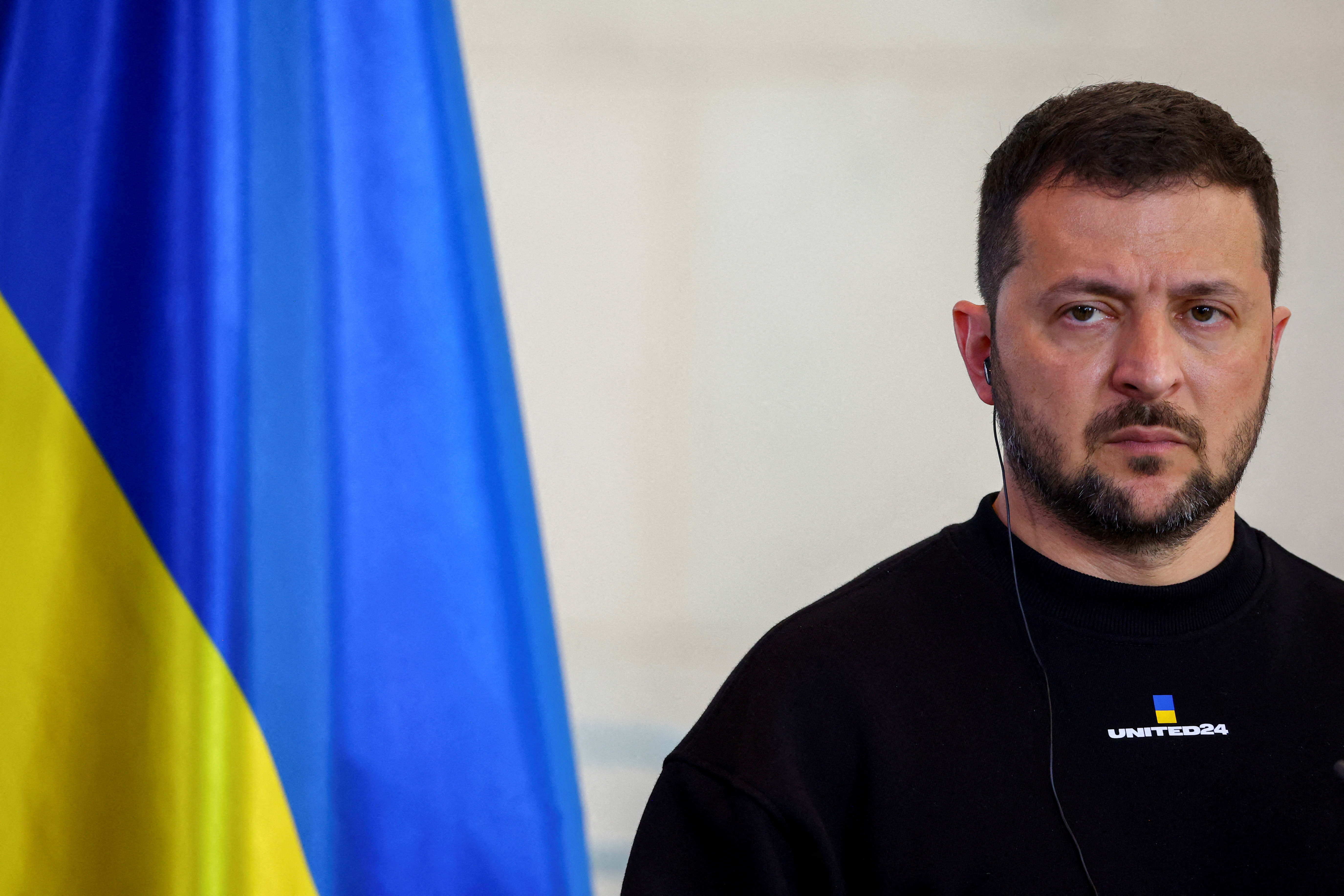
FILE PHOTO: Ukraine’s President Volodymyr Zelenskiy speaks to the media at the Chancellery in Berlin, Germany, May 14, 2023. REUTERS/Fabrizio Bensch/File Photo
