








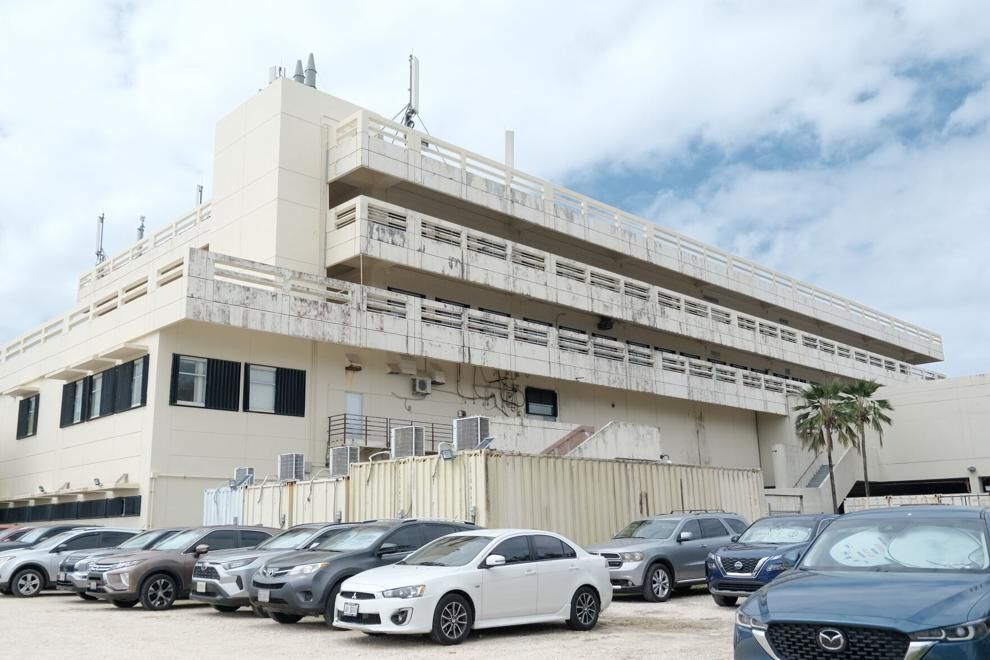
HAGÅTÑA (The Guam Daily Post) — Results from the indoor air quality evaluation, airborne mold spore tests and microbial survey of the hospital have been released by Guam Memorial Hospital, which also laid out a two-year plan to address the mold.
Guam Memorial Hospital contracted Industrial Hygiene Professionals Inc. to perform indoor air quality and airborne mold spore testing of the hospital in October and December 2023.
“To determine the airborne mold spore concentrations in select areas throughout the building in response to indoor air quality complaints (and) concerns,” the IHP report said, IHP used several methods in its investigation, including interviews and visual inspections, temperature and relative humidity testing, carbon dioxide testing, airborne mold sampling and tape lift sampling.
The results were detailed for each method, respectively.
Informal interviews with the facility manager and hospital employees, along with a walk-through of the hospital, led IHP to determine that complaints about indoor air quality “coincided with recent (heating, ventilation and air conditioning) system failures (and) issues.”
“Based on previous experience with faulty HVAC system, building management deployed portable air filtration units and fans throughout the building,” IHP said in its report.
The report further stated that mold growth and signs of water leaks were observed throughout the inspected areas, as well as in hallways throughout the building.
“According to facility management personnel, ceiling tiles are regularly changed out when potential mold growth is observed. However, in conjunction with the high relative humidity throughout the building, if the source of water intrusions (and) water leaks are not properly addressed, mold will continue to proliferate throughout the building,” IHP said in its findings.
The type of mold IHP came across in most indoor airborne mold samples was identified as Aspergillus/Penicillium.
“For people with healthy immune systems, breathing in Aspergillus isn’t harmful. However, for people who have weakened immune systems, breathing in Aspergillus spores can cause an infection in the lungs or sinuses which can spread to other parts of the body,” the Centers for Disease Control and Prevention said on its website.
Ascospores and Basidiospores were the predominate fungal types found in outdoor samples, according to the IHP report.
“Visible mold growth was observed during the inspection. Past water intrusions, condensation from chilled lines and temperature differences (cold air in one space and warm air in an adjacent space), as well as the known relative humidity issues with the HVAC system may all be potential causes/sources for mold. Air ducts, drip pans and plenums may also be potential sources of mold/mold spores and should be assessed by a qualified professional(s) who may recommend methods of professional cleaning and/or other preventive maintenance,” IHP said in its report.
The industrial hygienist report recommended that “potential causes (and) sources be further investigated and addressed. Any future renovations, water intrusion episodes, changes in the ventilation system, number of building occupants, or any other changes which may affect indoor air quality should be carefully evaluated to ensure acceptable conditions are maintained.”
The microbial assessment survey, also conducted by IHP, found “visible mold growth and signs of water damage/water stains were observed on select areas of gypsum board walls, cement board walls and concrete walls throughout the interior of GMHA,” IHP said in its report.
Ceilings were also affected by mold growth and water damage, according to IHP.
“Although ceiling tiles are typically replaced, the suspected mold growth is visible due to the ongoing water intrusions through the building and condensation from piping and ventilation ducts over the drop ceiling. Mold growth is likely to reoccur,” IHP said in the microbial survey report.
IHP again recommended that GMH address the HVAC issues “to maintain the relative humidity below 60% to prevent further mold proliferation throughout the hospital.”
“It is highly recommended that a licensed professional be contacted to address any structural deficiencies causing the water intrusions inside the occupied space. It is highly recommended that moving forward, the causes of mold growth be addressed prior to any renovation of the interior of the hospital,” IHP said.
The report further indicated that remediation should be done in line with the U.S. Environmental Protection Agency and an industrial hygienist be hired to develop a remediation plan.
Corrective action
The hospital has developed a Typhoon Mawar mold remediation plan of corrective action detailing its immediate, intermediate and long-term plans.
Immediate corrective actions were underway in the first two months post-Typhoon Mawar, according to GMH. The actions included removing water and moisture from floors at the hospital, repairing floors, walls and ceilings and replacing ceiling tiles.
Part of the fix is upgrading the HVAC system with the installation of 30 air conditioner units and deploying 36 of 51 HEPA filter systems, GMH said.
Intermediate corrective actions are ongoing, according to the document.
These include repairs to Chillers 1 and 2 and the installation of additional air conditioner units and associated power source.
GMH Assistant Administrator of Operations William Kando at last week’s board meeting noted that the procurement was moving forward for air conditioning units to be installed in the obstetric and gynecology ward, labor and delivery nursery and the neonatal intensive care unit.
Long-term corrective actions that will be carried out through 2025 include the removal and replacement of the remaining 48 hospital air-handling units, two 450-ton chillers and cooling towers and one 265-ton backup chiller and air-cooled condensing units.
The hospital’s envelope, which contributes to the mold growth, also will be addressed to mitigate against heavy rainfall water intrusion in the interior courtyard envelope and the exterior envelope, GMH said.

A section of Guam Memorial Hospital in need of maintenance is seen in Tamuning on Wednesday, Jan. 31, 2024.
