

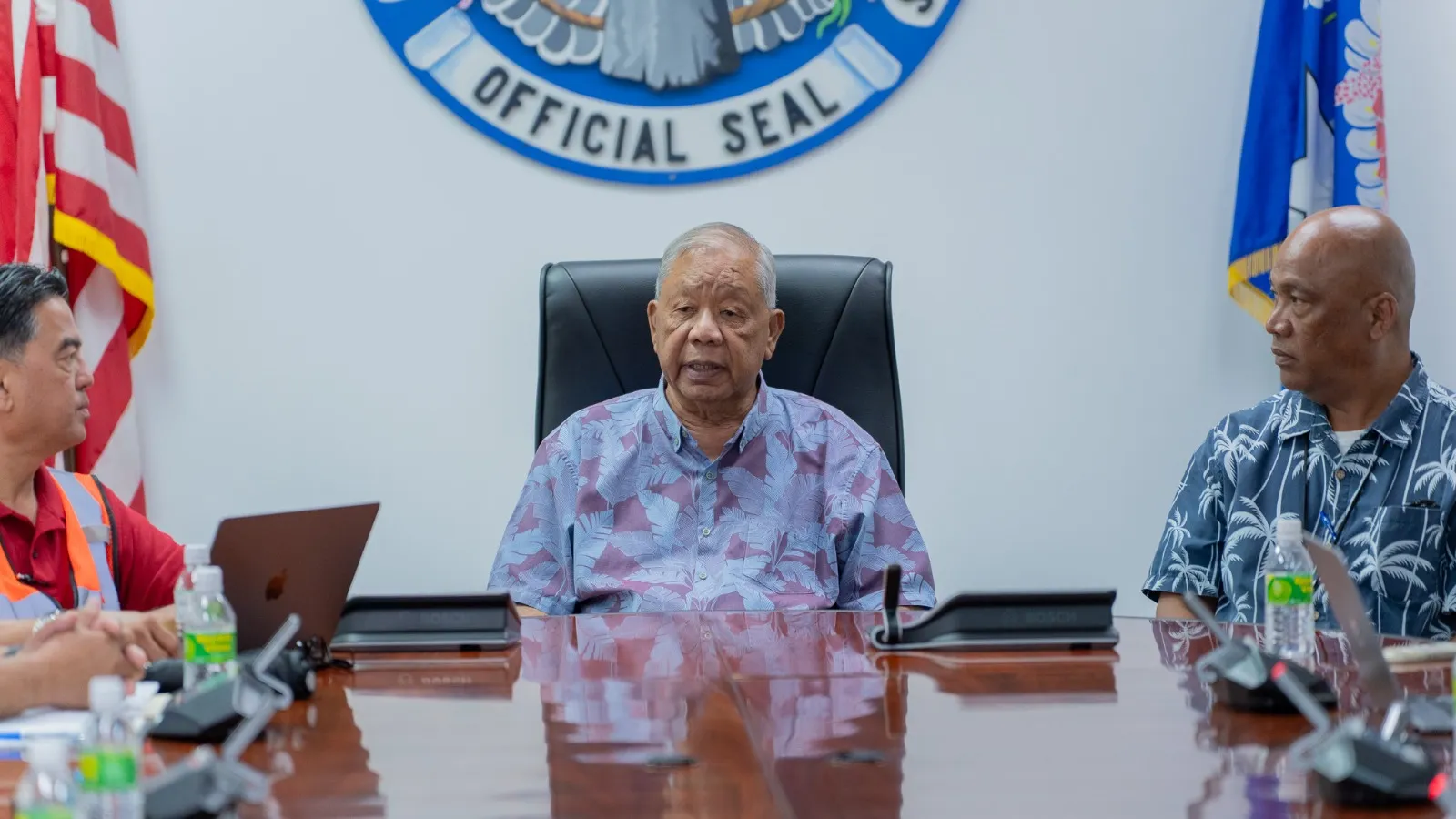



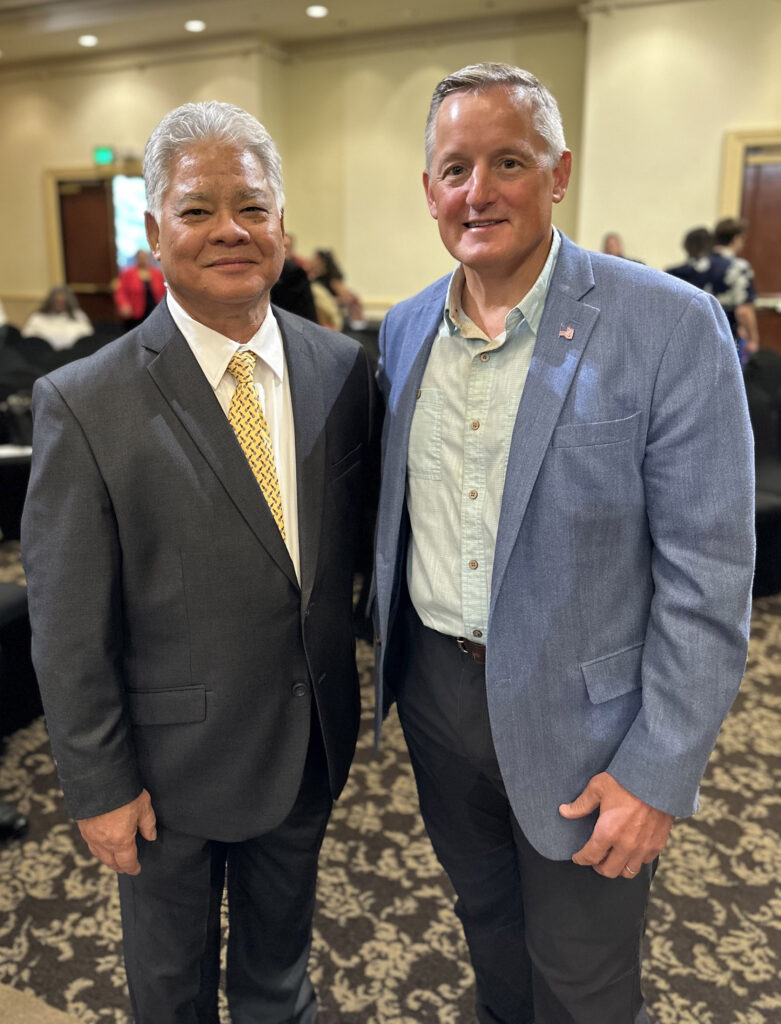
GOVERNOR Arnold I. Palacios on Thursday urged members of the U.S. House Committee on Natural Resources to, among other things, repeal or delay the implementation of the touchback provision in the CNMI-Only Transitional Worker program, saying, “help us help ourselves.”
The governor was among the Pacific islands leaders who were invited by the U.S. House panel to testify in an oversight hearing titled, “Peace Through Strength: The Strategic Importance of the Pacific Islands to U.S.-led Global Security” at the Hilton Hotel in Tamuning on Guam.
The other members of the witnesses panel were Guam Gov. Lou Leon Guerrero; Palau Finance Minister Kaleb Udui Jr.; Federated States of Micronesia acting Department of Foreign Affairs Secretary Ricky Cantero; Marshall Islands Foreign Affairs and Trade Minister Jack Ading; Guam National Guard Adjutant General Brig. Gen. Michael W. Cruz; Guam Vice Speaker Tina Barnes; Retired U.S. Army Brig. Gen. Roderick Leon Guerrero; and World War II survivor Irene Sgambelluri.
Palacios told U.S. lawmakers that the CNMI, Guam, and American Samoa “firmly anchor America’s position in the Pacific, and together with the Freely Associated States, create a vast corridor of peace and security that spans nearly three million square miles and connects to the seas of other allied nations.”
CCP aggression
He said the Chinese Communist Party, aware of the strategic importance of America’s territories and allies in Micronesia, “moves aggressively to fill perceived voids in American assistance and to capitalize on the social and economic vulnerabilities of Pacific Island communities.”
“We see that aggression in massive investments in infrastructure and economic development. We see it in land grabs and fisheries expansions. We see it in unauthorized research vessels lurking around our undersea fiber optic cables. We see it in organized crime, public corruption, and political interference,” Palacios said.
He added that “there is a strategic edge in all of the CCP’s activities, and it destabilizes island communities and cuts against America’s influence and security in the region.”
In the CNMI during times of economic hardship and vulnerability, Palacios said “we too have turned to Chinese investment for solutions. In fact, for almost 40 years now, the People’s Republic of China has had a firm foothold in our islands. Chinese investors were always conveniently there when we needed them, offering new industries and revenue sources that also directly or indirectly advanced the interests of China in the Marianas.”
Palacios said when the garment industry shut down in the 2000s, the Commonwealth lost a major source of revenue, and drastic austerity measures had a deeply destabilizing effect. To make up for the loss, he said the CNMI turned to Chinese tourism and Chinese casino gaming.
Prior to the Covid-19 pandemic, he said tourists from the China comprised approximately 40% of all visitor arrivals in the CNMI. The casino on Saipan at its peak reported billions of dollars in rolling chip volumes generated at just 16 VIP tables, he said.
For a brief period, the governor said, Chinese tourism and gambling revenues propped up the Commonwealth’s government and economy. But this was short-lived and had unfortunate consequences, he added.
Today, he said, Chinese tourism has dried up and the casino has shut down. The CNMI economy continues to struggle, and the government is in deep fiscal distress. These are conditions that make the Commonwealth again acutely vulnerable to CCP exploitation, Palacios said.
“Shortly after I was inaugurated as governor earlier this year, I announced the position of my administration that we would pivot away from the Commonwealth’s overreliance on Chinese investment, and seek to strengthen our relationships with our federal partners and allies in the region. I worried about the instability of the Chinese markets in light of shifting geopolitical currents. I also worried about the Commonwealth’s potential exposure to national security concerns,” Palacios said.
“Not everyone was pleased with this position. We are taking the hits for it, both economically and politically. To this day, we are continually asked to open up to Chinese investment once again. That same kind of pressure ripples across the Pacific in various ways. Whatever form this pressure takes, it is always erosive to America’s influence and security in the region,” he added.
Recommendations
Palacios said to strengthen its “security architecture” in the Pacific, “and to bolster our defenses against CCP threats,” the U.S. should expand its engagement with all of the island jurisdictions, and increase support for the economic and social development of these communities.
Palacios said the U.S. Congress can revisit the provisions of the Covenant between the U.S. and the CNMI, especially Section 702, which provided direct financial assistance to the CNMI for government operations, capital improvement, and economic development.
“We are currently facing a workforce shortage that threatens the CNMI’s economic recovery,” he added. “While we fully appreciate the federal government’s considerable financial assistance for infrastructure improvements, we will not be able to carry out most of these projects because of the labor challenges we face. I therefore also ask for urgent congressional support for legislation to repeal or at the very least delay implementation of the touchback provision in our Commonwealth-Only Transitional Worker (CW) program, which would require a significant portion of our workforce to exit the Commonwealth for an indefinite period while they wait for new work permits to be processed.”
The governor said the touchback provision is due to go into effect next month, “and could not come at a worse time for us. Many businesses in the CNMI will be adversely impacted, and this will further deepen our economic vulnerability in the region.”
Palacios also asked the U.S. House members to support U.S. Congressman Gregorio Kilili Camacho Sablan’s H.R. 560, the Population Stabilization Act, which aims to “shore up the eroding population and workforce of the CNMI by providing stability and permanent residency to the Commonwealth’s long-term foreign workers.”
In addition, he asked the U.S. Congress to pass legislation that “recognizes the unique challenges that confront Pacific Island communities and make changes to federal policy that hinder our economic and social development.”
For instance, “while we understand and support the goals of the Build America, Buy America Act or BABA, this policy is untenable for insular areas in the Pacific Islands when it makes the sourcing of equipment and supplies extremely cost-prohibitive and when it is exceedingly difficult for small island territories to compete with the bigger states in procurement.”
He said a blanket BABA Act waiver from U.S. Congress across the federal family “would efficiently resolve the issue, and allow the territories to access closer markets with allied nations so that our projects can move forward.”
Palacios likewise asked the U.S. House committee to support H.R. 5001, a bipartisan bill that would place “special advisors for the insular areas in every executive department of the federal government to ensure that the concerns of island communities are considered in federal-decision-making.”
He added, “I have emphasized many of these points before in testimonies before the U.S. Senate Committee on Energy and Natural Resources, before the Interagency Group on Insular Areas in February, and in conversations I have had with military and political leaders. The stability of America’s territories and allies in Micronesia are inseparable from national security and peace in the region. Help us help ourselves, so we are stronger partners in bolstering national security and ensuring that the Pacific remains a haven of peace, prosperity, and freedom.”
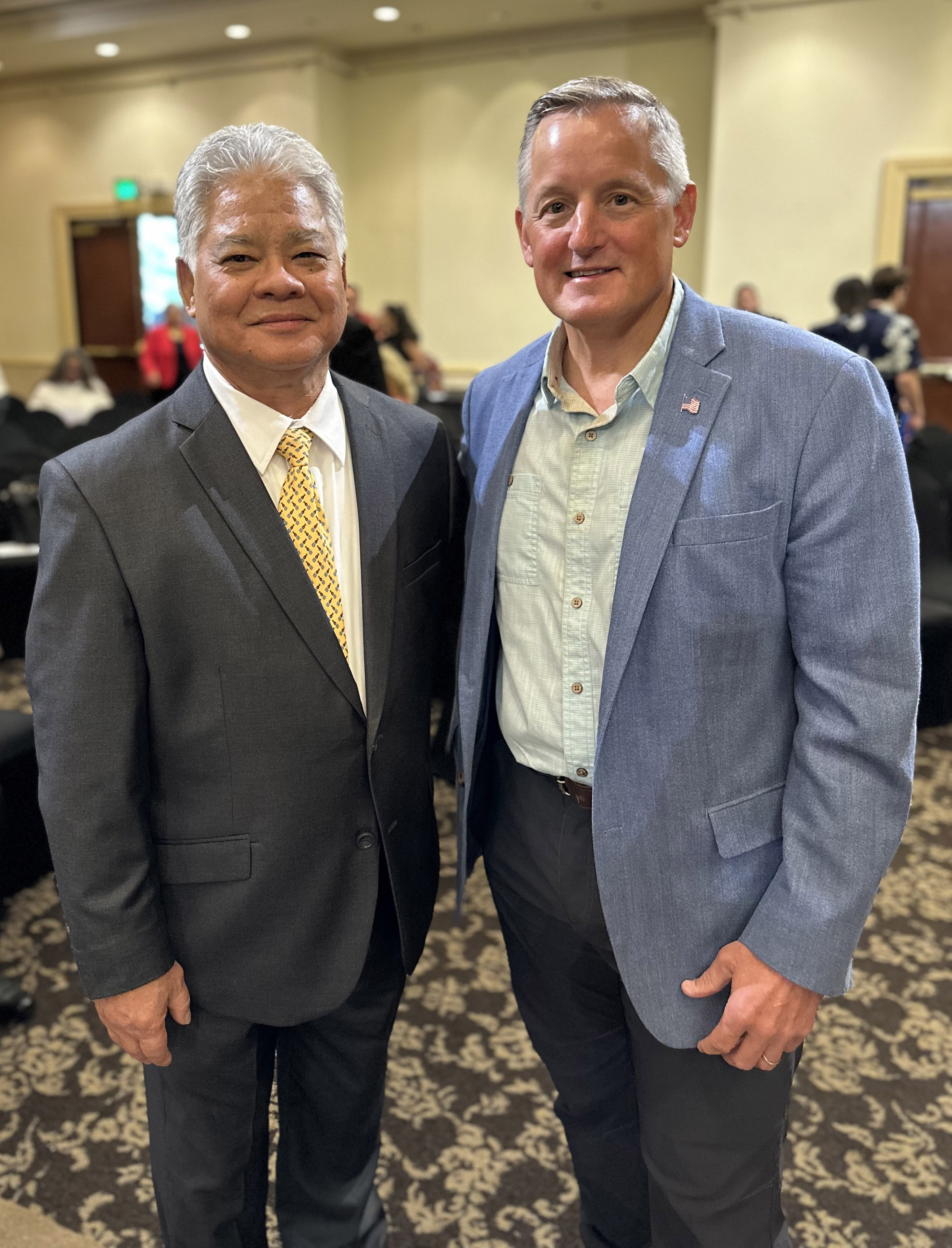
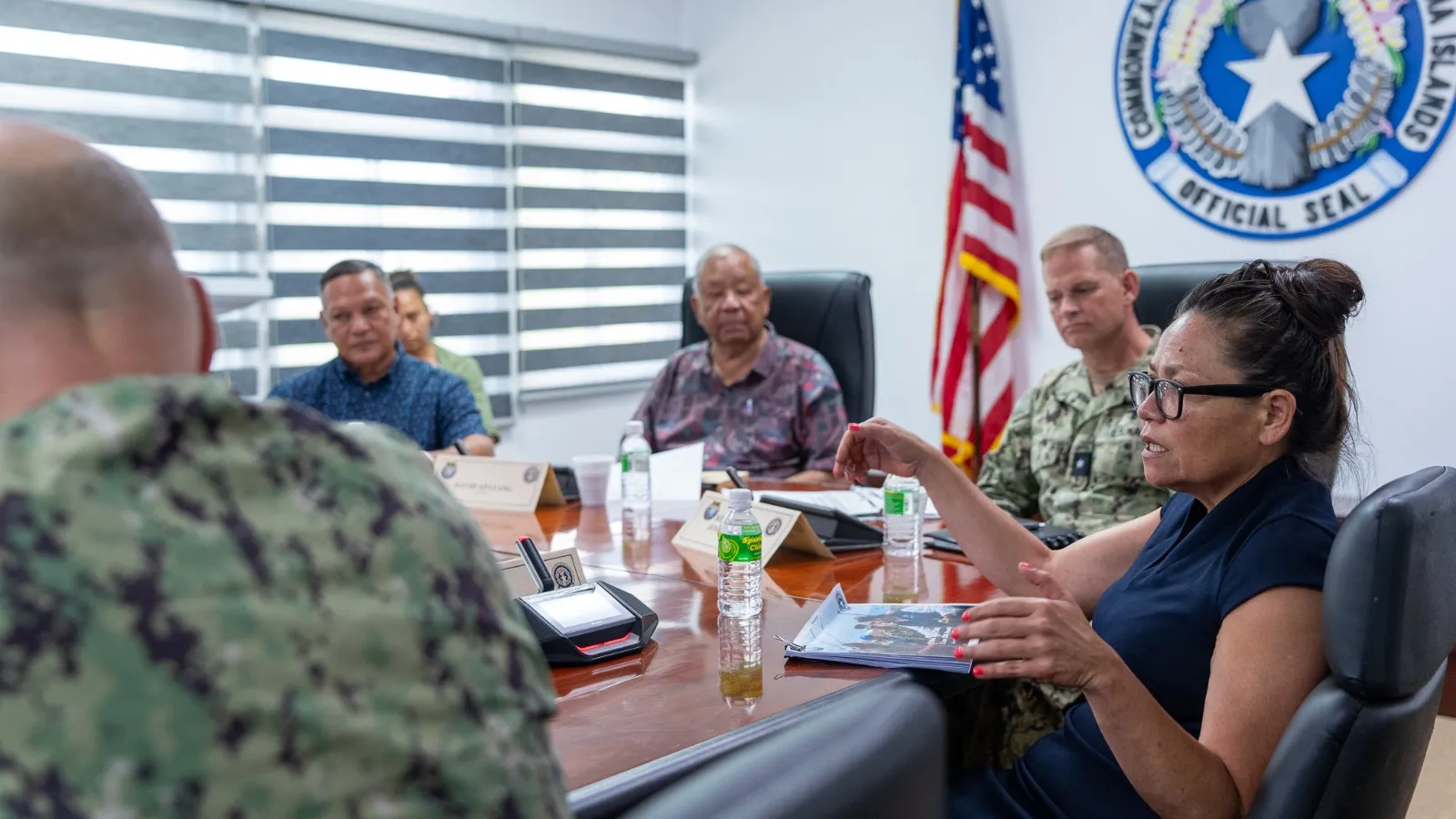
CNMI Gov. Arnold I. Palacios and the chairman of the U.S. House Committee on Natural Resources, U.S. Congressman Bruce Westerman, R-Ar., pose for a photo prior to a field hearing conducted by the committee on Guam, Thursday, Aug. 23. The hearing examined the importance of the U.S. territories and the Freely Associated States to the United States’ ability to counter the People’s Republic of China’s “malign influence” and maintain the United States’ strategic interests in the region.
