



WITH the recent enactment of the $1.9 trillion American Recovery Plan Act, U.S. Congressman Gregorio Kilili Camacho Sablan said, “Opportunities in Congress to fund key infrastructure in the Marianas continue to grow.”
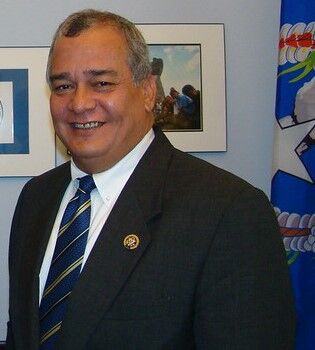
Gregorio Kilili Camacho Sablan
In a letter to Commonwealth Utilities Corp. Executive Director Gary Camacho last week, Kilili requested information and cost analyses for core infrastructure from CUC.
Kilili said he is interested in supporting several areas of development including production of potable water, protection of water supplies and coastal waters, and reduction of power costs.
Potable water
Because of the significant increase in the Safe Drinking Water Act funding Kilili has secured for the CNMI since he became a member of the U.S. Congress, he noted that all Saipan households now have 24-hour water. The next step, he said, is to make that water safe to drink out of that tap.
Kilili asked Camacho if CUC has a plan for achieving this goal for Saipan, Tinian and Rota — with progression of actions needed and cost estimates of each step.
Protecting water supplies and coastal waters
Noting that the population in Kagman has grown, Kilili said the aquifer there, which is also Saipan’s most important source of water, has been contaminated by household septic systems, commercial development, and agriculture uses.
He said achieving potable water for Saipan requires the conservation of the Kagman aquifer, so there is a need to build a wastewater treatment facility there.
Kilili noted that the connection of Dandan and other areas proximate to the existing Agingan and Sadog Tasi treatment facilities and the upgrade of those facilities to meet pollution standards are actions recommended in CUC’s 2015 draft final wastewater master plan, which also listed 57 needed capital projects, presumably including a Kagman treatment facility. CUC anticipates that funding will be available for 24 of these projects from 2015 to 2035.
Kilili asked Camacho to provide him a complete list of the projects that have been completed since 2015, and the costs of the remaining projects that must be completed to achieve CUC’s wastewater management goals.
Reduction of power costs
Because diesel fuel remains among the costliest means to run the power plant, Kilili said he has been working successfully to increase funding over the last several years for the U.S. Department of the Interior’s Energizing Island Communities project.
Kilili said his goal is to reduce costs for consumers in the CNMI by shifting to cheaper, domestic, renewable energy sources and by increasing system efficiencies.
Kilili asked Camacho to provide him with CUC’s specific plan for the development of the power systems on Saipan, Tinian and Rota.
“Please do not hesitate to send partial answers to any of this inquiry, rather than waiting to be comprehensive,” Kilili added.
“As I said at the outset, we have been successful at obtaining capital improvement funding over the last 12 years I have been in office, both through increases in Safe Drinking Water Act and Clean Water Act annual grants, as well as through special infrastructure appropriations, such as the $10.4 million for water and sewer and the $56 million for solid facilities in Public Law 116-20. With your assistance, we can continue that record of success,” Kilili told Camacho.
