

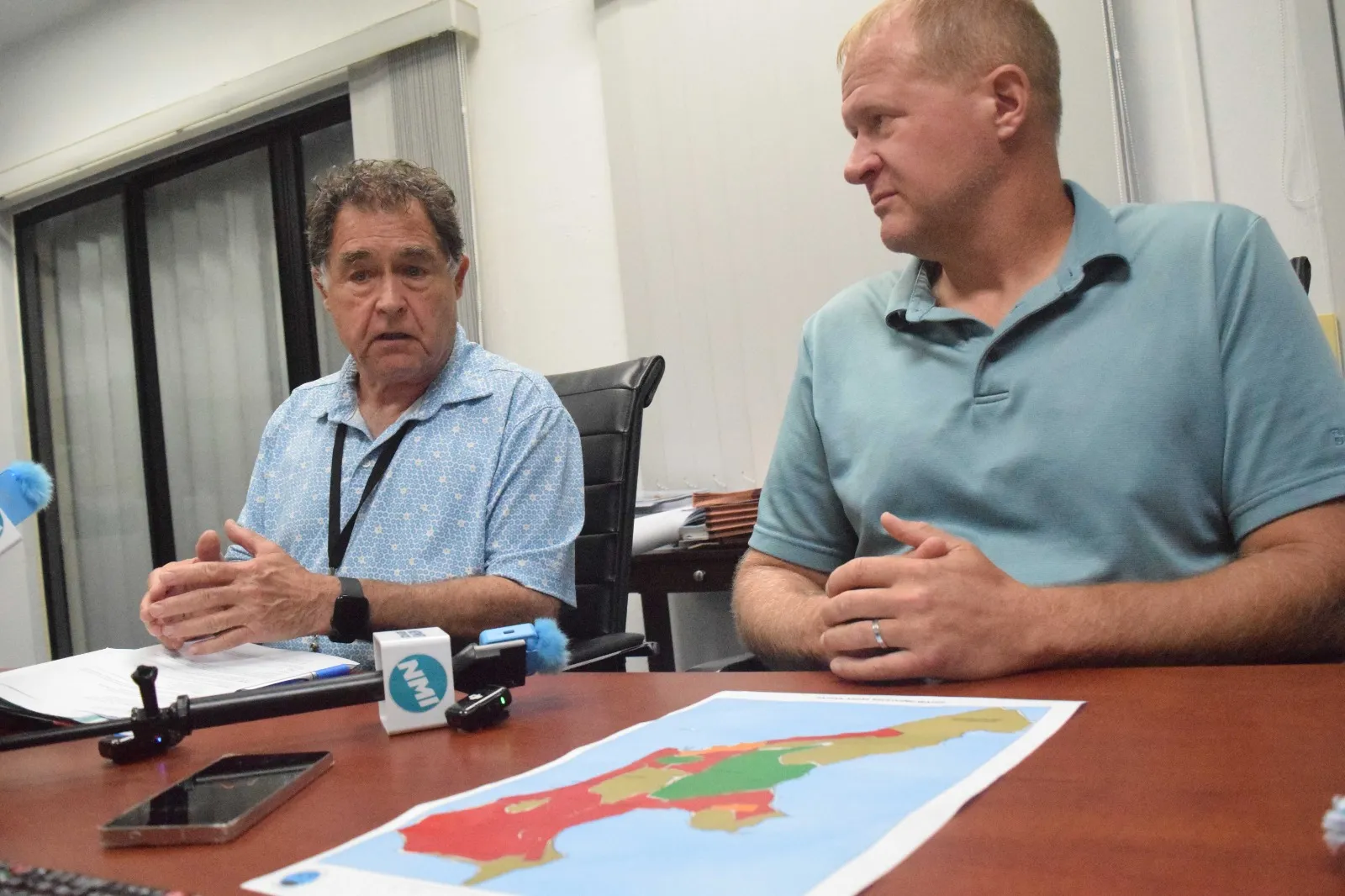


These agencies have pooled their resources to enable O’Leary to travel from Guam, where he was contracted to conduct secondary transition training for that island’s Department of Education.
“The purpose of the training is for special education teachers and teacher aides to gain the necessary knowledge to be able to help their students transition into a post-secondary college or career,” said O’Leary.
In the training, teachers acquired an in-depth understanding about the importance of having a “measurable post-secondary goal” for each student.
“We have discovered that teachers and others do not know conceptually or operationally how to develop and respond to many of the requirements in IEPs,” O’Leary added.
An IEP, or an Individualized Education Program, is mandated by the Individuals with Disabilities Education Act, or IDEA.
An IEP is designed to meet the unique educational needs of a child who may be disabled, as defined by federal regulations.
The IEP aims to help children reach educational goals.
When the student reaches the age of 16, a long-range plan for post-school adult life will be developed.
O’Leary has spent over 30 years working in and with schools as a secondary special education teacher, a special education consultant, a transition specialist, a work experience coordinator, a program specialist, and a program director.
He has also taught at the graduate and undergraduate levels and has worked in vocational rehabilitation.
He has trained and presented nationally on the transition requirements under IDEA and has developed an approach in helping districts and states meet the transition requirements and demonstrate improvements and results.
He is the co-author of “Transition Requirements A Guide for States, Districts, Schools, Universities and Families (2000)” which is currently being updated.
If you would like further information on this project contact PSS secondary transition coordinator Joanne Nicholls at 237-3029.
