



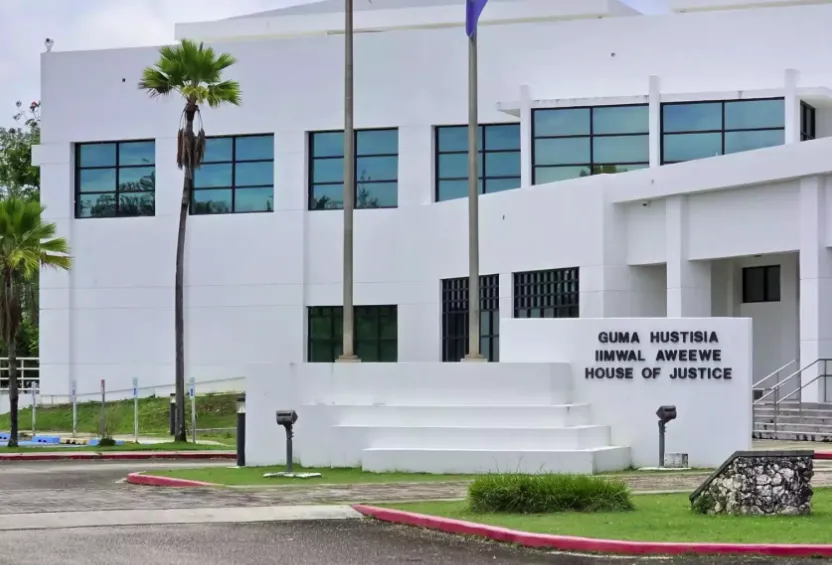


Attorney General Edward Buckingham, in a statement, said: “As to the procedural aspects of this case, the position of the commonwealth is that the issues raised are constitutional in nature. Because of this, removal to U.S. District Court is the appropriate location for this proceeding.”
He said a notice of removal was filed yesterday in federal court.
When asked about the position of the parties involved in the litigation, he replied: “Litigation is best accomplished in the courtroom rather than in the media.”
Friends of Marpi’s David Banes, a lawyer, told KSPN last night that they would oppose the AGO’s motion.
Superior Court Associate Judge Kenneth Govendo is scheduled to preside over the evidentiary hearing this Friday.
Concerned citizens led by the Friends of Marpi want the CNMI government to stop erecting more power poles in the historic Marpi area, saying there was not enough public consultation on the project that costs $3 million.
Govendo issued a Temporary Restraining Order, or TRO, last April 15 which prohibits the government and its contractor from erecting the last two power poles in the area as well as hooking them with electrical wires.
The complaint was filed by former Rep. Tina Sablan, Suzy Kindle, Glen Hunter and Ruth Tighe.
Banes, the pro-bono counsel of the plaintiffs, told the Variety the granting of the TRO was encouraging.
“It shows that there are fundamental rights at stake here for the traditions and culture of the CNMI that the court sees that the government shouldn’t just be able to tramp upon,” Banes said.
Should the plaintiffs prevail, Banes said the court has many options.
“It could fashion a remedy to remove the power poles. Or it could just simply require a number of public hearings. It’s really up to the court,” he said.
Sablan said the court should “deeply examine this project and its ramifications.”
The plaintiffs believe the Marpi area is being prepared for commercial development which will “eventually deprive the indigenous people of their inherent cultural heritage.”
Banes said it appears that the CNMI government violated Section 106 of the National Historic Preservation Act which requires a review process.
“A Section 106 review, among other requirements, requires federal agencies or local government agencies, if they are federally funded, ‘to explore measures to avoid or reduce harm (adverse effect) to historical properties…as well as require them to consider the views of the public,’ ” Banes said in his motion for TRO.
Charlene Vaughn, assistant director of the Office of Federal Agency Programs, Advisory Council on Historic Preservation, recently asked the U.S. Department of the Interior to find out how the CNMI or the department complied with the mandates of Section 106 relevant to the Marpi project, which is funded by the U.S. government.
