


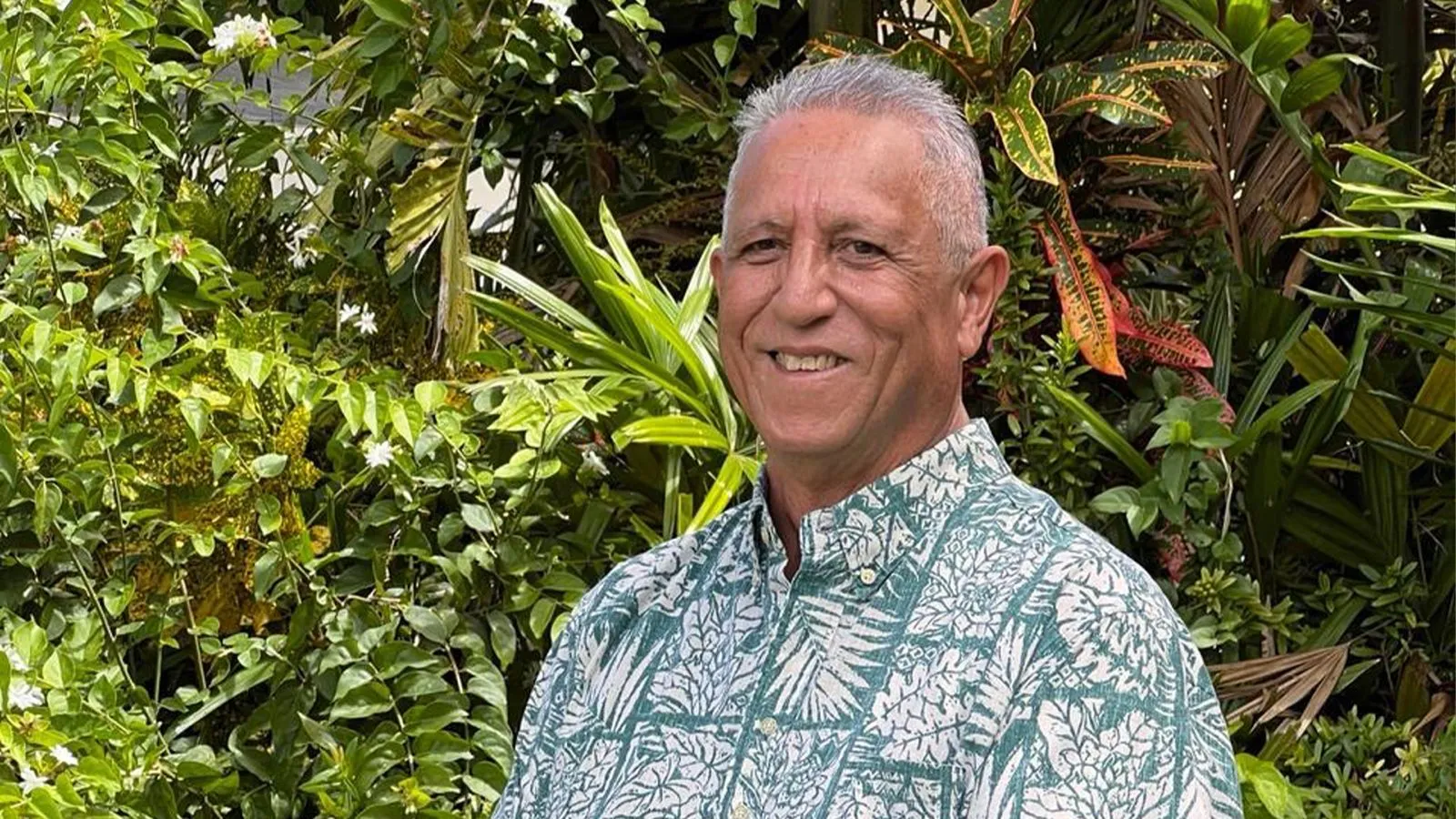


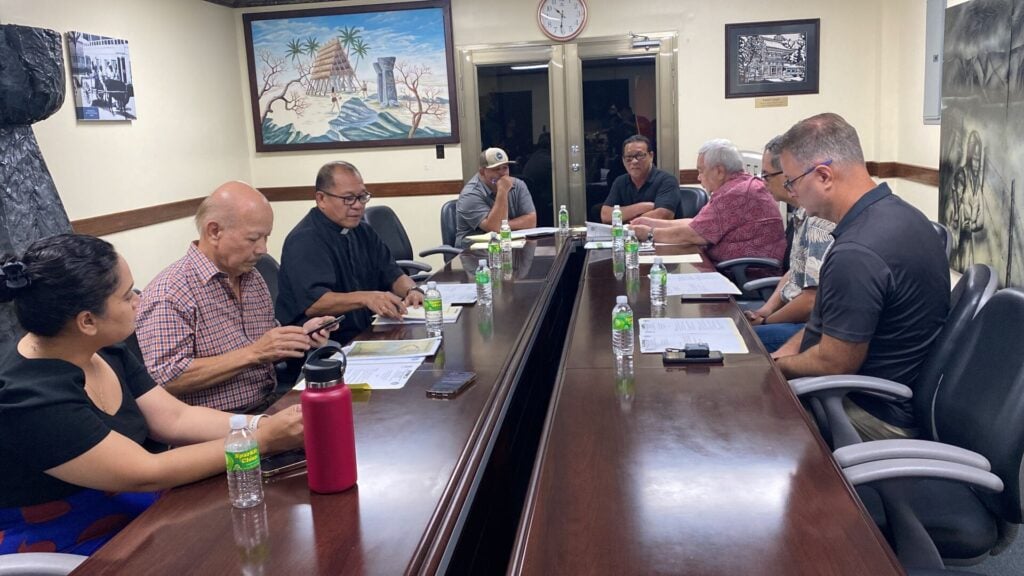
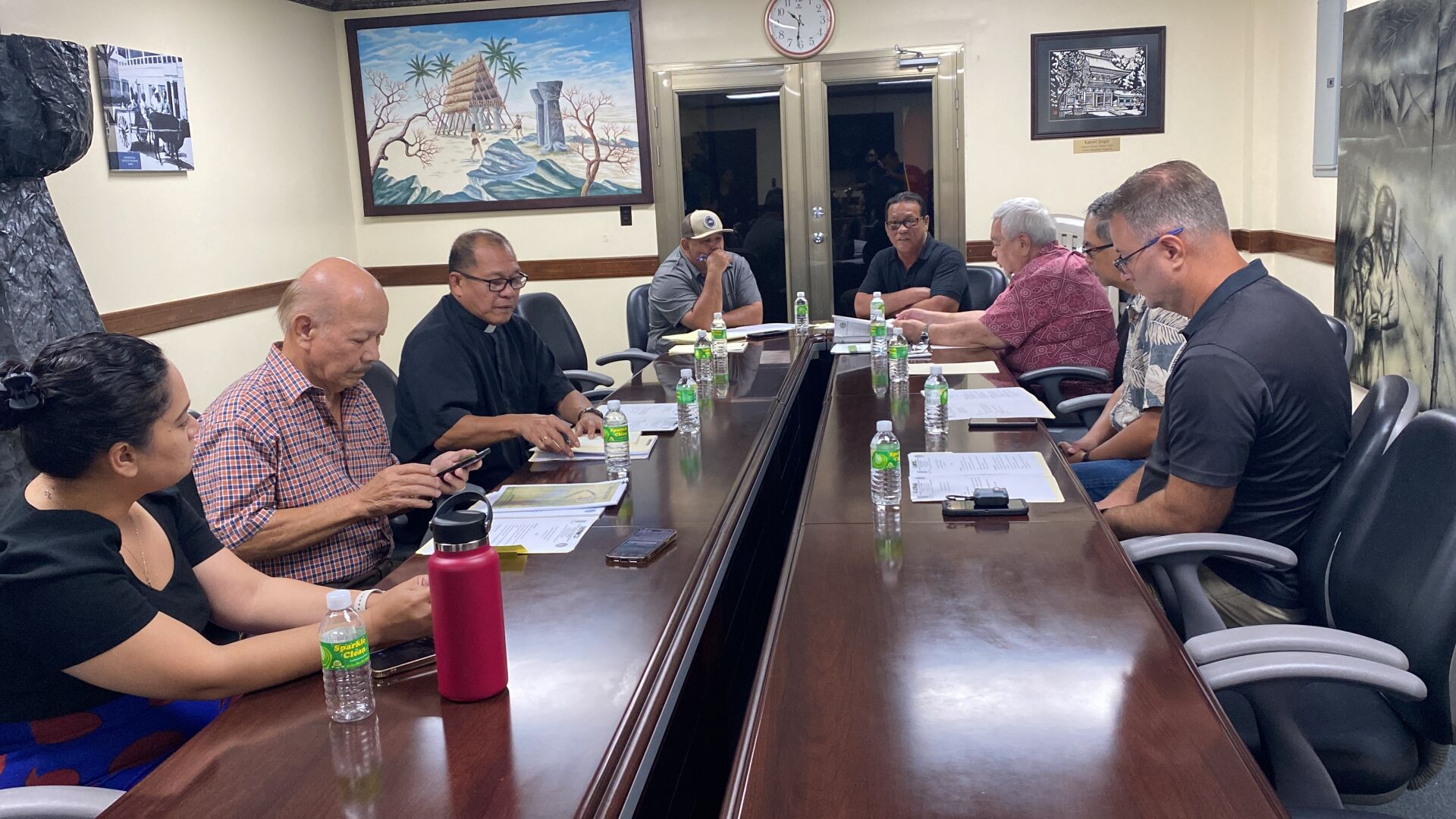
From left, Natashia Tomokane, public information officer of the Saipan Mayor’s Office; Marpi Public Cemetery Restoration Project Manager Herman Cabrera; Father Rey Rosal of the Diocese of Chalan Kanoa; Director of Parks and Recreation Mike Cruz; Saipan Mayor RB Camacho; Ron Sablan of the Commonwealth Healthcare Corp.; Pastor Eric Abragan of Life in the Son Christian Church; and Pastor Michael Rodgers of Grace Christian Church.
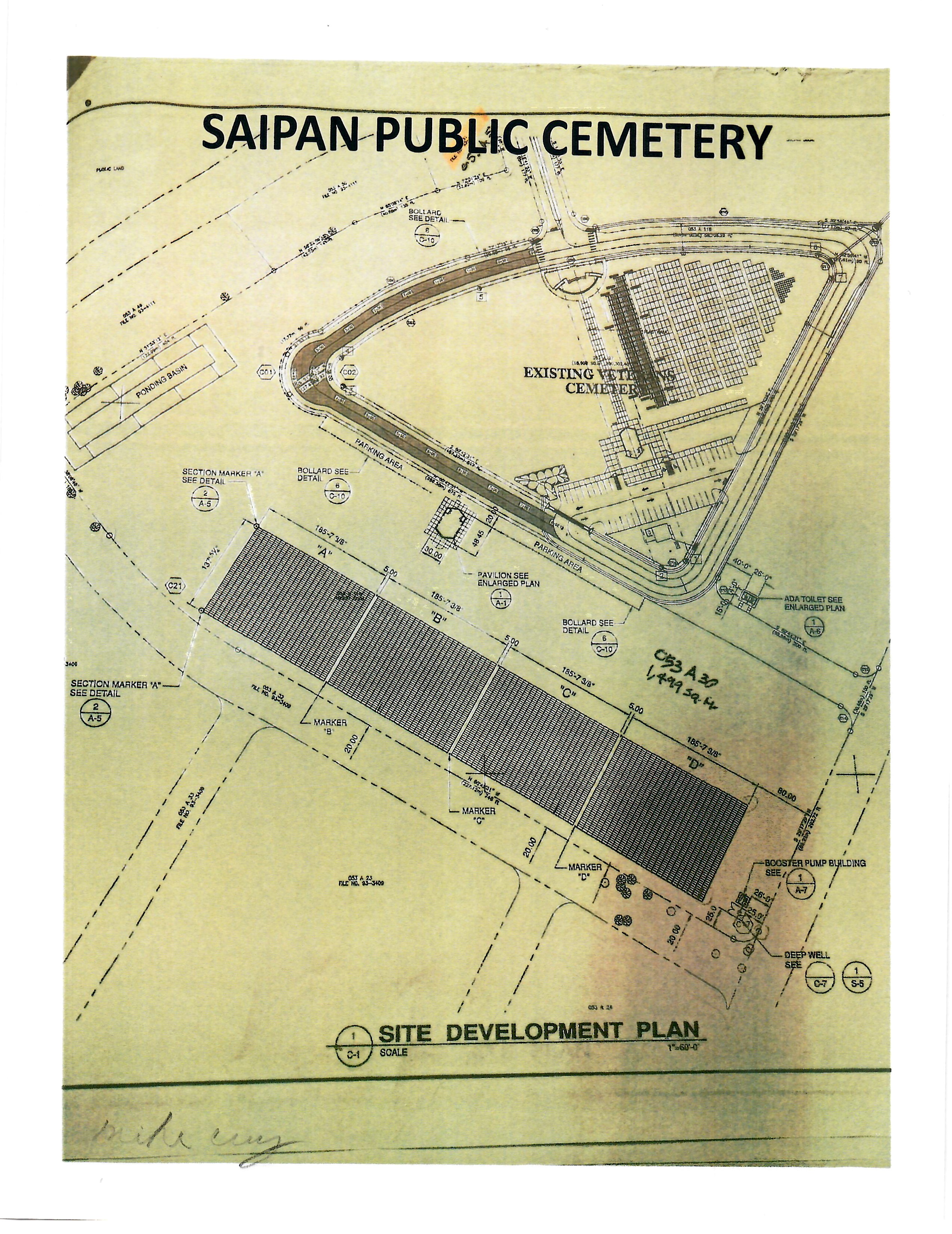
The site development plan for the Marpi Public Cemetery, which is adjacent to the veterans cemetery.
HERMAN Cabrera, an architect, estimates that it would cost over $464,918 to get the Marpi Public Cemetery ready for public use.
The project manager for the cemetery restoration project, Cabrera doubts whether the CNMI government could afford to implement the project and maintain the site if completed.
He attended a stakeholders meeting on Dec. 4 at the Saipan Mayor’s Office to discuss the cemetery project.
Also participating in the meeting were Father Rey Rosal of the Diocese of Chalan Kanoa; Mike Cruz, director of the Division of Parks and Recreation; Ron Sablan of the Commonwealth Healthcare Corp.; Pastor Eric Abragan of Life in the Son Christian Church; Pastor Michael Rodgers of Grace Christian Church; Saipan Mayor Ramon “RB” Camacho; and his public information officer, Natashia Tomokane.
It was the second such stakeholders meeting hosted by Camacho to solicit comments regarding the Marpi Public Cemetery, which was established in 1999.
During the meeting, Cabrera said the cemetery’s chapel would need to be repaired and painted, and a fence should be erected around it to keep out animals. This alone would cost around $50,000, he added.
Cabrera said the other major costs would include the cleaning, repairing, and painting of the public restroom, $35,000; and building an office and storage facility, $150,000.
He recommends the purchase of a $75,000 backhoe grader with chain lift accessory specifically for use at the cemetery, which will have lawn crypts.
Cabrera said if four people were buried in the cemetery a month, it would be “practical” and “convenient” for the cemetery to have its own backhoe.
He also mentioned the other issues the public cemetery could face due to the cost of maintenance. These include operations and maintenance, which would cost $100,000, he said.
Moreover, the cemetery has a “definite” need for employees to properly care for the grounds and funeral arrangements.
He said the cemetery’s location adjacent to a federally run veterans cemetery and in the heart of a heavily visited tourist area necessitated that the grounds be kept “nice, neat and organized.”
“We need somebody there to oversee the maintenance and operation of the cemetery,” Cabrera said. “If we don’t have that there’s no way this cemetery is going to be organized.”
Cabrera said the cemetery would also need “essential tools and equipment” such as a small riding lawnmower, various grounds tools, and 10 cubic yards of sand to “refine distributed soil on top of the concrete graveyard pit.” The sand would be a monthly expense, he said.
With nearly $465,000 needed to get the project up and running, Cabrera doubts the CNMI government’s ability to implement it.
“[In terms of] my vision as an architect, for the government to handle this there’s no way,” Cabrera said. “We need to come up with money,” he added.
Public Law 11-117 established the Marpi Public Cemetery under the purview of the Department of Lands and Natural Resources.
Mike Cruz, the director of the Division of Parks and Recreation, which is under DLNR, said his office and Mayor Camacho are working on a memorandum of understanding regarding ground maintenance.
Cruz also said that cemeteries are “very high maintenance.”
“So [the government needs] to find a way to stay within our budget. If we can’t afford to maintain it, then somebody has to pay for those things,” Cruz added.
Other concerns
Father Rosal said he has spoken to some of his parishioners, and they have expressed concerns about the Marpi cemetery.
“It’s very far, the ground is rocky, and there are unexploded bombs there,” the priest said, quoting his parishioners.
But Mayor Camacho said families are not going to be involved in the digging of burial plots.
Father Rosal also wanted to know which government agency to turn to when parishioners want to use the public cemetery in Tanapag.
Parks and Recreation Director Cruz said the Tanapag cemetery falls under the purview of CHCC.
For his part, Pastor Rodgers brought up a point he made in their first meeting when he asked about exhuming the remains buried at the Wireless Hill Public Cemetery.
Pastor Rodgers cited regulations that said the exhumation of remains cost $300. He said other regulations state that metal caskets would not be allowed at the Marpi Public Cemetery.
Pastor Rodgers wanted to know who would pay for the exhumations, considering that some families who have buried their loved ones on Saipan no longer live here. Additionally, new caskets would potentially be needed for the remains.
“Something you might consider, especially once they close [the Wireless Hill Public Cemetery]…. all the caskets that were buried that are metal. What is the policy going to be for all these families? I’m just thinking about families. It’s a hard thing.” Pastor Rodgers said.
The stakeholders will have another meeting with the mayor, who, like the faith-based leaders and Cabrera, said Muslims, Buddhists, and other faith-based leaders should be present because the Marpi Public Cemetery would be open to the entire community.
Father Rosal said funeral parlor representatives should also be included in the next meeting because they could clarify issues regarding the types of caskets available for purchase.
